Accommodations & Resorts
Choosing where to stay can shape your entire travel experience. The right accommodation does more than provide a bed—it becomes your home base, influences your daily rhythm, and often determines how deeply you can engage with a destination. Whether you’re drawn to the comprehensive amenities of a full-service resort or the intimate charm of a boutique property, understanding the landscape of accommodations empowers you to make decisions that align with your travel goals and budget.
The hospitality industry has evolved considerably, offering travelers an expansive spectrum of options. From urban hotels designed for business efficiency to oceanfront resorts built around leisure and relaxation, each accommodation type serves distinct purposes and caters to different traveler priorities. This article breaks down the essential categories, key selection criteria, and practical considerations that will help you navigate your options with confidence.
Understanding Different Types of Accommodations
The accommodation landscape extends far beyond the traditional hotel. Each category offers unique advantages, and understanding these distinctions helps you identify which aligns best with your specific travel needs.
Hotels: The Traditional Foundation
Hotels remain the most recognized accommodation type, ranging from budget-friendly chains to luxury properties with premium services. Standard hotels typically provide daily housekeeping, front desk services, and basic amenities like fitness centers and business facilities. They excel in urban environments where proximity to business districts, transportation hubs, or cultural attractions takes priority. A three-star city hotel might offer compact, functional rooms ideal for travelers who plan to spend most of their time exploring, while five-star properties provide spacious suites, concierge services, and upscale dining options.
Resorts: Destination-Focused Experiences
Resorts distinguish themselves by offering comprehensive on-site amenities designed to make the property itself a destination. Think of a resort as a self-contained vacation ecosystem—you could theoretically never leave the grounds and still have a fulfilling experience. These properties commonly feature multiple dining venues, recreational facilities like pools and sports courts, spa services, and organized activities. Beach resorts might include water sports equipment and beachfront service, while mountain resorts often provide ski-in/ski-out access or guided hiking programs.
Boutique Properties: Character and Individuality
Boutique hotels typically house fewer than 100 rooms and emphasize distinctive design, personalized service, and local character. These properties often occupy historic buildings or showcase unique architectural elements that chain hotels rarely match. The intimate scale allows staff to provide highly personalized attention, remembering guest preferences and offering insider recommendations. Travelers seeking authentic local flavor and design-forward spaces frequently gravitate toward boutique options, accepting potentially smaller room sizes in exchange for memorable atmospheres.
Vacation Rentals and Alternative Stays
Vacation rentals—including apartments, villas, and private homes—offer advantages for longer stays, family groups, or travelers who value space and privacy. These options typically include full kitchens, multiple bedrooms, and living areas, providing substantially more square footage than hotel rooms at comparable price points. The trade-off involves reduced services—you won’t find daily housekeeping or front desk assistance—but many travelers appreciate the residential feel and ability to prepare their own meals.
What Makes a Resort Different?
The distinction between hotels and resorts extends beyond simple nomenclature. Resorts are purpose-built or extensively developed to provide a comprehensive vacation experience, whereas hotels primarily focus on comfortable lodging. A resort typically sits on expansive grounds with multiple buildings, recreational zones, and landscaped areas designed for guest enjoyment.
Resort amenities commonly include multiple swimming pools (often with distinct atmospheres—family-friendly versus adults-only, for example), full-service spas, fitness centers with extensive equipment and classes, tennis or golf facilities, and organized activities from morning yoga to evening entertainment. All-inclusive resorts take this further by bundling meals, beverages, and activities into a single upfront price, eliminating the need for constant transactions and budget monitoring during your stay.
Many resorts cater to specific niches: wellness resorts emphasize health-focused activities, nutrition, and spa treatments; eco-resorts prioritize environmental sustainability and nature immersion; family resorts design programming specifically for children while providing parents with relaxation opportunities. Understanding these specializations helps you select properties aligned with your vacation priorities rather than settling for generic options.
Key Factors in Choosing Your Accommodation
Several fundamental considerations should guide your accommodation selection, each weighted according to your specific travel context and personal preferences.
Travel Purpose and Style
Business travelers often prioritize efficient workspaces, reliable internet connectivity, proximity to meeting locations, and quick check-in/check-out processes. Leisure travelers might instead value pools, beach access, recreational activities, and dining variety. Families require different configurations than couples—interconnecting rooms, childcare services, and kid-friendly dining become relevant factors. Consider how you actually plan to use the accommodation: if you’ll return only to sleep after full days of exploration, investing in extensive resort amenities makes little sense.
Amenities That Match Your Needs
Rather than simply choosing properties with the longest amenity lists, identify which specific features genuinely enhance your experience. Frequent considerations include:
- Dining options: On-site restaurants, room service availability, breakfast inclusion, proximity to external dining
- Connectivity: Complimentary Wi-Fi quality, business centers, in-room workspaces
- Fitness and recreation: Gym equipment quality, pool size and atmosphere, beach or waterfront access
- Wellness facilities: Spa services, yoga classes, wellness programs
- Family amenities: Kids’ clubs, family pools, babysitting services, interconnecting rooms
- Parking and transportation: Parking availability and costs, airport shuttles, proximity to public transit
Service Level Expectations
Service philosophies vary dramatically across accommodation types. Luxury properties typically maintain high staff-to-guest ratios, enabling anticipatory service and quick response to requests. Mid-range hotels provide competent, friendly service focused on efficiency. Budget accommodations often minimize staffing to control costs, potentially requiring more self-sufficiency from guests. Determine which service level aligns with your expectations—some travelers appreciate being left alone, while others value attentive hospitality.
Location Considerations That Matter
Location represents perhaps the single most consequential accommodation decision. A perfectly appointed resort loses appeal if it requires exhausting commutes to reach your intended activities and attractions.
Urban accommodations benefit from walkability and transit access—proximity to subway stations, central business districts, or cultural neighborhoods can eliminate transportation hassles and costs. Beach destinations require consideration of actual beach quality (private versus public, calm versus rough waters, sand quality), while mountain locations involve access to trails, lifts, or scenic viewpoints.
The neighborhood character surrounding your accommodation significantly impacts your experience. Research whether the area feels safe for evening walks, offers dining and shopping options, provides local atmosphere, or sits in a sterile tourist zone disconnected from authentic local life. Reading recent guest reviews specifically about location—not just property amenities—provides valuable ground-truth perspective.
Consider the balance between seclusion and convenience. Remote resorts offer tranquility and often stunning natural settings, but may require lengthy transfers and limit spontaneous exploration. Centrally located hotels facilitate easy movement but potentially involve urban noise and crowds. Neither approach is inherently superior—the ideal choice depends on your specific vacation vision.
Timing Your Booking for Best Value
When you book often matters as much as where you book. Accommodation pricing fluctuates based on demand patterns, and understanding these rhythms helps you secure better value.
Most destinations experience clear peak, shoulder, and off-peak seasons. Peak periods—summer vacations, winter holidays, major events—command premium prices due to high demand. Shoulder seasons immediately before or after peak periods often provide the ideal balance: pleasant weather with moderate crowds and prices. Off-peak seasons offer the lowest rates but may involve weather limitations or reduced services (some resort amenities close during slow periods).
Booking windows also influence pricing. Many properties offer early-booking discounts for reservations made several months in advance, rewarding planners with reduced rates. Conversely, last-minute deals sometimes emerge when properties need to fill unsold inventory, though this approach involves risk—you might secure savings, or you might find limited availability and inflated prices. The most consistent strategy involves booking during promotional periods—many hotel chains and booking platforms run predictable sales around holidays or seasonal transitions.
Flexibility with travel dates dramatically expands your options. Shifting your trip by even a few days to avoid weekend peaks or holiday periods can yield substantial savings. Many booking platforms now offer flexible date search tools that display pricing across multiple date ranges, making it easy to identify cost-optimal windows.
Understanding Accommodation Pricing and Value
Published room rates represent only the starting point for understanding accommodation costs. Savvy travelers look beyond the nightly rate to calculate true total expenditure.
Additional fees can significantly inflate costs: resort fees (daily charges covering amenities like pools and fitness centers), parking charges (especially in urban areas), Wi-Fi fees (less common recently but still present at some properties), and service charges or tourism taxes. All-inclusive pricing eliminates many of these variables by bundling accommodations, meals, drinks, and activities—this structure provides budget predictability and can deliver genuine value for travelers who actively use included amenities.
Value assessment requires looking beyond price to consider what you receive. A moderately priced hotel including breakfast, free parking, and airport transfers might deliver better overall value than a cheaper property charging separately for each service. Similarly, a resort with extensive included activities and dining options may justify higher nightly rates compared to a basic hotel requiring you to pay separately for every meal and excursion.
Loyalty programs reward frequent travelers with accumulated points, status benefits (room upgrades, late checkout, bonus amenities), and exclusive member rates. If you regularly travel or concentrate bookings within particular hotel groups, these programs can provide meaningful long-term value. However, avoid letting loyalty incentives override better options—sometimes the independent boutique hotel or competing chain offers superior value for a specific trip.
Understanding accommodations and resorts empowers you to make informed decisions aligned with your unique travel style, priorities, and budget. The hospitality landscape offers remarkable diversity—from intimate guesthouses to sprawling mega-resorts—ensuring options exist for virtually every traveler preference. By considering accommodation types, location factors, timing strategies, and true value calculations, you can confidently select lodging that enhances rather than merely supports your travel experiences.

The Solo Backpacker’s Guide to Finding Safe and Social Hostels in Santo Domingo
In summary: Finding the right hostel in Santo Domingo is a skill; think like a « social detective, » not just a tourist. Prioritize hostels with verified safety features like 24/7 reception and key-card access, especially in mixed dorms. Decode reviews to…
Lire la suite
The Insider’s Guide to Renting a Casa de Campo Villa: Unlock Value Beyond the Price Tag
The true cost of a Casa de Campo villa isn’t in the hidden fees you avoid, but in the seamless luxury experience you fail to architect. A private villa is often more cost-effective than multiple hotel rooms for groups, offering…
Lire la suite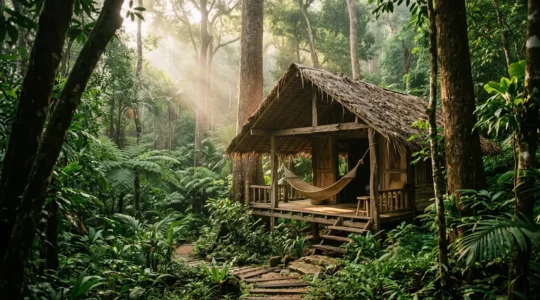
How to Prepare for a Stay in an Off-Grid Jungle Lodge?
Most guides focus on what to pack for a jungle trip, but true preparation goes deeper. The key to a transformative off-grid experience isn’t about bringing the right gear; it’s about intentionally recalibrating your internal operating system. This means adapting…
Lire la suite
How to Choose a Boutique Hotel in Santo Domingo’s Zona Colonial?
The secret to finding the perfect boutique hotel in the Zona Colonial isn’t just looking for history; it’s decoding its architectural DNA to match your travel style. Restored convents offer social, courtyard-focused atmospheres, while merchant houses provide more private, introspective…
Lire la suite
Is the « Club Level » Upgrade Worth the Extra $1000 per Week?
The true value of a luxury resort isn’t in the price you pay, but in understanding and manipulating the hidden systems that govern your stay. The ROI of a « Club Level » upgrade depends less on free alcohol and more on…
Lire la suite
Eco-Lodge vs All-Inclusive: Which One Fits Your Travel Personality?
Your ideal vacation choice isn’t about the place, but what your mind needs: predictable comfort or transformative connection. All-inclusive resorts masterfully deliver convenience and abundance, ideal for social relaxation and decompression. Eco-lodges offer authentic experiences and nature immersion, satisfying a…
Lire la suite
How to Build a Wellness Itinerary That Actually Reduces Stress
The secret to a truly restorative vacation isn’t adding more wellness activities; it’s strategically removing the hidden cognitive load that causes stress in the first place. Your brain processes decisions about relaxation the same way it processes work decisions, leading…
Lire la suite
How to Choose the Right Punta Cana Resort When They All Look the Same?
The perfect Punta Cana resort is chosen by analyzing its operational flaws and pricing traps, not its beachfront photos. The « all-inclusive » price is a starting point, with hundreds of dollars in hidden upsells for dining, activities, and transport being the…
Lire la suite
Where to Find Private Beach Access That Actually Lives Up to the Photos?
Securing genuine beach privacy is not about luck; it’s a matter of strategic vetting and understanding the subtle difference between ‘private access’ and true solitude. Villas and remote eco-lodges consistently outperform hotels for guaranteed isolation. The ‘when’ of your visit,…
Lire la suite