In summary:
- Genuine participation in Dominican culture is less about following rules and more about understanding unspoken social dynamics.
- Moving from a spectator to a participant involves learning to read “implicit invitations” in daily life, like at a corner store domino game.
- Contributing to the “shared energy” of a festival or celebration is key to being welcomed, rather than just observed.
- Everyday actions, like a respectful greeting or sharing a meal, are rituals of connection that build authentic bridges.
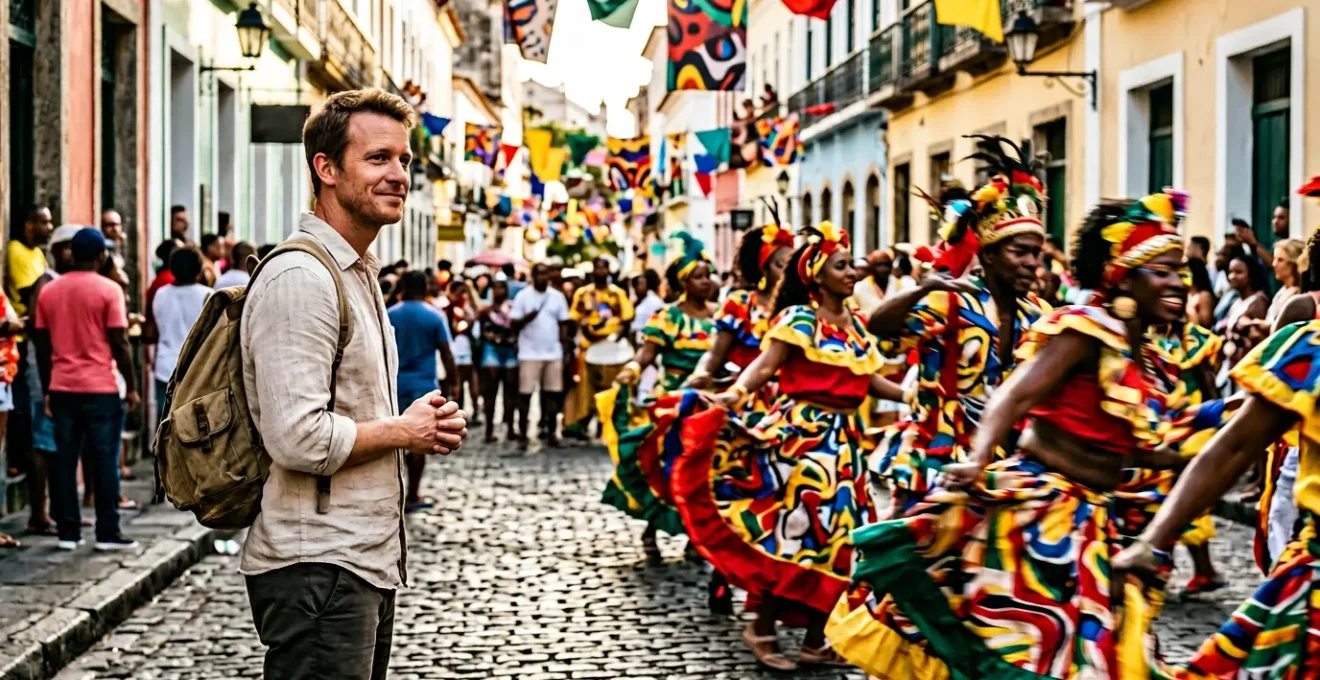
There’s a feeling every sensitive traveler knows: standing at the edge of a vibrant local scene, separated by an invisible velvet rope. You can see the joyous chaos of a street festival, hear the clatter of dominoes from a corner store, and feel the rhythm of bachata pulsing from an open doorway. You want to step in, to be part of it, but you’re held back by a crucial question: how do you participate without being an intruder? The fear of being the awkward, camera-toting tourist can be paralyzing.
Most travel guides offer generic advice: learn a few Spanish phrases, smile, be friendly. While well-intentioned, this barely scratches the surface. It treats culture like a museum exhibit with a list of “dos and don’ts.” This approach keeps you firmly on the outside, looking in. You might avoid offending anyone, but you won’t connect with anyone either. You’ll remain a spectator, collecting experiences instead of sharing in them.
But what if the real key wasn’t a checklist, but a change in perception? The secret to moving from observer to welcome guest lies in understanding the unspoken social currents that flow through Dominican life. It’s about learning to recognize the implicit invitations, contributing to the shared energy of a moment, and realizing that warmth and genuine interest are a form of cultural currency that opens doors no guidebook can unlock.
This guide is your bridge. We’ll move beyond simple etiquette to explore the deeper social fabric of the Dominican Republic. You will learn not just what to do, but how to see, listen, and feel your way into authentic experiences, transforming your journey from a passive tour into an active, respectful, and unforgettable participation.
Contents: How to Genuinely Engage with Dominican Culture
- Why Is the Higüey Pilgrimage the Most Important Event in January?
- The “Saludo” Rule: How to Greet Locals Respectfully in Rural Areas?
- How to Join a Game of Dominoes at a Local Corner Store?
- Faceless Dolls: What Is the Meaning Behind the Souvenir?
- When to Visit to Catch the Patron Saint Festivals (Fiestas Patronales)?
- How to Learn Authentic Bachata Steps Without Looking Like a Tourist?
- How to Attend the La Vega Carnival Without Getting Whipped by a Diablo Cojuelo?
- How to Experience Taino Traditions Through Food and Agriculture?
Why Is the Higüey Pilgrimage the Most Important Event in January?
On January 21st, something profound happens in the Dominican Republic. It’s not just a religious holiday; it’s a massive convergence of faith, culture, and collective identity. The annual pilgrimage to the Basílica Catedral Nuestra Señora de la Altagracia in Higüey is the spiritual heartbeat of the nation. To understand its importance is to understand the soul of the country. This event draws incredible crowds, with a study confirming that more than 800,000 devoted visitors participate each year, making it one of the most significant religious gatherings in the Caribbean.
The event is a spectacle of devotion. People travel for days, some on foot, to honor the Virgin of Altagracia, the spiritual protector of the Dominican people. But participating isn’t about being Catholic; it’s about respecting and contributing to the immense shared energy of the day. The atmosphere is thick with reverence, hope, and community. Observing quietly from the sidelines, dressing modestly, and allowing pilgrims their space is the most profound way to show respect. This isn’t a tourist attraction; it’s a living, breathing expression of national faith.
The Basílica’s status as a spiritual epicenter was cemented on the world stage, lending it an authority that resonates deeply with Dominicans.
Case Study: Pope John Paul II’s Historic Visit to Higüey Basilica
Pope John Paul II’s 1992 visit to the Basilica reinforced its status as a major pilgrimage center in the Caribbean. His mass at the site brought international attention and strengthened the Basilica’s connection to the global Catholic community, transforming it into a beacon of faith that continues to attract pilgrims worldwide. For Dominicans, this event validated the deep, personal connection they have with Altagracia, elevating a local devotion to a site of global spiritual significance.
Witnessing the Higüey pilgrimage is to see devotion on a grand scale. Your role as a respectful observer is a form of participation, acknowledging the profound cultural and spiritual weight of this extraordinary day.
The “Saludo” Rule: How to Greet Locals Respectfully in Rural Areas?
In the Dominican Republic, especially in rural areas, a greeting is more than just a word; it’s the first step in a ritual of connection. Entering a small shop or walking past a group of people sitting on their porch without offering a “Buenos días” or “Buenas tardes” is like walking into a friend’s house without saying hello. It creates an invisible wall. The “saludo” is your first and most important tool for moving from an invisible tourist to a recognized human presence.
The key is not just the words but the warmth behind them. A simple nod, a warm smile, and a clear greeting announce your peaceful and respectful intentions. It acknowledges the other person’s existence and invites a positive, if brief, interaction. In more formal situations, a handshake is appropriate, while with new friends, a light embrace or a single cheek kiss is common. The specific form is less important than the genuine intent, a sentiment echoed by local experts.
As a local cultural guide explains, this simple act is the foundation of Dominican hospitality:
Warmth and friendliness matter more than formality. Smiling and showing genuine interest in conversation help us connect quickly in any setting.
– Dominican Tree House Village Cultural Guide, Embracing Dominican Hospitality: Cultural Etiquette and Local Customs
This approach transforms a simple transaction into a human interaction. When you start conversations, it’s best to begin with light, neutral topics—the weather, a local baseball team, or how delicious the food is—before moving to more personal questions. Using the formal “Usted” with elders or in professional settings shows a deep level of respect that is always appreciated.
How to Join a Game of Dominoes at a Local Corner Store?
As evening falls in the Dominican Republic, a sacred ritual unfolds on plastic tables outside countless colmados (corner stores): the game of dominoes. The sharp clack of the tiles, the passionate arguments, and the triumphant shouts are the soundtrack of Dominican social life. For a traveler, this scene can be intimidating—a closed circle of friends. However, it’s often an open one, waiting for an implicit invitation to be recognized.
You don’t join a game by asking, “Can I play?” You join by becoming part of the periphery. The first step is to become a customer of the colmado. Buy a cold Presidente beer or a soda, find a nearby spot, and simply watch. Show genuine interest. Smile, nod at a good play, and absorb the rhythm of the game. This respectful observation is your entry fee. Players will notice your quiet appreciation. After a game finishes, a seat may open up. Eye contact might be made. A nod or a gesture towards the chair is your cue. This is the moment the spectator becomes a potential participant.
Once you’re at the table, however, you must understand the unwritten rules. Dominican dominoes are fast, loud, and strategic. It’s a team sport, and your partner (your ‘frente‘) will expect you to understand the flow without words. Banter and noise are part of the strategy, often used to distract opponents or cover subtle signals. The most important thing is to play your part with humility and good humor.
Your Guide to Dominican Dominoes Etiquette
- Observe, Don’t Advise: Never, ever offer unsolicited advice to a player. This is known as ‘no soprando‘ (not blowing/whispering) and is considered the ultimate sign of disrespect.
- Understand the Partnership: Good players have a ‘Frente,’ a favorite partner. They understand each other’s style and communicate non-verbally. As a newcomer, your job is to be a reliable, predictable partner.
- Embrace the Noise: The game is loud. The arguments are passionate but rarely personal. This energetic atmosphere is part of the experience and a strategic element of the game.
- Know the Stakes: While it may look casual, games are often played for small amounts of money or the next round of drinks. This is serious fun, so play your best.
- Play Fast and Follow the Local Style: The “Dominican style” of play is quick and intuitive. Don’t overthink. Follow the lead of the experienced players and learn as you go.
Playing a game of dominoes is less about winning and more about sharing a moment of community. If you play with respect and a smile, you’ll have earned more than just points; you’ll have earned a place at the table.
Faceless Dolls: What Is the Meaning Behind the Souvenir?
Walk into any souvenir shop in the Dominican Republic, and you’ll inevitably find them: ceramic figures of women in traditional dresses, their heads tilted, but with one striking feature missing—a face. These are the Muñecas Limé, or “faceless dolls,” and they are far more than a simple tourist trinket. Understanding their meaning is to grasp a fundamental concept of Dominican identity. They are not unfinished; their facelessness is their most important feature.
The dolls were first created by the artist Liliana Mera Limé in the 1980s. The absence of a face is a deliberate artistic choice meant to represent the Dominican people themselves. The island’s history is a rich and complex tapestry woven from three main threads: the indigenous Taíno, the Spanish colonists, and the enslaved Africans. No single face could ever capture this diverse heritage.
By having no face, the doll represents every Dominican woman. She is a universal symbol of the island’s blended culture. Her features are left to the imagination of the beholder, allowing her to reflect the mix of races and ethnicities that define the nation. She is a quiet but powerful statement that Dominican identity is not monolithic but a beautiful and inclusive fusion. When you buy a faceless doll, you are not just acquiring a souvenir; you are taking home a piece of social commentary and a celebration of the country’s multi-layered identity. It’s a reminder that the true face of the Dominican Republic is a mosaic of many.
When to Visit to Catch the Patron Saint Festivals (Fiestas Patronales)?
Beyond the well-known national celebrations like Carnival, the Dominican Republic’s cultural calendar is packed with hundreds of smaller, more intimate festivals known as fiestas patronales. Each town and village honors its patron saint with days of music, food, religious processions, and community gatherings. For a traveler seeking an authentic experience, stumbling upon one of these local celebrations is like finding cultural gold. These are not events staged for tourists; they are the vibrant, beating heart of community life.
While major religious events are well-documented and draw huge crowds, the real magic often lies in the smaller, un-Googleable festivities. Finding them requires an on-the-ground approach that prioritizes human connection over online research. To move from spectator to participant, you must tap into the local information network:
- Ask bartenders, taxi drivers, or shopkeepers about upcoming celebrations in their neighborhood.
- Look for handmade posters and banners in town squares upon arrival.
- Engage with local families; a respectful and curious visitor is often invited to join private toasts or family gatherings associated with the fiesta.
- Visit smaller towns during the off-peak season, when celebrations feel more like a large family reunion than a public spectacle.
Of course, knowing the major festival dates provides a useful framework for planning your trip. A recent comparative analysis of Dominican festivals outlines the key events that anchor the cultural year.
| Festival | Date | Key Features | Visitor Tips |
|---|---|---|---|
| Fiesta de la Altagracia | January 21 | Pilgrimages, church services, festive gatherings | Book accommodations early, expect massive crowds |
| Semana Santa | March/April (varies) | Religious processions, reenactments, beach gatherings | Mix of solemn ceremonies and vacation atmosphere |
| Carnival | Every Sunday in February | Parades, Diablo Cojuelo costumes, street celebrations | Each region has unique traditions and characters |
Whether you aim for a massive national event or a small-town fiesta patronal, the rule is the same: participate with joyful respect. Buy from local vendors, dance to the music (even if you don’t know the steps), and contribute your positive energy to the celebration.
How to Learn Authentic Bachata Steps Without Looking Like a Tourist?
Bachata is more than a dance in the Dominican Republic; it’s a conversation. It’s a national passion born from the countryside, telling stories of love, heartbreak, and daily life. The “tourist” version often seen in international dance studios—with dramatic dips and flashy turns—is very different from the authentic, grounded style you’ll find on the island. To dance bachata without looking like an outsider is to learn its language, which is spoken through the hips and feet, not just the arms.
Authentic Dominican bachata is all about connection and feeling. It’s a close-partner dance characterized by a simple eight-step structure (side-to-side or forward-and-back) with a signature tap and subtle hip pop on the fourth beat. As experts note, “Hallmarks of Bachata on the island are a focus on using a variety of basic steps to create intrigue and to use grounded body movement to create the feeling of the dance.” Forget complex choreography; the magic lies in the footplay (jugueteo de pies) and the fluid, sensual hip movement that originates from a relaxed posture and bent knees.
The best way to learn is by watching and doing. Go to a local car wash (a popular spot for dancing), a colmado with music, or a classic dance hall. Notice how couples communicate with subtle shifts in weight and pressure. The leader guides with their body, not by pulling the follower’s arms. The dance is an integral part of nearly all traditional celebrations. According to a report by UNESCO on the music and dance of Dominican Bachata, while the dance is often learned spontaneously from a young age, there are also over a hundred academies and schools on the island dedicated to its transmission. Taking a class from a local instructor can provide a fantastic foundation, but the real learning happens on the social dance floor.
Your goal isn’t to be perfect; it’s to connect with the music and your partner. Keep the steps simple, relax your body, and let your hips follow the rhythm. A smile and a willingness to try are far more important than flawless technique.
Key Takeaways
- True cultural participation is about mindset, not just actions. Shift from a spectator to a respectful participant.
- Learn to read “implicit invitations” in social settings like domino games to find opportunities for genuine connection.
- Embrace the “shared energy” of festivals and celebrations; your positive presence is a form of participation.
How to Attend the La Vega Carnival Without Getting Whipped by a Diablo Cojuelo?
Every Sunday in February, the streets of La Vega explode in a riot of color, music, and controlled chaos. This is the most famous Carnival in the Dominican Republic, and its central figures are the Diablos Cojuelos (Limping Devils). Adorned in elaborate, terrifying masks and armed with inflated animal bladders (vejigas), their job is to roam the streets, playfully “whipping” spectators on their backsides. For the unprepared visitor, this can be alarming. But understanding the ritual is the key to enjoying one of the most exhilarating cultural experiences on the island.
The “whipping,” or vejigazo, is not an act of aggression. It is a symbolic form of purification, a playful tradition where the devils cleanse the crowd of their sins to make way for the coming of Lent. Fear, anticipation, and laughter are all part of the shared energy of the event. The key is to understand that you have a choice in your level of participation. The streets are the “wild zone,” while ticketed areas or elevated stands offer a “safe zone” for observation.
If you want to avoid the vejigazo, the rules are simple. If you want to engage in the ritual, the signals are just as clear. Here’s how to navigate the beautiful chaos:
- To Avoid a Whipping: Stay on the sidewalks or in designated viewing areas. The devils primarily roam the main parade route. If a devil approaches, avoiding eye contact and moving away is a clear signal you do not wish to participate.
- To Be a Willing Participant: Venture into the street! Make eye contact with the devils, cheer them on, and dance to the music. Your enthusiastic presence is an open invitation. Getting a vejigazo is a badge of honor, a sign that you were truly in the thick of it.
Remember that the entire spectacle is a performance. The devils are not malicious; they are artists and community members upholding a centuries-old tradition. By choosing your level of engagement, you move from being a nervous spectator to an active participant in the collective thrill of the La Vega Carnival.
How to Experience Taino Traditions Through Food and Agriculture?
Long before Columbus arrived, the island of Hispaniola was known as Ayiti and was home to the Taíno people. While the tragic history of colonization led to their genocide, the spirit and legacy of the Taíno live on, most powerfully in the soil and on the plates of the Dominican Republic. To experience Taíno traditions today is to connect with the agricultural and culinary roots that have profoundly shaped modern Dominican food culture. It transforms a simple meal into a history lesson.
The Taíno were master agriculturalists, and their methods have endured. Look for staples like yuca (cassava), batata (sweet potato), corn, and peanuts. The most direct link to this heritage is casabe, a dry, flat bread made from yuca. It was a cornerstone of the Taíno diet and is still eaten today. Trying casabe is like tasting history itself. Many modern Dominican dishes are a fusion, combining these indigenous ingredients with Spanish and African flavors. The famous sancocho stew, for example, is a melting pot in a bowl, often containing yuca and other root vegetables first cultivated by the Taíno.
Participating in this tradition is as simple as eating with intention. When you enjoy a plate of mangú (mashed plantains) for breakfast, recognize the deep African and Taíno roots of using plantains and other tubers as a dietary staple. When you see a conuco, a small mound of earth used for farming, you are seeing a Taino agricultural technique that is still in use. By showing interest, asking questions about ingredients, and choosing dishes that feature these historical foods, you are honoring a legacy that refused to disappear. You are engaging in a form of cultural and historical preservation with every delicious bite.
This culinary journey offers a profound connection to the island’s deepest roots. It reminds us that even in the face of immense tragedy, culture finds a way to survive, adapt, and enrich the future.
Now that you have the tools to engage respectfully with these traditions, you can approach your journey not as a checklist to complete, but as a series of opportunities for genuine human connection. The most memorable travel moments are rarely planned; they arise from a spirit of openness and curiosity. By embracing this mindset, you transform yourself from a visitor into a welcome guest, ready to share in the vibrant life of the Dominican Republic.
Frequently Asked Questions About Dominican Food Culture
What is a traditional Dominican breakfast?
Dominicans ‘go hard’ at breakfast with Mangu (mashed plantains) topped with fried onions, Queso Blanco (fried cheese squares), Dominican Salami, and avocado slices.
What is ‘La Bandera’ and why is it important?
La Bandera (‘The Flag’) is the traditional lunch of chicken, rice, and beans. At noon, the entire country rushes home for this meal, with businesses closing from 12:00pm-2:00pm for lunch and naps.
How has indigenous cuisine survived colonization?
While Taino people faced genocide, their agricultural techniques like the ‘conuco’ mound system and ingredients like casabe continue to influence modern Dominican farming and cooking.