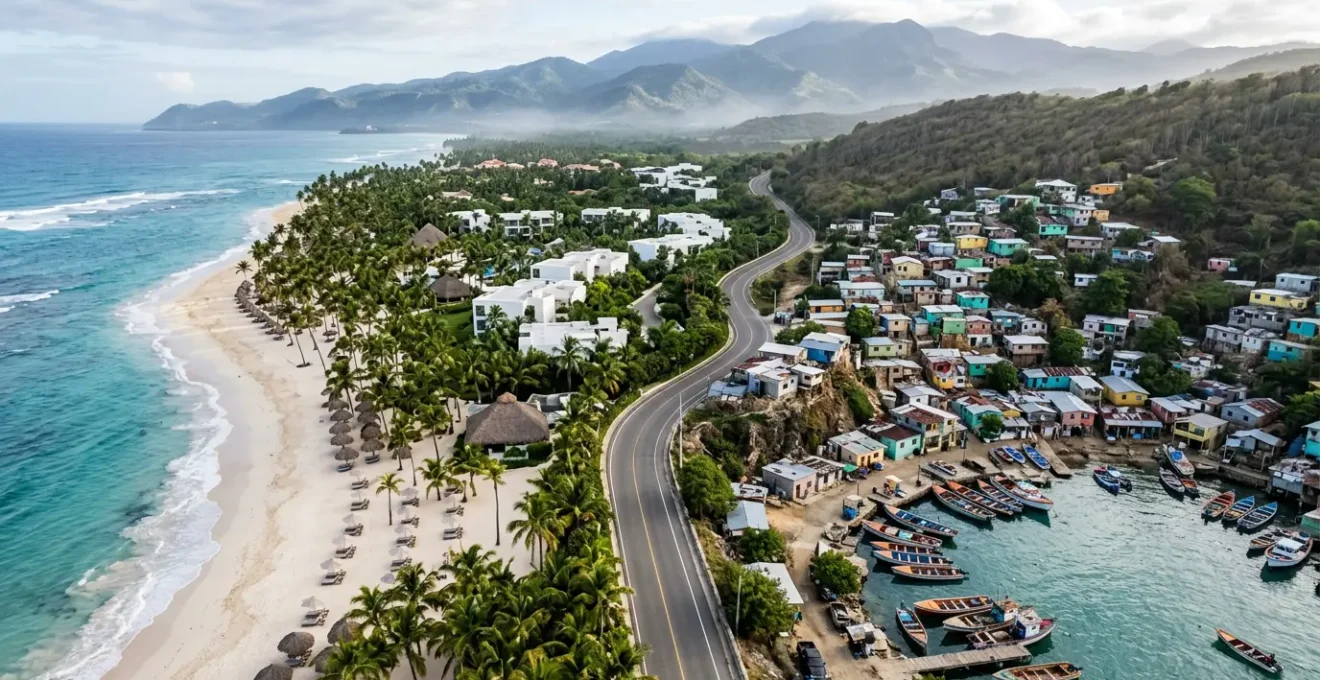
The Dominican Republic isn’t just another Caribbean beach stop; it’s a complex, continent-in-miniature with a distinct cultural ‘operating system’ that rewards the curious traveler.
- It offers superior value density, where your dollar buys not just a room, but access to a wider range of authentic experiences.
- Its vibrant Latin social fabric—rooted in music, community, and history—creates a dynamic atmosphere fundamentally different from the Anglophone Caribbean.
- Unmatched geographic diversity allows for road trips that traverse mountains, deserts, and colonial cities, all on one island.
Recommendation: For travelers seeking more than a resort bubble, the DR offers a deeper, more dynamic experience that feels like a new discovery.
You’ve done Jamaica, Barbados, maybe even St. Lucia. You know the rhythm of the English-speaking Caribbean, the familiar cadence of reggae, the taste of jerk chicken, and the comfort of a shared language. So, you look at the map and wonder, “What about the Dominican Republic? Is it just a larger, Spanish-speaking version of the same tropical formula?” Many frequent Caribbean travelers face this question, seeing another island defined by its all-inclusive resorts and pristine beaches.
Common wisdom points to these attributes, and while the DR certainly delivers world-class beaches, this surface-level view misses the point entirely. The true Dominican experience is not an iteration of its neighbors; it’s a completely different travel ‘operating system.’ This is a nation where a rich colonial history, a vibrant and immersive Latin social pulse, and a staggering geographic diversity—from alpine peaks to desert plains—converge. It offers a depth and variety that most other islands simply cannot match, moving far beyond the confines of a tourist-centric ‘island time’ mindset.
This guide is designed for the seasoned traveler. We will decode the Dominican ‘operating system,’ moving beyond the platitudes to explore why its value proposition is about more than just price, how its culture creates a unique social energy, and how its landscape invites exploration on a scale unseen elsewhere in the region. Prepare to see the Dominican Republic not as just another island, but as a destination of unparalleled contrasts and depth.
To help you navigate these differences, this article breaks down the key aspects that define the Dominican experience, from budget and culture to safety and logistics.
Summary: Understanding the Dominican Difference
- DR vs Jamaica vs Mexico: Where Does Your Dollar Go Further?
- Why the “Latin” Vibe Sets DR Apart from the English Caribbean?
- How to Use Santo Domingo as a Hub for Caribbean Hopping?
- The Safety Myth: Is DR More Dangerous Than Its Neighbors?
- When Is the Risk of Hurricanes Lowest in the Central Caribbean?
- How to Choose the Right Punta Cana Resort When They All Look the Same?
- How to Navigate Dominican City Centers Safely as a Solo Traveler?
- How to Plan a Road Trip Across 3 Iconic Provinces Without Getting Stranded?
DR vs Jamaica vs Mexico: Where Does Your Dollar Go Further?
For the experienced traveler, “value” isn’t just about finding the cheapest room; it’s about what your money buys in terms of experience, quality, and access to the local culture. While many Caribbean destinations compete on price, the Dominican Republic consistently offers a superior value density. The average cost of a vacation is around $172 per person per day, a figure that is highly competitive. But the real story lies in the range and quality of options available at every price point, especially when compared to its neighbors.
A recent analysis showed that despite a massive tourism surge, with the country welcoming 8.3 million visitors through September 2024, pricing has remained remarkably stable. This is where the DR’s scale and developed infrastructure give it an edge. Unlike smaller islands where high demand quickly inflates prices, the DR’s vast inventory of accommodations helps absorb demand, keeping it affordable without sacrificing quality.
This table illustrates how the Dominican Republic’s resort pricing structure compares favorably to other popular destinations, often providing access to mid-range and luxury experiences at what would be considered budget prices elsewhere.
| Destination | Budget Resorts | Mid-Range Resorts | Luxury Resorts |
|---|---|---|---|
| Dominican Republic | $100-$200/night | $200-$300/night | $250-$800/night |
| Jamaica | $150-$250/night | $250-$400/night | $400-$1000/night |
| Mexico (Cancun) | $120-$220/night | $220-$350/night | $350-$900/night |
This financial accessibility means your travel budget can stretch further, allowing for more excursions, higher-end dining, or simply a longer stay. The key takeaway is that in the DR, affordability doesn’t mean compromise; it means opportunity.
Why the “Latin” Vibe Sets DR Apart from the English Caribbean?
The most profound difference between the Dominican Republic and its Anglophone neighbors is its cultural ‘operating system.’ This isn’t just about language; it’s a vibrant, passionate, and deeply social Latin rhythm that permeates every aspect of daily life. While islands like Barbados and Jamaica have rich cultures rooted in British colonial history and Afro-Caribbean traditions, the DR’s Spanish colonial heritage and Taino roots create a completely different energy. This is a country where music, dance, and community are not just for tourists—they are the lifeblood of the nation.
This social fabric is most visible in the institution of the colmado. Far more than a simple corner store, the colmado is the neighborhood’s living room, where locals gather in the evenings to play dominoes, share stories, and dance to the ever-present sounds of merengue and bachata. This organic, community-driven social life stands in stark contrast to the more tourist-focused pub culture found in many English-speaking islands.
As travel experts at Lonely Planet note, this cultural depth is matched by its physical environment, calling it “one of the Caribbean’s most geographically diverse countries, with stunning mountain scenery, desert scrublands, evocative architecture and beaches galore.” This combination of cultural authenticity and natural variety creates an immersive experience that feels a world away from a standard beach vacation. To truly connect with this vibe, a traveler should:
- Learn a few basic steps of merengue or bachata, dances that originated in the DR and are a core part of the social scene.
- Try a traditional Dominican breakfast of mangú (mashed plantains), a culinary staple with deep local roots.
- Embrace “Dominican time,” a more fluid and relaxed approach to punctuality that reflects the laid-back Latin culture.
- Join a passionate neighborhood dominoes game, a national pastime played with fiery enthusiasm.
How to Use Santo Domingo as a Hub for Caribbean Hopping?
For the strategic traveler, a destination’s value is also measured by its connectivity. While many Caribbean islands are relatively isolated, the Dominican Republic—and particularly its capital, Santo Domingo—is rapidly evolving into a powerful hub for multi-destination trips. Its central location, large population, and growing economy have fueled significant investment in air travel, making it easier and more affordable to explore the wider Caribbean region.
A pivotal development is the new US Open Skies agreement signed in December 2024, which removes all limits on air routes between the United States and the Dominican Republic. This policy is set to drastically increase the number of flights and carriers serving the island, driving down prices and creating a competitive market for regional travel. This makes Santo Domingo’s Las Américas International Airport (SDQ) an ideal starting or ending point for an extended Caribbean tour.
From the DR, you have direct, non-stop access to key neighboring islands that are often difficult to reach from other locations. Short, affordable flights connect you to:
- San Juan, Puerto Rico (SJU): A quick hop away, allowing you to easily combine the Spanish Caribbean’s two largest islands.
- Curaçao (CUR): Explore the Dutch Caribbean with its unique architecture and culture.
- Port-au-Prince, Haiti (PAP): Discover the other side of Hispaniola, offering a profound and distinct cultural experience.
This strategic position allows a traveler to design an itinerary that might start in the historic streets of Santo Domingo, continue to the vibrant reefs of Curaçao, and conclude in the rainforests of Puerto Rico—all without the lengthy layovers or expensive multi-leg flights often required when hopping between smaller islands.
The Safety Myth: Is DR More Dangerous Than Its Neighbors?
For any seasoned traveler, safety is a practical consideration, not a source of fear. The Dominican Republic, due to its size and media reports, sometimes faces a reputation that doesn’t align with the on-the-ground reality for most visitors. While no country is without crime, it’s crucial to contextualize the risks. The perception of danger is often overblown when compared to other popular destinations in the region.
The Dominican government has made significant investments in tourist security. A specialized police force, POLITUR (Polícia de Turismo), has a dedicated presence in all major tourism zones, from the beaches of Punta Cana to the historic streets of Santo Domingo. Their sole focus is the safety and assistance of visitors, providing a visible and reassuring layer of security that is not as formalized in many other Caribbean nations. The fact that there are over 14,600 American and Canadian expats living safely in the country is a testament to the day-to-day reality.
The key is applying the same smart travel practices you would anywhere else: be aware of your surroundings, avoid displaying overt signs of wealth, and stick to well-trafficked areas, especially at night. As the publication Island Life Caribbean puts it, the narrative requires nuance.
The Dominican Republic isn’t without its problems, but it is relatively a safe place to travel and most visits to the country are trouble-free. The island is very friendly and welcoming to tourists, and it is the most visited island in the Caribbean.
– Island Life Caribbean, Dominican Republic Visitors Guide 2026
Ultimately, the “safety myth” is just that—a myth born from a lack of context. For the prepared and aware traveler, the DR is no more or less dangerous than other major tourism hubs in the Caribbean or Latin America.
When Is the Risk of Hurricanes Lowest in the Central Caribbean?
Timing is everything in the Caribbean, and for the savvy traveler, navigating hurricane season is a calculated science. The official Atlantic hurricane season runs from June 1st to November 30th, but the risk is not uniform across this period or the region. For the central Caribbean, including the Dominican Republic, the peak risk historically falls between mid-August and late October. Therefore, planning around this window is key to a worry-free trip.
The ideal time to visit the Dominican Republic for perfect weather is during the dry season. Analysis from travel experts at Simply Dominican confirms that the period from November through April offers ideal conditions, with comfortable temperatures ranging from 70-82°F (21-28°C) and minimal rainfall or hurricane risk. This is the country’s high season, offering glorious sunshine and calm seas, perfect for both beach relaxation and inland exploration.
However, the experienced traveler knows that the “shoulder seasons” often provide the best balance of good weather and great value. Traveling in May, early June, or November can yield significant savings on flights and accommodations while still carrying a relatively low risk of major storms. Even during the low season (September-October), travel is possible and can be extremely affordable, but it requires a different strategy. If you choose to travel during this time, keep these points in mind:
- Expect some rain: Low-season weather often involves sunny mornings with afternoon showers that typically clear up quickly.
- Book flexible travel: Opt for flights and hotels with good cancellation policies and always consider purchasing travel insurance.
- Monitor the weather: Keep a close eye on weather forecasts in the two weeks leading up to your departure for any developing systems.
- Choose modern resorts: Newer resorts are built to higher hurricane standards and have well-rehearsed preparedness protocols.
By understanding these weather patterns, you can strategically plan your visit to either guarantee sunshine or take advantage of lower prices with a calculated, minimal risk.
How to Choose the Right Punta Cana Resort When They All Look the Same?
To the uninitiated, the seemingly endless stretch of all-inclusive resorts in Punta Cana can feel like a monolithic wall of uniformity. They all promise sun, sand, and unlimited buffets. But for the discerning traveler, the key is to look beyond the marketing and understand the subtle but crucial differences in audience, ambiance, and offerings. Cracking the code to Punta Cana means identifying which “type” of resort aligns with your specific travel style.
The first step is to segment the market. Not all all-inclusive resorts are created equal. They generally fall into distinct categories, each catering to a different kind of guest. A family with young children will have a miserable time at a high-energy, adults-only party resort, just as a couple seeking a quiet, romantic getaway will feel out of place at a resort overrun with kids’ clubs and water parks. Understanding this segmentation is the most critical part of the decision-making process.
This table breaks down the main resort archetypes in Punta Cana, helping you match your travel needs to the right property.
| Resort Type | Price Range | Best For | Key Features |
|---|---|---|---|
| Budget All-Inclusive | $100-$200/night | Value Seekers | Basic amenities, buffet dining, beach access |
| Mid-Range Resort | $200-$400/night | Families & Couples | Multiple restaurants, pools, entertainment |
| Adults-Only Luxury | $400-$800/night | Romantic Getaways | Spa, gourmet dining, butler service |
| Family Resort Complex | $250-$500/night | Families with Kids | Water parks, kids clubs, family suites |
Case Study: Dominican-Owned Luxury vs. International Chains
To further refine your choice, consider the resort’s ownership and character. A property like Casa de Campo Resort represents the pinnacle of Dominican-owned luxury, offering sprawling villa accommodations, private golf carts for transportation, and an exclusive beach club. This provides a more authentic, expansive, and self-contained experience. In contrast, an international chain property like CHIC Punta Cana offers a standardized, high-energy, adults-only 5-star experience with features like butler service and themed parties. Meanwhile, resorts in quieter areas like Uvero Alto or budget-friendly options in Cortecito village provide more local character and a break from the mega-resort formula.
How to Navigate Dominican City Centers Safely as a Solo Traveler?
Exploring the vibrant, chaotic, and historic city centers of the Dominican Republic—like Santo Domingo’s Colonial Zone—is one of the most rewarding experiences the country offers. For a solo traveler, it presents a unique opportunity for immersion, but it also requires a smart and prepared approach to navigation and safety. The key is not to be fearful, but to be proactive, blending in and moving with confidence.
While public transport options like shared taxis (guaguas) are an authentic local experience, they can be overwhelming for a first-timer. As experts from Simply Dominican advise, they can be “overcrowded and sometimes unreliable.” For solo travelers, especially when first arriving, a better strategy is to rely on modern conveniences that offer transparency and security.
For safer and more comfortable travel, consider using reputable taxi companies or rideshare services.
– Simply Dominican, Ultimate Guide to Dominican Republic Travel
Using rideshare apps like Uber, which operates in major cities like Santo Domingo, eliminates the need to negotiate fares and provides a digital trail for your journey. Beyond transportation, your personal safety strategy should focus on minimizing your profile as a target and maximizing your awareness. This means dressing modestly to blend in, avoiding flashy jewelry, and keeping your valuables secure and out of sight.
Your Action Plan: Solo Traveler Safety in Dominican Cities
- Master Your Maps: Download offline Google Maps for your area before you head out. This allows you to navigate confidently without relying on a spotty data connection and avoids broadcasting that you are lost.
- Use Smart Transport: Stick to rideshare apps like Uber where available for transparent and safe transport. If taking a taxi, have your hotel call a reputable company for you.
- Learn Key Phrases: Master a few essential Spanish phrases. “Cuanto cuesta?” (How much does it cost?), “Donde esta el baño?” (Where is the bathroom?), and “La cuenta, por favor” (The bill, please) go a long way.
- Secure Your Documents: Carry a copy of your passport and leave the original in your hotel safe. Keep a small amount of cash easily accessible and the rest stored securely elsewhere.
- Stay Aware: Avoid walking alone at night in unlit or unfamiliar areas. Stick to the well-patrolled and bustling streets of historic centers like the Colonial Zone in Santo Domingo.
Key Takeaways
- Go Beyond the Beach: The DR’s true appeal lies in its “Geographic Diversity Triangle”—the ability to experience colonial history, mountain adventures, and coastal paradise in a single trip.
- Value is More Than Price: The Dominican Republic offers superior “value density,” where affordability provides access to a deeper and more varied range of experiences compared to its neighbors.
- Culture is the Core Difference: The immersive, social, and vibrant Latin rhythm creates a fundamentally different atmosphere from the more reserved, tourist-centric vibe of many Anglophone islands.
How to Plan a Road Trip Across 3 Iconic Provinces Without Getting Stranded?
The ultimate way to shatter the “all-inclusive” stereotype and experience the Dominican Republic’s true character is to hit the road. This is a country built for road-tripping, with a diverse landscape that can take you from the bustling capital to cool mountain towns and remote beaches in a matter of hours. A well-planned road trip allows you to connect with the island’s “Geographic Diversity Triangle”—the trifecta of history, nature, and coast.
However, a successful road trip requires more than just a rental car and a map; it demands preparation. The infrastructure is generally good on major highways, but rural roads can be challenging, and services like gas stations can be sparse in remote areas. Planning your route, fuel stops, and accommodations in advance is not just recommended; it’s essential to avoid getting stranded.
Case Study: The DR Diversity Triangle Route
A proven two-week itinerary showcases the island’s incredible variety. Start by picking up a rental car at Las Américas International Airport (SDQ) near Santo Domingo to explore the colonial capital’s rich history. From there, drive north into the mountains to Jarabacoa, the “Dominican Alps,” for hiking and waterfalls. Finally, head east to the Samaná Peninsula for some of the country’s most stunning and undeveloped beaches. This route provides a perfect cross-section of the island’s offerings. A crucial first step for any arrival is to pre-fill the mandatory (and free) government e-ticket for immigration.
To ensure your journey is smooth, your preparation checklist should include more than just packing bags. It’s about logistical and digital readiness.
- Rental Strategy: Rent your car from a major airport like Santo Domingo (SDQ) or Santiago (STI). You’ll find better rates, more selection, and more reputable agencies than in resort towns.
- Tolls and Currency: Familiarize yourself with the ‘peaje’ (toll) system on major highways and keep small bills in Dominican Pesos (DOP) ready.
- Digital Navigation: Mobile coverage is unreliable in mountainous or rural regions. Download offline maps of your entire route on an app like Google Maps before you start.
- Fuel Planning: Gas stations can be few and far between once you leave the main arteries. Plan your fuel stops and always fill up when you have the chance.
- Local SIM Card: For the best connectivity in rural areas, consider purchasing a local SIM card from providers like Claro or Altice.
Your next great Caribbean adventure isn’t about finding a new beach, but a new experience. Start planning your Dominican road trip today and discover the island that lies just beyond the resort gates.