A truly ethical whale watching tour is judged not by its brochure, but by its deep respect for the entire marine ecosystem.
- Your choice goes beyond just keeping a safe distance; it involves understanding the operator’s impact on the whales’ acoustic environment and breeding grounds.
- Recognizing the connection between healthy mangroves, clear water, and the whales’ presence empowers you to support true conservation efforts.
Recommendation: Before booking, ask operators about their specific protocols for protecting mothers with calves and how they adjust vessel speed in the presence of whales—their answers reveal their true commitment.
The sight of a forty-ton humpback whale breaching, its colossal body momentarily suspended between sea and sky, is an experience that changes you. For wildlife lovers, the desire to witness this spectacle is profound. Yet, this desire is coupled with a deep-seated concern: how can we be sure our presence isn’t harming these magnificent creatures? The common advice often includes checking for certifications or choosing tours with a naturalist, which are valid starting points. But in a world of savvy marketing, these can sometimes be superficial reassurances.
The truth is, a genuinely ethical tour requires a deeper understanding—an “observational literacy” that allows you to see beyond the surface. The real measure of an operator’s commitment isn’t just in the rules they claim to follow, but in their palpable respect for the entire marine ecosystem. This guide moves beyond the standard checklist. It will equip you to understand the intricate connections between the whales, their habitat in places like Samaná Bay, and the subtle behavioral cues that separate a tour that merely entertains from one that truly conserves.
This article will guide you through the critical elements of choosing a responsible tour. We’ll explore the ecological reasons that make a habitat like Samaná Bay so vital for whales, how to interpret tour operator behavior in different conditions, and how your choice as a conscious traveler contributes to a sustainable conservation-driven economy.
Summary: A Guide to Choosing a Genuinely Responsible Whale Watching Experience
- Why Do Humpback Whales Choose Samaná Bay Every Year?
- Early Season vs Late Season: When Are Calves Most Active?
- How to Handle the Choppy Bay Waters During a Small Boat Tour?
- Catamaran or Speedboat: Which Vessel Is Better for Whale Photography?
- The 3 Red Flags of an Unregulated Whale Watching Boat
- Where to Find Crystal Clear Water Safe for Children and Beginners?
- How to Plan a Week in Samaná for Authentic Connection With Nature?
- How Do the Mangroves Protect the Coral Reefs and Tourism Economy?
Why Do Humpback Whales Choose Samaná Bay Every Year?
The annual migration of North Atlantic humpback whales is one of the planet’s great natural wonders, and Samaná Bay in the Dominican Republic is its epicenter. This isn’t a random vacation spot for them; it’s a critical, ancestral breeding and calving ground. The bay’s unique geography—warm, calm, and shallow waters protected from the open ocean—creates the perfect nursery. Here, pregnant females can give birth in relative safety, and newborn calves can build strength before undertaking the long journey back to their northern feeding grounds.
The significance of this area cannot be overstated. It is a vital sanctuary where, according to the International Whaling Commission, at least 252 individual humpback whales have been identified, returning each year to engage in the essential life-cycle behaviors of mating, birthing, and nursing. For the whales, this is not a performance; it is a fight for survival and the continuation of their species. The spectacular breaches and tail slaps are often part of complex mating rituals, while quieter moments signal a mother nursing her young.
Understanding this context is the first step in ethical observation. We are not visitors in a marine amusement park; we are guests in a sacred nursery. The presence of over 40,000 tourists each season underscores our collective responsibility. An ethical operator knows they are managing access to a sensitive, vital habitat, and their every action reflects this profound respect for the bay’s true purpose.
Early Season vs Late Season: When Are Calves Most Active?
Timing your whale watching trip is about more than just maximizing sightings; it’s about aligning your expectations with the whales’ natural behavioral calendar. The experience in early season (January) differs significantly from late season (March), particularly concerning the most vulnerable members of the population: the newborn calves. While whale activity is high throughout the season, the type of activity changes, and with it, our responsibility as observers.
Peak Season (February) is often characterized by high energy. This is the height of the mating season, where you are most likely to witness the spectacular competitive displays from males: powerful breaches, pectoral fin slapping, and intense chases. While thrilling, it’s a time when responsible operators must be extra vigilant not to interfere with these crucial courtship rituals. In contrast, Late Season (March) is the prime time for observing mothers with their newborn calves. The energy is quieter, more intimate. You may witness a calf learning to breach, or simply resting on its mother’s back. These are incredibly tender moments, but they come with a heightened need for caution.
This is when a tour’s ethics are truly tested. Mothers and calves spend a significant amount of time resting at the surface, a critical period for nursing and energy conservation. Research shows that intrusive boat noise has a direct, negative impact. For instance, controlled experiments reveal that louder boat noise can lead to a 30% decrease in mother whale surface resting time. This disruption forces the pair to expend precious energy, potentially compromising the calf’s health and survival. A truly ethical operator understands this science and will adopt stricter protocols during the late season, such as increased observation distances, shutting down engines, and spending less time with these vulnerable pairs.
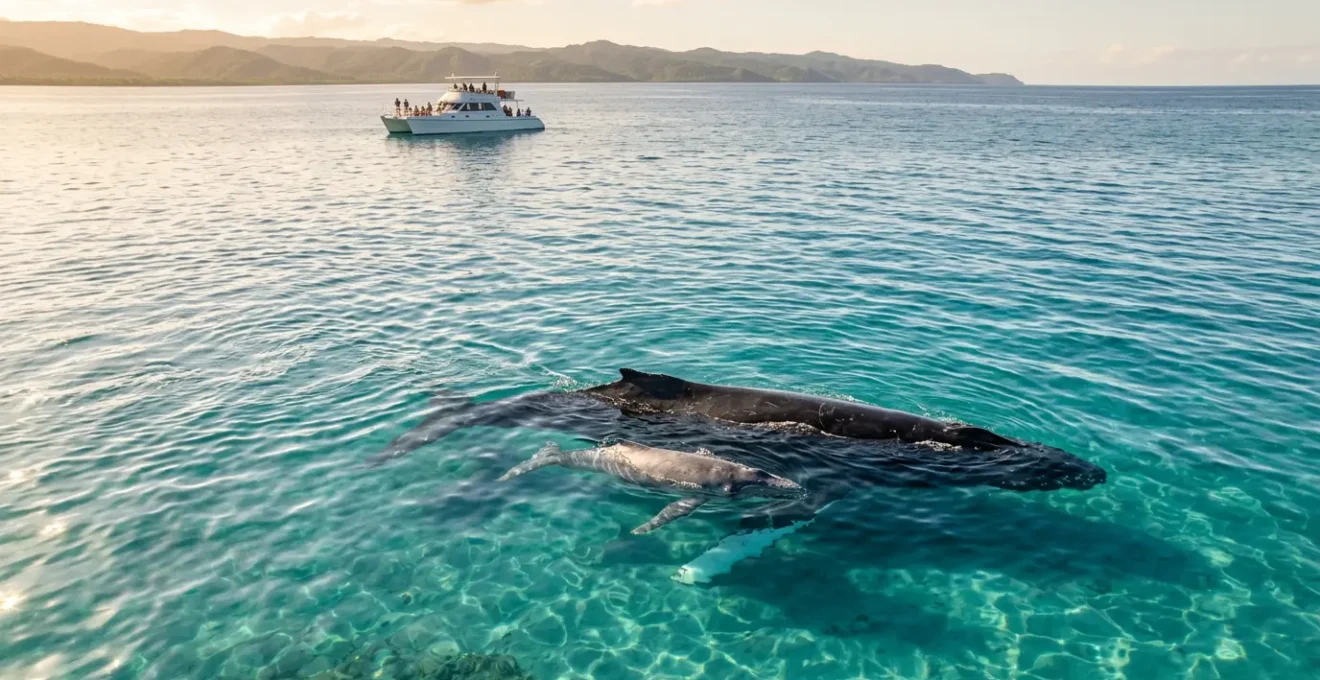
Observing a mother and calf is a privilege that demands our utmost respect for their need for peace. The image below captures the profound intimacy and vulnerability of this bond.
This visual is a powerful reminder of what is at stake. The calf’s survival depends entirely on the energy it receives from its mother—energy that is depleted every time they are disturbed. Choosing an operator who prioritizes the well-being of these pairs over a “closer look” is the most fundamental act of ethical whale watching.
How to Handle the Choppy Bay Waters During a Small Boat Tour?
The conditions on the water can dramatically shape a whale watching experience, not just for passenger comfort, but for the whales’ safety. Samaná Bay can be choppy, and how an operator prepares for and navigates these conditions is a critical indicator of their professionalism and ethical standards. It’s an issue that goes far beyond simply avoiding seasickness; it’s directly linked to the pressure placed on both the captain and the animals.
When passengers are uncomfortable or ill, the dynamic of the tour changes. As wildlife tourism experts point out, a seasick tourist’s focus shifts from respectful observation to personal misery. This can create an implicit pressure on the crew to “make the trip worth it” by taking risks they otherwise wouldn’t, such as approaching whales too quickly or getting too close, thereby violating regulations and stressing the animals. A responsible operator mitigates this from the start with transparent communication and clear weather policies.
This is where your pre-trip diligence becomes a tool for conservation. Before booking, you have the power to vet operators by asking pointed questions about their safety and weather protocols. A captain who prioritizes safety—for both passengers and whales—will have clear, confident answers. This proactive approach helps you select an operator whose primary concern is a safe, respectful encounter, not just completing a trip at any cost.
Your Pre-Tour Vetting Checklist: Questions on Weather Policy
- Vessel Safety: What is your wind and wave height threshold for tour cancellation, and is this decision made for passenger comfort or regulatory requirements?
- Maneuvering Protocols: How does your vessel maneuvering protocol change in rough seas to prioritize whale safety and predictability over getting a closer look?
- Cancellation Policy: Do you have a clear refund or rescheduling policy for weather-related cancellations, removing any financial pressure to go out in questionable conditions?
- Passenger Comfort: What specific stability features does your boat have (e.g., catamaran design, stabilizers) to ensure passenger comfort and reduce the risk of seasickness?
- Whale Guarantee: Does your company offer a “whale sighting guarantee” or refund if no whales are seen? (This is a red flag, as it can pressure captains to harass wildlife).
An operator’s response to these questions provides a clear window into their philosophy. A company that is proud of its safety standards and ethical framework will welcome your inquiry. One that is evasive or dismissive is likely prioritizing profit over the well-being of everyone involved, including the whales.
Catamaran or Speedboat: Which Vessel Is Better for Whale Photography?
The choice between a nimble speedboat (a “yola”) and a stable catamaran seems like a simple matter of preference for speed versus comfort. However, for a conscious observer, the decision runs much deeper, touching on the critical issue of our acoustic impact on the marine environment. When it comes to whale photography, the “best” vessel isn’t the one that gets you closest the fastest, but the one that allows for a stable, respectful, and quiet encounter.
Speedboats offer the advantage of covering more water quickly, which can seem appealing in the search for whales. However, their design often involves faster, noisier engines and a less stable platform, especially in choppy water. This can make photography difficult and, more importantly, it can be highly disruptive to the whales. Catamarans, by contrast, offer a wider, more stable base, which is a significant advantage for photographers trying to hold a long lens steady. Their design often allows for quieter engines and a more predictable, slower approach.
The most crucial factor, however, is not the type of boat but how it is operated. The single most significant source of stress for cetaceans during a tour is underwater noise, and this is almost entirely dictated by the captain’s hand on the throttle. As NOAA Fisheries research confirms, vessel speed is the #1 factor affecting the level of noise that impacts whales. A speeding boat, regardless of its type, creates a wall of sound that can mask whale communication, disrupt feeding, and cause immense stress, particularly to mothers and calves.
Therefore, the superior vessel for photography is operated by a captain who understands acoustic etiquette. This captain will approach a pod slowly and from the side, cut the engine at a respectful distance, and allow the whales to dictate the encounter. This patient approach not only minimizes stress on the animals but often results in better photographs, as the whales are more likely to exhibit natural, relaxed behaviors. The question to ask is not “Which boat is better?” but “Which operator prioritizes a slow, quiet approach?”
The 3 Red Flags of an Unregulated Whale Watching Boat
In the excitement of booking a whale watching tour, it can be easy to be swayed by glossy brochures and enthusiastic promises. However, a discerning eye can quickly separate the genuinely responsible operators from those who are merely “greenwashing.” Unregulated or unethical boats often display clear warning signs—or red flags—in their marketing and behavior. Learning to spot these is your best defense against contributing to the harassment of wildlife.
The most glaring red flags often appear before you even step on the boat. They are embedded in the language and imagery the company uses to sell its tours. A company that puts the well-being of the animals first will communicate that priority clearly and consistently. A company that is focused solely on making a sale will make promises that a responsible operator never would. Keep a sharp lookout for these critical warning signs:
- The “Sighting Guarantee”: Any company that “guarantees” you will see whales or offers a refund if you don’t is creating immense pressure on their captain to find and follow whales at any cost. Nature offers no guarantees, and a responsible operator respects this. This often leads to boats chasing down animals and violating approach distances.
- Misleading Marketing Imagery: Scrutinize the photos and videos on the company’s website and social media. If they consistently show boats extremely close to whales (appearing to be within the regulated 100-200 meter distance), or people touching the animals, they are proudly advertising their non-compliance.
- Vague “Eco” Credentials: Look for specifics. Any tour can call itself an “eco-tour.” A responsible operator will be proud to display their specific certifications, such as being a Whale SENSE recognized operator or a World Cetacean Alliance (WCA) certified partner. If they only use generic terms like “green” or “eco-friendly” without mentioning adherence to specific regulations or partnerships, be skeptical.
A fourth red flag becomes apparent on the water: the guide’s role. A guide on an ethical tour is an educator, providing context about whale biology, behavior, and conservation. They speak with a tone of respect and awe. If your guide acts more like a “hype man,” blasting music, shouting to get the whales’ attention, or encouraging passengers to yell, you are on the wrong boat. This behavior prioritizes a party atmosphere over a respectful wildlife encounter and causes significant acoustic stress to the animals.
Where to Find Crystal Clear Water Safe for Children and Beginners?
For many visitors to Samaná, the adventure doesn’t end with whale watching. The region’s stunning beaches, like Cayo Levantado, are a major draw, offering postcard-perfect scenes of turquoise water and white sand. The desire for crystal clear water is often about aesthetics and safety, especially for families with children or beginner swimmers. However, the clarity of the water in and around Samaná Bay is more than just pretty; it’s a vital sign of the health of the entire ecosystem that the whales themselves depend on.
Clear water is an indicator of a healthy, low-sediment environment. This clarity is not a given; it’s the direct result of a robust and functioning coastal ecosystem, particularly the vast mangrove forests that line the bay. These mangroves act as a natural filtration system, their complex root networks trapping sediment and pollutants running off the land. This prevents the water from becoming murky and protects the fragile offshore coral reefs from being smothered.
This is the core of the region’s ecological interdependence. The mangroves protect the reefs, and the healthy reefs support a vibrant population of fish and marine life. This rich biodiversity is a key part of the food web that makes the broader marine environment, including the sanctuary, a hospitable place for migrating humpbacks. A case study on the area’s ecosystem highlights this connection, noting that the health of the bay where whales breed is directly correlated with the protection of these surrounding coastal habitats.
So when you seek out a beach with pristine, clear water for your family to enjoy, you are also indirectly looking for evidence of a healthy, well-protected ecosystem. You are seeing the end result of successful conservation. Choosing to support local initiatives that protect these mangroves and reefs is as much a part of being an ethical visitor as choosing a responsible whale watch operator. It’s a recognition that the crystal-clear swimming hole and the 40-ton whale are not separate attractions; they are two parts of the same, interconnected natural wonder.
How to Plan a Week in Samaná for Authentic Connection With Nature?
A whale watching tour is an unforgettable peak experience, but it should be just one part of a deeper engagement with the Samaná peninsula’s incredible natural wealth. To truly connect with the region, consider planning your week around a “slow travel” itinerary that explores the ecological web supporting the whales. This approach transforms your trip from a series of tourist activities into an authentic journey of discovery, deepening your appreciation for the conservation challenges and successes of the area.
By extending your focus beyond the bay, you begin to understand the story of water, from the mountains to the reefs. You also get the chance to support the local communities who are the frontline stewards of this precious environment. An itinerary built around authentic connection might look something like this:
- Day 1-2 (The Whale Experience): Start with your pre-vetted, ethical whale watching tour. The next day, process the experience with a visit to the small but informative Whale Museum (Museo de las Ballenas) in Samaná town. This helps contextualize what you saw on the water.
- Day 3 (The Water Cycle): Journey inland to witness the stunning El Limón waterfall. This experience highlights the freshwater sources that feed the entire ecosystem, flowing down to the mangroves and the bay.
- Day 4 (The Coastal Guardians): Dedicate a day to Los Haitises National Park. Opt for a non-motorized kayak tour to explore the park’s incredible mangroves and limestone karsts with minimal impact. This is where you see the bay’s natural filter system up close.
- Day 5 (Community and Land): Visit a local farmer’s market or a community-run eco-project. Supporting the local economy provides a direct incentive for residents to continue protecting the natural resources that attract visitors.
- Day 6 (A Different Perspective): Try land-based whale watching. The public observation point at Punta Balandra offers a fantastic, no-impact alternative to a boat tour, allowing you to watch for whales from a clifftop vantage point.
- Day 7 (Reef and Relaxation): Enjoy the fruits of this healthy ecosystem by snorkeling or swimming at a protected beach with clear water, understanding now that its clarity is a sign of the entire system working in harmony.
This thematic approach weaves the whale watching experience into the larger tapestry of Samaná’s environment and culture. It fosters a more profound connection and ensures your visit contributes positively to the long-term sustainability of this special place.
Key Takeaways
- A truly ethical tour operator understands and respects the science behind whale behavior, especially the vulnerability of mothers and calves to acoustic disturbance.
- Your power as a consumer is greatest before you book. Asking specific questions about safety, weather, and vessel operation reveals an operator’s true priorities.
- The health of Samaná Bay is inseparable from its surrounding ecosystems; the same mangroves that create clear water for swimming also protect the whales’ nursery.
How Do the Mangroves Protect the Coral Reefs and Tourism Economy?
The connection between a swampy mangrove forest and a multi-million-dollar tourism economy may not be immediately obvious, but in Samaná, it is the fundamental pillar of sustainability. The Dominican Republic boasts the largest whale-watching industry in the Caribbean, an economic engine built on a “three-legged stool” of interdependent natural assets: the whales in the bay, the beautiful beaches and reefs, and the inland forests and mangroves.
If any one of these legs is weakened, the entire structure is at risk. The mangroves of Los Haitises National Park are the unsung heroes of this system. They serve as the coast’s primary defense and filtration system. Their dense roots trap sediment running off the land after heavy rains, preventing it from smothering the delicate coral reefs offshore. Healthy coral reefs, in turn, support a staggering amount of biodiversity, provide a critical food source for local communities, and create the idyllic snorkeling and diving sites that attract tourists.
This creates a virtuous cycle. The revenue from beach tourism and whale watching provides the economic incentive to protect the 32,913 km² Marine Mammal Sanctuary, the most extensive conservation area in the country. This protection benefits the mangroves, which in turn keep the water clear for the reefs, which support the marine life that attracts both whales and tourists. It is a perfect, yet fragile, example of a conservation-driven economy. As the Caribbean Marine Conservation Alliance eloquently summarizes this profound ecological link:
Healthy Mangroves lead to Less Sediment, which creates Healthy Reefs, supporting a Thriving Local Economy, providing More Resources & Motivation for Whale Conservation
– Caribbean Marine Conservation Alliance, Integrated Coastal Management Study
Understanding this connection is the final piece of the ethical puzzle. Your choice of a whale watching tour is not a transaction isolated to the bay. When you choose a responsible operator who is part of this conservation cycle—one who perhaps contributes to mangrove reforestation or supports local environmental education—you are investing in the health of the entire three-legged stool. You are ensuring that the magic of Samaná endures for future generations of both humans and humpbacks.
Now equipped with this deeper ecological understanding, you can confidently choose an experience that not only provides a breathtaking spectacle but actively contributes to the preservation of the entire marine ecosystem. Your journey to see the whales becomes an act of conservation itself.