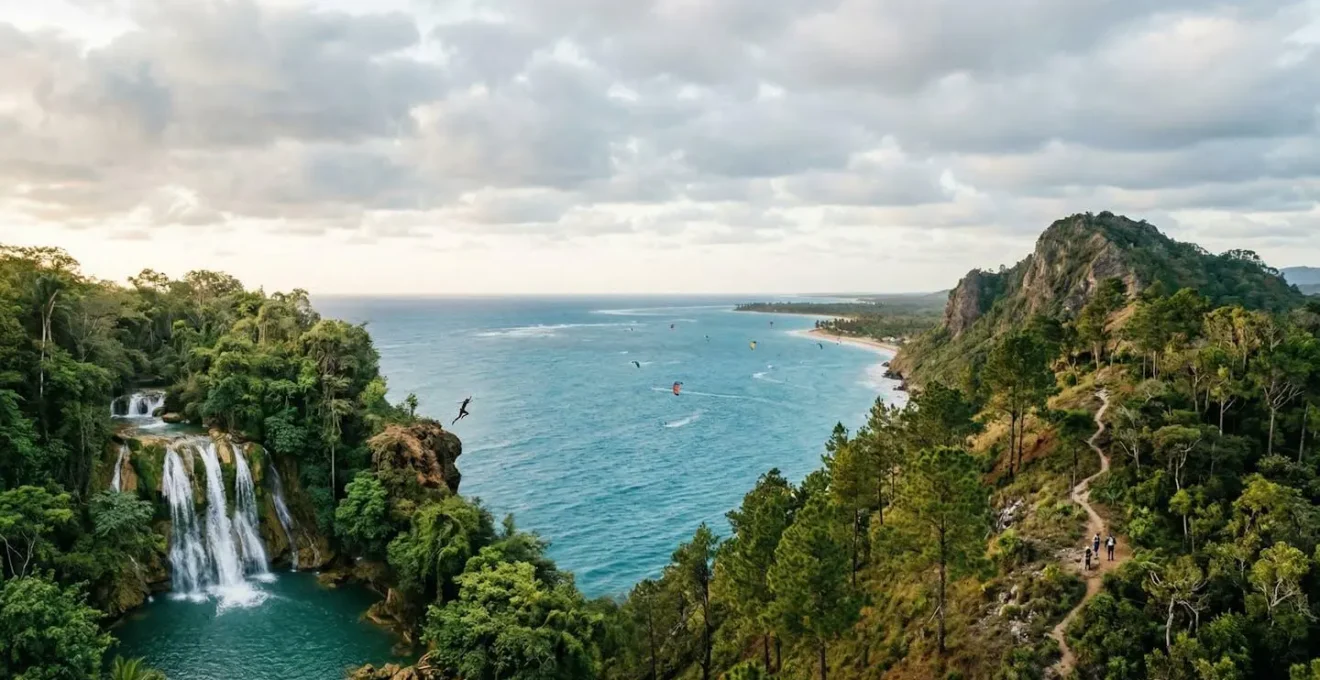
Building a high-adrenaline Dominican Republic trip requires treating it as a logistical mission, not a casual vacation.
- Success depends on strategically sequencing activities from dedicated “adventure hubs” to minimize travel time and maximize action.
- Proactive risk management, from fitness self-assessments to detailed insurance checks, is non-negotiable for extreme sports.
Recommendation: Instead of booking activities ad-hoc, build your 7-day plan around one primary element (water, land, or air) and a core location like Jarabacoa or Cabarete.
The image of the Dominican Republic is often one of serene beaches, all-inclusive resorts, and lazy afternoons. For an adrenaline junkie, that picture spells one thing: boredom. You didn’t book a flight to paradise to sit still; you came for a challenge. The common advice to book a buggy tour from your hotel or see the colonial sights feels like a consolation prize, a diluted version of adventure designed for the masses. You’re not the masses. You need a plan that matches your intensity, a schedule packed with genuine thrills that pushes your limits.
But what if the key to the ultimate Dominican adventure isn’t just picking the most extreme activities, but executing a strategic plan? This isn’t about a simple checklist; it’s an operational briefing. Forget the tourist trail. We’re going to build a 7-day itinerary based on logistical efficiency, risk assessment, and maximizing the thrill-per-day ratio. We will analyze the terrain, assess the conditions, and prepare the gear. This guide provides the framework to transform your trip from a standard vacation into a high-octane expedition.
This article provides a complete strategic framework for your mission. We will analyze the core adventure elements the island offers, detail cost-saving maneuvers, establish fitness benchmarks for key activities, and cover the critical logistics of insurance and transportation. Let’s gear up.
Summary: Your High-Adrenaline 7-Day DR Itinerary
- Water, Land, or Air: Which Element Offers the Best Thrills in DR?
- How to Package Adventure Tours to Save $200 on Activity Fees?
- Am I Fit Enough for the Canyoning Tours in Puerto Plata?
- The Insurance Clause You Must Check Before Bungee Jumping
- When Is the Wind Reliability 90% for Kiteboarding in Cabarete?
- How to Train and Prepare for the Pico Duarte Expedition?
- How to Find “Soft Adventure” Activities Suitable for Multi-Generational Families?
- How to Plan a Road Trip Across 3 Iconic Provinces Without Getting Stranded?
Water, Land, or Air: Which Element Offers the Best Thrills in DR?
The first step in any operation is defining the primary objective. In the Dominican Republic, your options are spread across three domains: water, land, and air. Each offers a distinct type of challenge and reward. Your choice will dictate your base of operations and the entire logistical flow of your week. Don’t think of it as choosing an activity; think of it as choosing your battleground. Water offers explosive, fast-paced action like the famous 27 Waterfalls. Land provides tests of endurance, such as the multi-day Pico Duarte trek. Air delivers the ultimate, pure-adrenaline rush with minimal skill required, like tandem paragliding.
To make a strategic choice, you must analyze the Thrill-to-Skill Ratio of each element. This ratio helps you decide where to invest your time and energy for maximum return. For example, while paragliding offers a 10/10 thrill with zero required skill, a serious trek requires significant physical preparation for a different kind of satisfaction. The following breakdown provides a top-level analysis to guide your decision-making, helping you choose a primary focus for your 7-day mission.
| Element | Top Activity | Thrill Level | Required Skill | Best Location |
|---|---|---|---|---|
| Water | 27 Waterfalls Damajagua | 9/10 | Basic swimming | Puerto Plata |
| Land | Pico Duarte Trek | 7/10 | Moderate fitness | Cordillera Central |
| Air | Paragliding | 10/10 | None (tandem) | Jarabacoa |
You can also execute a combined-element assault. For instance, basing yourself in the Samana Peninsula allows you to go zip-lining through the jungle (Land/Air), visit the El Limón waterfall (Land/Water), and take a boat to a remote island like Cayo Levantado or the stunning Playa El Ermitaño (Water). This “hub and spoke” model is effective if you prioritize variety over mastering a single discipline.
How to Package Adventure Tours to Save $200 on Activity Fees?
An adrenaline habit can be expensive, but smart resource management is a core tenet of any successful mission. Wasting money on inflated tour prices is a logistical failure. In the Dominican Republic, the difference between a savvy operator and a tourist-trap booking can easily exceed $200 over a week. Forget booking through hotel concierges; your strategy is to go direct and bundle. Local operators, especially in adventure hubs like Jarabacoa and Cabarete, are where the real value lies.
The key is to think in packages. Operators are more willing to negotiate when you’re booking multiple activities or bringing a small group. A solo traveler is a customer; a group of three booking an ATV and ziplining combo is a partner. Always look for combo packages, which often offer immediate 15-20% savings. Furthermore, timing your arrival can make a difference; morning tours are often cheaper and avoid the typical afternoon Caribbean thunderstorms. According to data from tour aggregators, tours in the Dominican Republic range from US$40–US$80 for simple excursions up to $150 for full-day experiences. By negotiating a multi-activity package directly with a local provider, you can often get those full-day experiences for a price closer to the mid-range.
The visual contrast is clear: piecemeal booking bleeds funds, while strategic packaging preserves your budget for what matters—more action. Grouping up with fellow travelers at hostels is a proven tactic to unlock group rates, even if you arrive solo. This financial strategy is as crucial as your gear checklist.
Am I Fit Enough for the Canyoning Tours in Puerto Plata?
Underestimating the physical demands of a mission is a critical error. The canyoning tour at the 27 Waterfalls of Damajagua is not a lazy river float; it’s a genuine physical challenge that requires a baseline of functional fitness. As your coordinator, I need to ensure you are ready. The experience involves a moderate hike through the jungle just to get to the starting point. From there, it’s a non-stop sequence of sliding down natural water slides, swimming across pools, and leaping from cliffs, with some jumps reaching up to 25 feet. Your body needs to be prepared for impact, sustained cardio, and functional strength.
This isn’t about being a professional athlete, but about having the capacity to handle the demands safely and enjoy the experience without hitting a wall. Can you handle repeated impact on your joints from jumping? Do you have the core strength to stabilize yourself on slippery rocks? Do you have the stamina to hike and swim without becoming completely exhausted? Before you even consider booking this tour, you must conduct a frank self-assessment of your physical readiness. It’s a simple go/no-go check.
Your Canyoning Readiness Checklist: A Self-Assessment
- Can you swim 50 meters unassisted in open water?
- Can you perform 10 consecutive bodyweight squats without stopping?
- Can you hang from a pull-up bar for at least 20 seconds?
- Can you jog continuously for 15 minutes at a moderate pace?
- Can you climb 3-4 flights of stairs without getting severely winded?
- Can you jump and land safely from a 1-meter height?
If you answered “no” to more than one of these questions, you should consider a less demanding activity or dedicate time to training before attempting the full 27 waterfalls. Some operators offer a shorter version of the tour that only covers the first seven falls, which can be a good alternative.
The Insurance Clause You Must Check Before Bungee Jumping
Risk mitigation is not optional. While we chase thrills, we don’t do it recklessly. The single most overlooked piece of gear for any adrenaline junkie is a robust travel insurance policy. However, not all policies are created equal. A standard travel insurance plan will likely not cover you if you get injured while bungee jumping, paragliding, or canyoning. These are often classified as “hazardous activities” and are explicitly excluded from basic coverage. Finding this out after an incident is a catastrophic failure.
Before you undertake any extreme sport, you must review your policy document with a fine-tooth comb. Look for specific riders or clauses that mention coverage for adventure or extreme sports. Be aware that some policies have cryptic exclusions, such as denying coverage for “activities at heights over 2,000 meters” or those involving the “use of specialized equipment.” It’s your responsibility to get clarification in writing from your provider before you leave. Also, don’t be afraid to ask the tour operator for proof of their own liability insurance. A professional and safe operator will have this readily available.
As The Wanderlover Travel Blog notes in its Dominican Republic guide, investing in proper coverage is a primary part of stress-free travel:
One of the best investments I personally make to make all my travels stress-free is SafetyWing so that I’m covered for things like travel delay, lost luggage, adventure sports accidents, trip interruption, and medical expense of $250,000
– The Wanderlover Travel Blog, Dominican Republic One Week Itinerary Guide
This isn’t an upsell; it’s a critical mission parameter. Your physical well-being and financial security depend on you getting this right. Assume you are not covered until you can find the exact line in your policy that says you are.
When Is the Wind Reliability 90% for Kiteboarding in Cabarete?
Timing is everything, especially when your activity depends on Mother Nature. For kiteboarders, Cabarete is the undisputed mecca of the Caribbean. It’s one of the world’s top spots for the sport, thanks to its consistent thermal winds. However, showing up in the wrong season is a complete mission failure. You’ll be left on the beach with no wind, watching your precious vacation days tick away. To ensure a successful operation, you must deploy when wind reliability is at its peak.
The prime window for consistent, powerful winds in Cabarete is predictable. Based on historical weather data and local expertise, you should plan your trip between June and August for the most reliable summer winds, or during the winter season for strong thermal effects. Travel reports confirm that the absolute best time to visit the Dominican Republic is from November to April for generally pleasant and dry weather, which aligns with a strong part of the wind season. During these peak months, you can expect the wind to kick in like clockwork around noon, providing ideal conditions for several hours a day, often reaching 90% reliability for kiteable days.
Planning your trip outside of this window is a significant gamble. While you might get lucky with a few windy days, you cannot count on it. For an adrenaline junkie, “hope” is not a strategy. Aim for the peak season to guarantee you spend your time on the water, not waiting for a gust of wind.
How to Train and Prepare for the Pico Duarte Expedition?
The Pico Duarte expedition is the ultimate land-based mission in the Dominican Republic. Reaching the highest peak in the Caribbean is a serious undertaking that demands respect and thorough preparation. This is not a casual day hike; it’s a multi-day trek into a rugged mountain range where temperatures can drop to near freezing at the summit. The Cordillera Central’s peaks tower over 3,000m (10,000+ feet), including the biggest, Pico Duarte, and the final ascent involves steep, challenging terrain. Your physical training should focus on endurance and leg strength: long-distance hiking with a weighted pack, stair climbing, and squats are essential.
However, physical fitness is only half the battle. Your gear selection is just as critical, and this is where many inexperienced hikers fail. The Caribbean climate at sea level is misleading; you will face cold, damp conditions in the mountains. The right gear isn’t about comfort, it’s about safety and mission success. Standard cotton socks or a simple rain jacket won’t cut it. You need specialized equipment designed for mountain environments. Here is a non-negotiable gear list that goes beyond the obvious:
- Wool socks: Absolutely essential for preventing blisters and keeping your feet warm during cold, damp nights in the mountain huts.
- Headlamp with red light mode: A standard headlamp is fine, but the red light feature allows you to navigate in shared huts at night without waking everyone else.
- Electrolyte tablets: More critical than extra food. They are your primary defense against altitude-related muscle cramps and dehydration.
- Lightweight thermal layer: A compact thermal shirt and leggings can be the difference between a miserable, shivering night and proper rest.
- Trekking poles: Critical for saving your knees on the descent and providing stability on the steep final 30% of the ascent.
- Emergency whistle: Cell phone signals are non-existent on most of the trail. This is your basic, life-saving communication device.
Key takeaways
- A successful adrenaline trip is built on a strategic plan, not a random list of activities. Choose a primary “adventure hub” and build out from there.
- Risk management is paramount. This includes a frank assessment of your physical fitness and a meticulous review of your travel insurance for extreme sports coverage.
- The greatest thrills come from matching the activity to environmental conditions. Don’t gamble on the weather; plan your mission around peak seasons for wind or dry trails.
How to Find “Soft Adventure” Activities Suitable for Multi-Generational Families?
Occasionally, an operator must plan for a mixed-capability group. If your mission includes family members who aren’t hardened adrenaline junkies, you need a “soft adventure” annex to your plan. These are activities that deliver a taste of excitement without the high-risk or intense physical demands of extreme sports. The goal is to find experiences that are engaging for teenagers, enjoyable for adults, and accessible for active seniors. This requires a different kind of strategic planning, focusing on accessibility and shared enjoyment rather than pure thrill.
Locations like Jarabacoa and the Samana Peninsula are excellent for this, offering a diverse portfolio of activities in one place. You can find options like horseback riding, hiking gentle mountain trails, or swimming in the serene lagoons at waterfalls like Salto de Jimenoa. A boat tour of Los Haitises National Park, with its stunning rock formations and ancient cave paintings, is a fantastic option that is thrilling yet low-impact. The key is to analyze activities based on their appeal across different age groups, ensuring no one is left behind.
| Activity | Teenagers (13-17) | Adults (18-65) | Seniors (65+) | Location |
|---|---|---|---|---|
| Zipline (short course) | 9/10 | 10/10 | 6/10 | Jarabacoa |
| Hoyo Azul Cenote Swim | 8/10 | 9/10 | 7/10 | Cap Cana |
| Boat Tour Los Haitises | 7/10 | 8/10 | 9/10 | Samana Bay |
| Coffee Plantation Tour | 6/10 | 8/10 | 10/10 | Jarabacoa |
By using a hub-and-spoke model from a base like Jarabacoa, the high-adrenaline members of your group can tackle canyoning or rafting on the Yaque del Norte River while others enjoy a more relaxed coffee plantation tour or a swim at Salto de Baiguate. This allows everyone to have an adventurous day suited to their own level, reconvening in the evening to share stories. It’s about smart, inclusive mission planning.
How to Plan a Road Trip Across 3 Iconic Provinces Without Getting Stranded?
Your final mission briefing covers ground transportation, the logistical backbone of your entire operation. A multi-province road trip in the Dominican Republic is the ultimate way to access remote adventure spots, but it comes with significant hazards. You must discard any assumptions based on driving in your home country. As the Perfect Day Somewhere travel blog bluntly puts it:
Driving in the Dominican Republic is nuts. There are cars, motorbikes, animals, and people, sometimes not even going in the correct direction of traffic.
– Perfect Day Somewhere Travel Blog, One Week in Dominican Republic Itinerary Guide
This is not an exaggeration; it is the ground truth. Therefore, your road trip plan must be built on a foundation of defensive driving and proactive risk management. Your primary objective is to move between adventure hubs without getting stranded. This requires a strict protocol. Google Maps time estimates are optimistic at best; you must add a 25% time buffer to any journey on secondary roads. Fuel stations can be sparse, so the rule is to never let your tank drop below half-full.
Driving after dark is strictly off-limits due to unmarked hazards, unlit vehicles, and wandering livestock. Before you even turn the key, you must have a contingency plan. This includes having the WhatsApp numbers of your car rental agent and local mechanics, downloading offline maps for notorious dead zones, and carrying enough cash for unexpected tolls or roadside emergencies. This checklist is not a suggestion; it is your survival guide for navigating the Dominican terrain.
- Time Buffer: Add 25% to all Google Maps estimates for non-highway roads.
- Fuel Discipline: Never let the tank drop below 50%, as stations can be over 50km apart.
- Contingency Contacts: Get WhatsApp numbers for the rental agency and a local mechanic before departure.
- Offline Navigation: Download offline maps via apps like Maps.me for areas with no cell service.
- No Night Driving: Avoid driving after sunset due to unmarked hazards and animals on the road.
- Cash Reserve: Carry Dominican Pesos for unexpected tolls, snacks, or minor emergencies.
Your mission brief is complete. You have the strategic framework to assess terrain, manage resources, mitigate risk, and execute a high-adrenaline 7-day Dominican expedition. The next step is to move from planning to action. Start mapping your primary route, assessing your gear, and booking your first adventure hub.