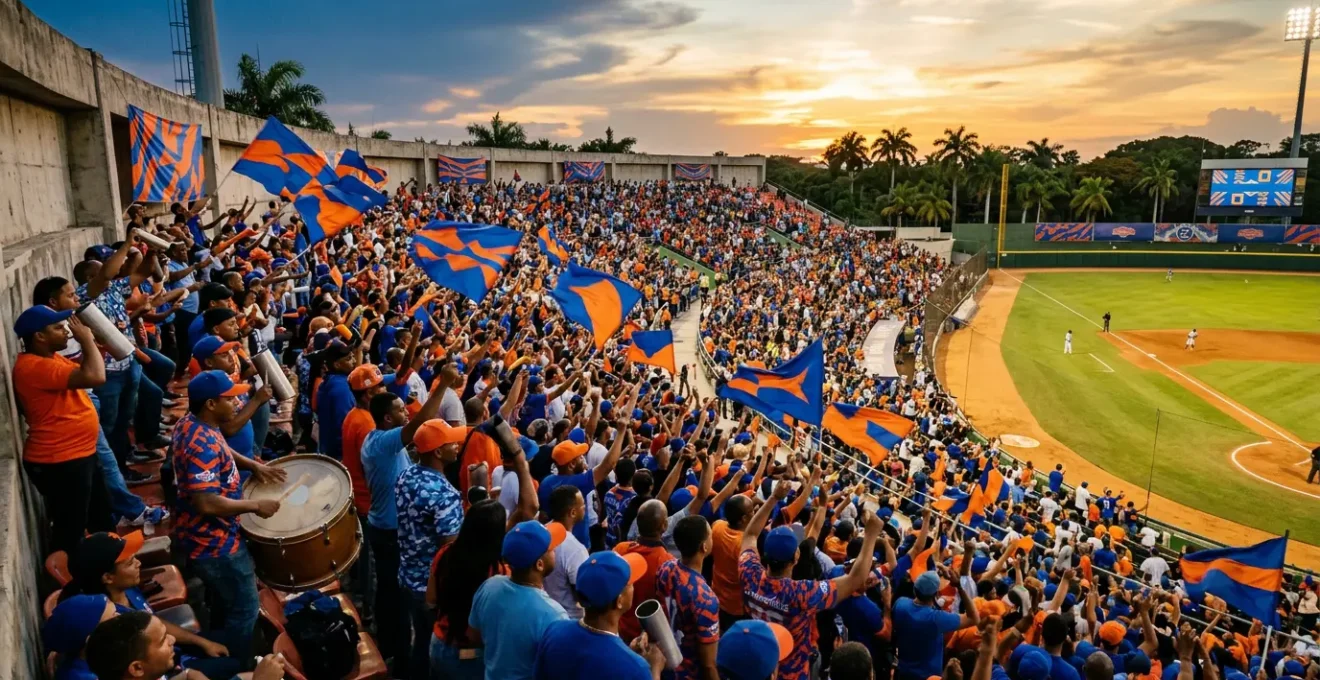
Attending a Licey vs. Águilas game is less about watching baseball and more about participating in a deeply-rooted cultural ritual.
- For high-stakes playoff games, securing tickets through official online channels is the only safe bet.
- For the regular season, the real local experience involves understanding the “art of the deal” with street vendors, where timing is everything.
Recommendation: Your mission isn’t just to find a seat. It’s to understand the stadium’s rhythm, food, and unwritten rules. Embrace the chaos, share a beer, and you’ll be a ‘pana por un día’ (buddy for the day).
The first thing you notice isn’t the crack of the bat. It’s the sound. A pulsating wave of trumpets, drums, and a thousand voices crashing together, a sound that feels more like a carnival than a sporting event. This is baseball in the Dominican Republic, and the epic clash between Tigres del Licey and Águilas Cibaeñas is its soul. Any online guide can tell you to “buy tickets from the official website” or “beware of scalpers.” But that advice misses the entire point. It treats the experience as a simple transaction when it’s a cultural immersion.
You’re not just a fan traveling to see a game; you’re an outsider attempting to enter a sacred space, a cathedral of national passion. The real question isn’t how to get a ticket, but how to earn your place in the stands. How do you navigate the unspoken rules, the team loyalties that run deeper than blood, and the sensory overload of sounds and smells that define the experience? This is not a guide for tourists. This is your initiation. It’s about learning how to move, eat, cheer, and buy your ticket like you belong there.
This guide will walk you through the essential rituals of attending a Dominican Winter League game. From choosing an allegiance that aligns with your personality to mastering the unwritten rules of stadium etiquette, you will learn the secrets to experiencing the game not as a spectator, but as a participant in one of the world’s most passionate sporting traditions.
Summary: How to Buy Tickets for a Licey vs Aguilas Game Like a Local?
- Licey, Aguilas, or Escogido: Which Team Should You Root For?
- Why Are Dominican Baseball Games Louder Than MLB Games?
- What Are the Must-Try Snacks Inside Projectqueya Stadium?
- The Scalper Mistake That Leaves You Without a Seat for the Playoffs
- When Does the LIDOM Season Start and End?
- How to Visit San Pedro de Macorís, the “Cradle of Shortstops”?
- How to Participate in Local Traditions Without Being an Intruder?
- How to Learn Authentic Bachata Steps Without Looking Like a Tourist?
Licey, Aguilas, or Escogido: Which Team Should You Root For?
In the Dominican Republic, you don’t just “pick” a baseball team; you declare an identity. This choice signals your personality, your regional pride, and even your family history. The rivalry between Tigres del Licey (from the capital, Santo Domingo) and Águilas Cibaeñas (from Santiago, the heart of the Cibao region) is the stuff of legends. It’s the Dominican equivalent of the Yankees vs. the Red Sox, but with a century of history fueling the fire. Licey is one of the oldest and most successful teams, and for many in the capital, being ‘Liceísta’ is a family birthright.
The numbers tell a story of a perfectly balanced war: the Tigres and Águilas are the two winningest franchises in the Professional Baseball League of the Dominican Republic (LIDOM). As of recently, Licey holds 23 titles to the Águilas’ 22. Choosing the Águilas means aligning yourself with the proud, defiant spirit of the Cibao region, known for its passionate loyalty. Then there’s Leones del Escogido, the “other” capital team. They share a stadium with Licey but boast their own fierce fan base, representing a more pragmatic, urban identity.
So, which tribe do you join? Here’s a simple guide:
- Choose Licey if you appreciate dynasty, history, and the swagger of the capital’s most decorated club.
- Pick Águilas if you’re drawn to passionate underdogs (by a one-championship margin!), intense regional pride, and the color yellow.
- Select Escogido if you want to root for a capital team but prefer a path less traveled, with a strong and loyal fan base.
- Consider Estrellas, Toros, or Gigantes if you want a more intimate, less overwhelming experience where interacting with locals is even easier.
Your choice is your entry ticket into local conversations. Choose wisely, wear the colors, and be ready to defend your new-found allegiance with passion. This decision is the first and most important step in experiencing the game like a local.
Why Are Dominican Baseball Games Louder Than MLB Games?
To compare the noise level at a Dominican game to an MLB game is to compare a bonfire to a volcano. They are not in the same category. The sound in a LIDOM stadium isn’t just noise; it’s the soundtrack of a country’s heartbeat, a constant, rhythmic, and musical celebration. Forget the polite applause and occasional “charge” melody. Here, the sound is organic, relentless, and comes directly from the stands.
The primary reason for the volume is the orchestra of the people. Fans bring their own instruments: tamboras (two-headed drums), güiras (metal scrapers), trumpets, and horns. This isn’t a pre-planned event by the stadium; it’s a spontaneous, fan-driven symphony. The rhythm section never stops, providing a non-stop merengue and bachata beat that underscores every pitch, hit, and out. This constant musical energy is more celebratory than confrontational, turning the entire game into a nine-inning party. The passion is so immense that when the league held an exhibition series in New York, the collective attendance was 90,900 fans across three games, shattering records and bringing the island’s unique energy to the U.S.
As FOX Sports aptly described the phenomenon, it’s a world away from the typical American ballpark experience.
There’s chest-pumping, bat-flipping and glove-slamming. The stands feature a lot of drums and a lot of rums. The fans roar and cheer and leap on the dugouts and create an energy more celebratory than that of any MLB fan base.
– FOX Sports, Dominican Winter League Coverage
This isn’t about being louder for the sake of it. It’s an expression of pure, unfiltered joy and passion. The sound is the experience. You don’t just hear a Dominican baseball game; you feel it in your bones.
What Are the Must-Try Snacks Inside Projectqueya Stadium?
In a Dominican ballpark, food isn’t just sustenance; it’s a crucial part of the social fabric and the overall sensory experience. Forgetting to indulge is like going to a movie and refusing to watch the screen. The culinary journey starts before you even enter. Outside the stadium, look for the tell-tale smoke and sizzle from chimi trucks, serving up the iconic Dominican burger—a juicy patty topped with shredded cabbage, onions, and a generous helping of “salsa rosada” (a mayo-ketchup blend).
Once inside, the options evolve depending on your seat. In the cheaper “gradas” (bleachers), you’ll find roaming vendors with a symphony of calls, carrying large metal containers filled with hot quipes (fried bulgur pockets stuffed with meat) and empanadas. From the official concessions, you can grab yaniqueque (a large, crispy, fried dough disk) and chicharrón (fried pork rinds), often served by the bag. These are the foundational snacks of the Dominican stadium experience.
The essential drink to accompany any of this is an ice-cold Presidente beer, but you must order it like a local: ask for “una fría vestida de novia” (a cold one dressed as a bride). This poetic phrase refers to a bottle so perfectly chilled it’s covered in a delicate layer of white frost. For those in the more expensive “palcos” (box seats), you can order a “picadera”—a large platter of mixed fried meats, sausages, and plantains—brought right to your seat. But no matter where you sit, be aware of the pricing differences, as savvy locals often buy from vendors outside.
| Food Item | Stadium Price | Outside Vendor | Best Location |
|---|---|---|---|
| Chimi Burger | 300-400 DOP | 150-200 DOP | Trucks outside |
| Presidente Beer | 200 DOP | 100-150 DOP | Colmado nearby |
| Yaniqueque | 100 DOP | 50 DOP | Stadium concession |
| Chicharrón | 150-200 DOP | 100 DOP | Roaming vendors |
The Scalper Mistake That Leaves You Without a Seat for the Playoffs
When it comes to buying tickets, there are two distinct paths in the Dominican Republic: the safe, official route and the thrilling, risky “street” route. Your choice defines your experience. For high-stakes games, especially the January playoffs or the finals between Licey and Águilas, the tourist mistake is assuming you can just “show up and buy tickets.” You can’t. These tickets sell out instantly, and the world of “revendedores” (scalpers) becomes a minefield of counterfeits.
The only guaranteed way to get authentic tickets for major games is to buy them officially. Many tourists fall for sophisticated scams on Instagram or WhatsApp, receiving fake QR codes. For peace of mind, using a reputable marketplace is essential. For instance, you can buy your Dominican Winter League Series tickets through verified platforms that offer a 100% buyer guarantee, ensuring your tickets are authentic and will arrive before the event. This is the foolproof method to avoid the heartbreak of being turned away at the gate.
However, for a regular-season game, buying from a scalper is part of the local experience—a calculated risk and a lesson in negotiation. Prices for decent seats typically range from 500 to 2000 DOP (approximately $10-$40 USD) at the box office, and scalpers will start much higher. The key is patience. Wait until after the first inning, when prices can drop by 30-50%. To avoid getting scammed, there’s a protocol to follow.
Your Action Plan: Negotiating with ‘Revendedores’
- Assess the Source: Only negotiate with scalpers wearing official “UEPA” vests near the main box office. Avoid random individuals who approach you far from the entrance.
- Inspect the Ticket: Look for holographic elements and crisp, clear printing. A blurry ticket is a major red flag. Be wary of sellers who rush the transaction or avoid eye contact.
- Deploy Key Phrases: Start your negotiation with a polite “¿Cuánto es lo menos?” (What’s your lowest price?). If the price is still too high, a firm “Muy caro, gracias” (Too expensive, thanks) and starting to walk away is your strongest move.
- Time Your Purchase: The biggest mistake is buying before the game starts. The best deals are found after the first inning when sellers are desperate to offload remaining inventory.
- Final Check: Before handing over cash, confirm the date, teams, and seat section on the ticket one last time. A common scam is selling a ticket for a different day.
When Does the LIDOM Season Start and End?
Timing your visit to the Dominican Republic to catch a baseball game requires understanding the dramatic arc of the LIDOM season. The experience of a relaxed game in October is wildly different from the national paralysis that occurs during the finals in January. The season is a crescendo of intensity, and each phase offers a unique experience. The league structure consists of 50 regular-season games from mid-October to late December, followed by a frantic playoff period.
Here’s how to strategically plan your trip based on the season’s rhythm:
- October-November (Regular Season – “Calentando los Motores”): This is the “warming up the engines” phase. The atmosphere is more relaxed, tickets are easy to come by, and prices are low. This is the perfect time for a first-timer to get a feel for the league without the intense pressure of the playoffs.
- December (Late Regular Season): The intensity starts to build. Teams are fighting for playoff spots, and you might see some MLB players arriving to play for their hometown teams during the MLB offseason. The crowds get bigger and louder.
- Early January (Round Robin Semi-finals): This is where the chaos truly begins. The top four teams enter an 18-game round-robin playoff. Every game is critical, and the stadiums are packed with fans armed with calculators and raw emotion. Tickets become much harder to get.
- Late January (The Finals): If Licey and Águilas make it to the best-of-seven championship series, the country effectively shuts down. Securing tickets becomes nearly impossible without deep connections or a willingness to pay exorbitant prices. This is the absolute peak of Dominican baseball passion.
The season culminates with the winner representing the Dominican Republic in the Caribbean Series in February, a moment of ultimate national pride. Watching a championship celebration is witnessing pure, unadulterated joy.
How to Visit San Pedro de Macorís, the “Cradle of Shortstops”?
For the true baseball fanatic, a pilgrimage to San Pedro de Macorís is a must. This city, located on the southeastern coast, is not just a town; it’s a baseball factory. Known as the “Cradle of Shortstops,” its contribution to Major League Baseball is simply staggering. While the capital of Santo Domingo has produced more total MLB players, its population is more than ten times larger. Per capita, San Pedro is unmatched, having produced an incredible 99 MLB players from a city of just over 200,000 people.
A day trip to San Pedro offers a glimpse into the heart of Dominican baseball culture, away from the main tourist hubs. It’s where you can see the game in its purest form, played by kids with dreams in dusty fields. Getting there is straightforward. From Santo Domingo, you can take a comfortable Caribe Tours bus for a 90-minute ride, or hire a private driver for a quicker, one-hour journey.
A Baseball Pilgrim’s Itinerary for San Pedro
Your first stop should be Tetelo Vargas Stadium, home of the local team, the Estrellas Orientales. Even if there isn’t a game, just being in the presence of the stadium is an experience. From there, the real exploration begins by walking through the local neighborhoods. This is where you’ll see the grassroots of baseball: kids playing “vitilla” (a version of baseball using a water bottle cap as a ball and a broomstick as a bat) in the streets and aspiring players training in any open space. Keep an eye out for murals dedicated to local heroes who made it to “las grandes ligas,” like Sammy Sosa, Alfonso Soriano, and Robinson Canó. This is where the obsession begins, and visiting allows you to understand the foundation of the country’s baseball dominance.
A trip to San Pedro de Macorís provides a profound context for the passion you’ll witness at a Licey vs. Águilas game. You’re not just visiting a city; you’re visiting the source code of Dominican baseball.
How to Participate in Local Traditions Without Being an Intruder?
The beauty of a Dominican baseball game is its interactive, participatory nature. Fans are not passive observers; they are part of the show. As a foreigner, the key is to transition from spectator to participant respectfully. The commissioner of baseball in the D.R., Junior Noboa, himself acknowledges the fans’ role in the spectacle.
In the stands every day, you’ve got 6,000, 7,000 managers, but we love that. It’s truly special. And I’d never want that to change — that passion among the fans.
– Junior Noboa, Commissioner of Baseball in the D.R.
Your goal is to become a temporary local, a “pana por un día” (buddy for the day). This is achieved through small, meaningful gestures. The first rule is to shed any preconceived notions of American ballpark etiquette. The constant drumming, singing, and celebrations make U.S. stadiums seem library-quiet by comparison. Don’t critique the chaos; join it. Clap along with the tambora rhythms, even if you’re off-beat. Your effort will be appreciated.
The social currency in the stands is generosity and shared experience. The single fastest way to integrate is to buy a round of beers for the people in your immediate vicinity after a big play or home run. This small investment pays huge dividends in camaraderie. Similarly, sharing your snacks is a powerful icebreaker. Offering a chicharrón or some of your quipes to a neighbor instantly breaks down cultural barriers. Wear your team’s colors with pride, but avoid making direct comparisons to the MLB. This is their league, their passion, and your role is to be a respectful and enthusiastic guest at their party.
The experience often starts before the game. Join locals at a nearby colmado (corner store) for a game of dominoes and a pre-game Presidente. By showing you’re willing to engage with the culture on its own terms, you cease to be an intruder and become a welcome part of the celebration.
Key Takeaways
- Plan your trip according to the season’s phase: October for a relaxed intro, January for intense playoff chaos.
- For major games, buy tickets from guaranteed official sources online to avoid scams. For regular games, embrace the local custom of negotiating with scalpers after the first inning.
- The true experience lies in participation: wear team colors, share your food, join the rhythmic clapping, and learn to order a beer “vestida de novia.”
How to Learn Authentic Bachata Steps Without Looking Like a Tourist?
You’ve chosen your team, navigated the ticket system, and mastered the stadium snacks. You feel like you’ve finally cracked the code. Then, between innings, the music swells—a soulful, rhythmic bachata—and the people around you start to move. Not in a flashy, performative way, but with a subtle, effortless sway. This is the final piece of the puzzle, the secret handshake of the Dominican experience.
The key insight is that authentic Dominican bachata isn’t learned in a dance studio; it’s absorbed in social settings like a ballpark. The elaborate turns and dips taught to tourists are impressive, but the real thing is much simpler and more profound. It’s all in the hips. Watch the locals in the stands. They aren’t performing complex footwork; they are simply swaying to the music, a small, natural hip movement that is the foundation of the dance. Every game is an event, filled with passionate fans, lively music, and this organic expression of rhythm.
To learn this, you must un-learn what you think bachata is. Follow this path from stadium sway to dance floor confidence:
- Start at the stadium: Don’t focus on feet. Watch the subtle hip sway of the people around you as they listen to the music between innings. Try to emulate that gentle, rhythmic pulse while standing.
- Master the box step: The core footwork is just a simple four-step pattern in a square. Practice this until it’s second nature.
- Focus on ‘sabor’ (flavor): Authentic bachata is about the feeling, the connection to the music, and your partner—not complex steps. The hip movement and a relaxed posture are more important than any fancy turn.
- Find the real dance floors: Look for Sunday “car wash” parties or local community gatherings. This is where you’ll see street-style bachata in its natural habitat, far from the polished tourist shows.
Understanding this rhythm is the ultimate insider move. It’s the realization that the beat of the tambora, the sway of the fans, and the steps of the dance are all connected. They are all different expressions of the same national soul. Learning to feel that rhythm, even in a small way, is the final step to not just watching a game, but truly experiencing it.