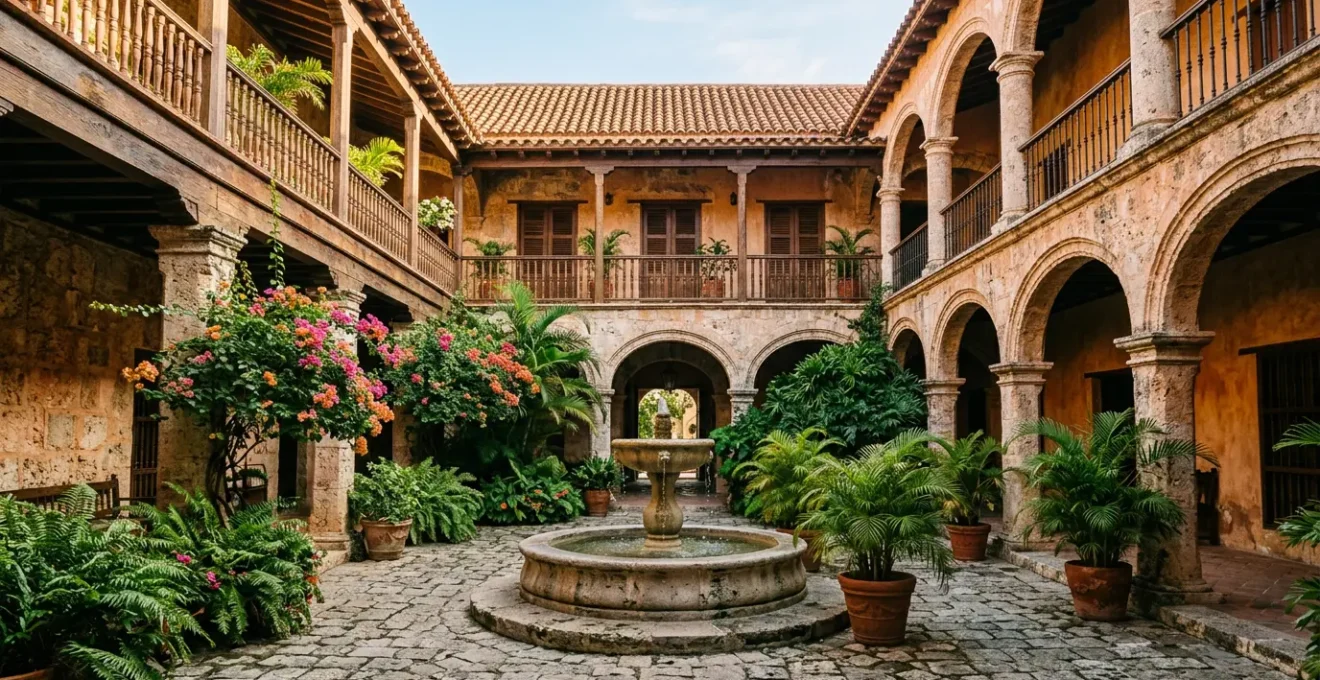
The secret to finding the perfect boutique hotel in the Zona Colonial isn’t just looking for history; it’s decoding its architectural DNA to match your travel style.
- Restored convents offer social, courtyard-focused atmospheres, while merchant houses provide more private, introspective spaces.
- Booking directly with the hotel often secures you a better room and establishes a personal connection that booking sites cannot offer.
Recommendation: Before booking, identify the building’s original purpose (convent or private home) and contact the hotel to request an interior-facing room. This is your first step in curating a truly immersive stay.
The quest for the perfect boutique hotel in Santo Domingo’s Zona Colonial can feel overwhelming. Every cobblestone street seems to host another beautifully restored 16th-century building, each promising “historic charm” and “unique character.” For the culture-focused traveler, this is both a blessing and a curse. You’ve rejected the sterile uniformity of global hotel chains, seeking a stay that feels as much a part of the discovery as the city itself. Yet, the online listings blur together, a mosaic of terracotta tiles, wooden beams, and sun-drenched courtyards. The generic advice to “stay in a historic building” is unhelpful when every option fits the description.
Most guides will point you toward the key attractions, but they fail to address the fundamental question: how does the hotel itself shape your experience of the city? The real challenge isn’t finding a beautiful hotel; it’s finding the *right* one for you. But what if the key wasn’t just about location or amenities? What if the true art of selecting a boutique hotel lay in understanding its story, its very structure, as a preview of the experience it offers? The secret is to stop seeing these hotels as interchangeable backdrops and start seeing them as the first chapter of your travel narrative.
This guide moves beyond the surface-level advice. We will explore how to decode a hotel’s “architectural DNA” to understand its atmosphere, how to secure an “acoustic sanctuary” in a vibrant city, and why the old-fashioned method of booking directly is a strategic move. By treating your hotel choice not as a logistical necessity but as your first act of cultural curation, you can ensure your stay is an authentic extension of your journey through the New World’s oldest city.
Summary: Your Guide to Boutique Stays in the Zona Colonial
- Restored Convent or Merchant House: Which Building Style Is More Atmospheric?
- How to Avoid a Room That Opens Directly onto a Noisy Street?
- Do Boutique Hotels Have Pools in the City Center?
- Why Booking Direct with Small Hotels often Gets You a Better Room?
- When to Book for the Zona Colonial Music Festival?
- How to Explore Santo Domingo’s Modern and Ancient Sides in 48 Hours?
- How to Plan a Self-Guided Walking Tour of Historic Streets Without Missing Context?
- How to Find Safe and Social Hostels in Santo Domingo?
Restored Convent or Merchant House: Which Building Style Is More Atmospheric?
The term “historic building” is the starting point, not the destination. In the Zona Colonial, the soul of a boutique hotel is intrinsically linked to its original function. The atmosphere you experience is a direct descendant of its architectural DNA, primarily split between two archetypes: the restored convent and the wealthy merchant house. Understanding this distinction is the first step in aligning a hotel’s character with your own. Many of these are genuine 16th-century buildings converted into boutique hotels, each with a story to tell.
Former convents were designed around a central, open-air courtyard. Life was communal, and the architecture reflects this. Hotels in these buildings, like El Beaterio or parts of the Hodelpa Nicolás de Ovando, often have rooms that open onto shared walkways overlooking this central space. The atmosphere is inherently more social and open. You’ll hear the gentle murmur of other guests, the splash of a fountain, and feel a sense of shared community. It’s ideal for the traveler who enjoys serendipitous encounters and a feeling of being part of a collective experience.
A converted merchant house, by contrast, was built for privacy and security. These structures were both a home and a place of business, with thicker walls and a more insular design. Rooms are often more self-contained, with layouts that prioritize solitude over social interaction. The ambiance is one of intimate retreat and quiet contemplation. This is the choice for a traveler who seeks a peaceful sanctuary after a day of exploring, a place to read a book in a secluded corner without interruption. The building itself encourages a more introspective journey.
This image perfectly captures the essence of the convent-style architecture, with its transition from a private corridor to a bright, communal courtyard. It visualizes the choice you are making: between the shaded privacy of a merchant house and the sunlit social life of a convent.
Ultimately, the “better” atmosphere is entirely subjective. Before you book, look at the hotel’s photos not just for aesthetics, but for clues to its past life. Do you see sprawling courtyards with many doors opening onto them, or do you see more enclosed, private-feeling spaces? By decoding the building’s original purpose, you’re not just choosing a room; you’re choosing the narrative of your stay.
How to Avoid a Room That Opens Directly onto a Noisy Street?
The vibrant energy of the Zona Colonial is one of its greatest draws—the music spilling from a Colmado, the lively chatter from outdoor cafes, the echo of footsteps on ancient cobblestones. While enchanting during the day, this same energy can become a significant disturbance at night. The key to a restful stay is to proactively secure an “acoustic sanctuary,” a room insulated from the city’s nocturnal pulse. Simply asking for a “quiet room” is too vague and leaves too much to chance.
The most effective strategy is to understand the hotel’s layout. Most colonial buildings are built around a central patio or garden. Rooms facing this interior space are naturally buffered from street noise. In contrast, rooms with balconies overlooking main thoroughfares like Calle El Conde or the bustling Plaza de España offer a front-row seat to the action, but at the cost of tranquility. Your goal is to specifically request an “interior-facing” or “courtyard-view” room during the booking process.
Furthermore, verticality is your ally. In multi-story properties, rooms on higher floors (second or third level) are significantly quieter than those at street level. The sound from the street dissipates with height. When communicating with the hotel, don’t hesitate to be specific about your needs. A well-managed boutique hotel understands the importance of a good night’s sleep and will appreciate a clear request they can act upon. Checking recent guest reviews for keywords like “noise,” “quiet,” or “courtyard” can provide invaluable, real-world intelligence on a property’s soundscape.
Your Checklist for Securing a Quiet Room
- Specify Your View: Explicitly request ‘courtyard view,’ ‘garden view,’ or ‘interior-facing’ rooms when you make your reservation.
- Analyze the Map: Identify the hotel’s location relative to high-activity zones like Plaza de España or Calle El Conde to avoid properties directly on them.
- Confirm Orientation: Ask hotel staff directly about the room’s orientation during booking, noting that rooms facing backstreets or internal patios offer significant noise reduction.
- Go for Height: In multi-story properties, prioritize rooms on the upper floors (2nd or 3rd level) as they naturally buffer street-level sounds.
- Verify with Reviews: Read recent guest reviews, filtering for keywords like ‘quiet,’ ‘street noise,’ or ‘courtyard’ to confirm the actual noise levels experienced by others.
Do Boutique Hotels Have Pools in the City Center?
Yes, many boutique hotels in the Zona Colonial do have pools, but it’s crucial to manage expectations. You are not likely to find Olympic-sized lap pools. Due to the strict preservation of historic architecture and space constraints, the prevalent model is the “plunge pool.” These are small, often beautifully designed pools integrated into the central courtyard, intended for cooling off and relaxing rather than for strenuous exercise. They are an oasis from the Caribbean heat, a place to sip a cocktail and admire the 16th-century walls surrounding you.
Case Study: The ‘Plunge Pool’ Model at Boutique Hotel Palacio
The Boutique Hotel Palacio demonstrates the typical pool offering in the Zona Colonial. It features an outdoor swimming pool, best described as a plunge pool, housed in its beautifully restored colonial courtyard. This amenity is presented alongside a sauna and fitness center, showing how these properties balance historical preservation with modern comforts. It’s a feature designed for leisure and atmosphere, a cooling-off amenity that enhances the historic setting rather than a facility for athletic swimming.
The presence and quality of a pool are often a reflection of the hotel’s philosophy. For many boutique properties, the focus is on curated details and an intimate guest experience, not on expansive resort-style amenities. The pool is an accent, not the centerpiece. This philosophy is about prioritizing a unique sense of place over generic luxury features.
This focus on a tailored experience is at the heart of the boutique concept, as articulated by one of the zone’s premier properties. The Billini Hotel, a luxury boutique hotel, explains their approach on their official website:
Boutique is better, its our way to focus our energy into all the small details and safety since we are a small historic luxury hotel of 24 suites, 1 apartment and 1 villa.
– Billini Hotel, Official Billini Hotel website
When searching for a hotel, look for pools that are harmoniously integrated into the architecture. They are a modern luxury, but in the best boutique hotels, they feel like a timeless part of the building’s soul—a tranquil, water-filled courtyard that has always been there.
Why Booking Direct with Small Hotels often Gets You a Better Room?
In an age of dominant online travel agencies (OTAs), the habit of clicking “book now” on a third-party site is deeply ingrained. However, for a culture-focused traveler seeking an authentic experience in the Zona Colonial, this convenience comes at a hidden cost. When you book directly with a small boutique hotel, you are not just making a transaction; you are initiating a relationship. This “relationship currency” is your most valuable asset in securing a better stay.
From a purely logistical standpoint, boutique hotel industry practices show that hotels prioritize direct bookings for the most desirable rooms. The rooms with the best views, the quietest locations, or unique architectural features are often reserved for guests who have engaged with them personally. Rooms allocated to OTAs, from which the hotel pays a hefty commission, are frequently the less desirable ones. By booking direct, you move from the bottom of the allocation list to the top.
This photograph captures the essence of what booking direct offers: a genuine, personal connection that OTAs simply cannot replicate. It represents the start of the “relationship currency” that leads to a more personalized and memorable stay.
Beyond room allocation, a direct booking opens a channel for communication. You can speak to a person who knows the property intimately. You can make specific requests—”we’d love the room with the original tile work,” or “could we have a room far from the street?”—that an algorithm cannot process. This human connection transforms you from an anonymous reservation number into a valued guest whose experience matters personally to the hotelier. This is particularly true in the Zona Colonial, where many boutique hotels are owner-operated. Your satisfaction is their personal and professional pride.
Booking direct is a strategic choice. It signals that you are an engaged traveler who values the character of the establishment. In return, the hotel is more likely to invest in your experience, offering not just a better room but also insider tips, a warmer welcome, and a level of personalized service that defines true boutique hospitality.
When to Book for the Zona Colonial Music Festival?
The Santo Domingo Colonial Fest is a vibrant, three-day celebration of Dominican culture that transforms the historic district into a massive open-air stage. If your travel plans coincide with this event, typically held in late November, your booking strategy must be deliberate and far in advance. The festival creates a huge spike in demand for the limited inventory of boutique hotel rooms, especially those with character and prime locations.
Case Study: The Impact of the Colonial Fest
The Santo Domingo Colonial Fest is the largest annual cultural event in the historic zone. According to reports from past events, it runs over three days with a packed schedule from 4 pm to midnight. As a free festival with stages at major landmarks like the Plaza de España and the fortress steps, it attracts enormous crowds. This concentration of activity means that boutique hotels in the heart of the Zona Colonial are completely booked out months in advance, making last-minute planning nearly impossible for desirable properties.
Your booking timeline depends on how much you value a specific hotel’s character. The true gems—the small, highly-rated properties with unique architectural features or exceptional service—are the first to go. For these, you should be looking to book 6 to 8 months in advance. For other good, well-located options, a minimum of 4 months out is a safe bet. This isn’t a time for spontaneity if you have your heart set on a particular experience.
The decision also involves a trade-off between “immersion vs. proximity.” Do you want to be steps away from the main stage on Plaza de España, ready to dive into the music at a moment’s notice? Or do you prefer a quiet sanctuary on the periphery of the zone, a peaceful retreat after a long night of celebration? Mapping out the previous year’s festival locations can help you make a strategic choice about where to position yourself.
Your Festival Booking Timeline
- 6-8 Months Out: Book the true gem boutique hotels with unique character. These are the first to fill up.
- 4 Months Out (Minimum): Secure reservations for good options in desirable locations.
- 1-2 Weeks Before: Set booking alerts to catch last-minute cancellations at your top-choice hotels.
- Planning Phase: Research the previous year’s festival map to identify stage locations for strategic hotel selection.
- Strategic Choice: Decide on your priority: proximity to the action for convenience or a sanctuary on the quiet periphery for a peaceful retreat.
How to Explore Santo Domingo’s Modern and Ancient Sides in 48 Hours?
Santo Domingo is a city of captivating contrasts, a place where 16th-century ramparts stand within view of modern skyscrapers. To truly understand its rhythm, a traveler must experience both its ancient heart and its contemporary pulse. With Las Américas Airport serving as a major gateway—receiving 24% of the country’s tourist arrivals in 2024—the city is perfectly positioned for a dynamic 48-hour exploration, using your Zona Colonial boutique hotel as a historical anchor.
Day 1: Immersion in the Ancient. Dedicate your first 24 hours entirely to the Zona Colonial. This is not just sightseeing; it’s a deep dive into the “First City of the Americas.” Start your day by absorbing the history of your own hotel, then set out on foot. Walk the Calle Las Damas, the oldest paved street in the New World. Spend the morning at the Catedral Primada de América and the afternoon exploring the Fortaleza Ozama. In the evening, dine at a restaurant in Plaza de España, watching the sky change color over the Ozama River, just as sailors did five centuries ago. The goal is to let the history seep in, to feel the weight and wonder of the centuries under your feet.
Day 2: A Leap into the Modern. After a breakfast steeped in colonial ambiance, it’s time to journey into the 21st century. Take a taxi or ride-sharing service to the city’s modern districts. Explore the upscale neighborhoods of Piantini or Naco, home to designer boutiques, contemporary art galleries, and sleek high-rise buildings. Have lunch at a trendy, modern restaurant to experience the city’s evolving culinary scene. In the afternoon, visit the Jardín Botánico Nacional for a dose of natural beauty or explore a large shopping mall like Ágora or Sambil for a look at modern Dominican life. This contrast will enrich your understanding of the city’s identity. Returning to the quiet, historic charm of your boutique hotel in the evening will feel like coming home, not just to a room, but to another era.
This two-day approach allows you to experience Santo Domingo not as a static museum, but as a living, breathing city that honors its profound past while confidently embracing the future. The juxtaposition makes each side more vibrant and meaningful.
How to Plan a Self-Guided Walking Tour of Historic Streets Without Missing Context?
A self-guided walking tour of the Zona Colonial is a must, but simply wandering from one landmark to another can feel like checking items off a list. To transform your walk into a meaningful journey, you need a narrative thread. The secret is to use your boutique hotel not just as a starting point, but as your “historical prologue”—the first chapter of the story you are about to uncover.
Before you even step outside, invest time in understanding the story of the building you are staying in. Was it a convent, a merchant’s residence, the home of a political figure? The hotel staff are often passionate custodians of this history. This knowledge becomes the theme for your walk. If you are staying in a former merchant house, your tour can focus on the history of commerce, seeking out old trading posts and the naval shipyard. If it’s a converted convent, your path can trace the city’s religious and social history.
Case Study: Using Boutique Hotel Palacio as a Historical Prologue
The Boutique Hotel Palacio is a perfect example. The building was originally owned by Buenaventura Báez, a five-time president of the Dominican Republic. Knowing this fact transforms a generic walk into a political history tour. Your first stop could be the nearby National Pantheon, where other national heroes are buried. From there, you might walk to the Presidential Palace, connecting the dots between your hotel’s past and the nation’s governance. The hotel’s location, steps from the first cathedral and first hospital in the Americas, makes it a natural ‘Chapter One’ connecting a personal story to the grand sweep of colonial history.
Once you have your theme, engage with your surroundings on a deeper level. Look for the subtle storytelling details that most tourists miss: the family crests carved above doorways, the cannonballs still embedded in church walls from old sieges, the distinct patterns of the pisos de mosaico (hydraulic tiles) that tell of a home’s former prestige. Walk the full length of Calle Las Damas, imagining the ladies of the court who gave the street its name. By connecting these small details back to the story of your own hotel, your walk becomes a personal investigation, a rich dialogue with the past where every corner reveals a new clue.
Key Takeaways
- The architectural style of a historic hotel (convent vs. merchant house) dictates its social atmosphere; choose based on your preference for communal or private spaces.
- Booking directly with a hotel and requesting an interior-facing room on an upper floor are the most effective strategies for avoiding street noise.
- For major events like the Colonial Fest, book your ideal boutique hotel 6-8 months in advance to avoid disappointment.
How to Find Safe and Social Hostels in Santo Domingo?
While this guide focuses on the curated experience of boutique hotels, the culture-focused traveler on a tighter budget may seek a more social atmosphere. The question of finding a “safe and social” stay often leads to hostels, but in the Zona Colonial, the landscape is more nuanced. The choice isn’t a simple binary between a private boutique room and a crowded dorm. It’s a spectrum that includes hostels, posadas (guesthouses), and budget-boutique hybrids.
Understanding the trade-offs in social atmosphere and security models is key. Hostels offer the highest potential for social interaction with communal rooms and organized activities but rely on a “safety in numbers” approach and personal lockers. Boutique hotels, at the other end, are secure sanctuaries with controlled access and 24/7 staff, but offer a much quieter, more intimate social setting. In between are the posadas, often family-run guesthouses where the social life revolves around a shared breakfast table and security is managed by the personal oversight of the owner.
This table, based on an analysis of Santo Domingo accommodation, breaks down the key differences to help you find the right fit for your needs.
| Accommodation Type | Social Atmosphere | Security Model | Price Range | Best For |
|---|---|---|---|---|
| Hostels | High-energy mingling, communal common rooms, many travelers | Safety in numbers, lively public presence, lockers provided | $15-40/night | Budget backpackers seeking social connections |
| Posadas (Guesthouses) | Intimate social breakfast table, engaged family host, relaxed atmosphere | Personal oversight by owner, smaller guest count, in-room safes | $40-80/night | Travelers wanting social warmth with private comfort |
| Boutique Hotels | Quiet courtyard conversations, intimate setting with few guests and owner | Secure sanctuary: controlled access, 24/7 reception/security, in-room safes | $80-250/night | Travelers prioritizing privacy, character, and personalized service |
Case Study: The Budget-Boutique Hybrid – Hostal La Colonia
Hostal La Colonia by The Oxo House represents a growing middle ground. With prices starting around $38 per night, it attracts budget-conscious travelers but offers private rooms rather than dorms. A solo female traveler reported feeling safe exploring the Zona Colonial while staying there. The property provides minimal amenities but features decently sized rooms and shared balconies on each floor, offering a social element and views of daily life. It demonstrates how travelers can find a balance between the social energy of a hostel and the privacy of a hotel without committing to a high-end boutique price.
Ultimately, finding a “safe and social” stay is about defining what those terms mean to you. If “social” means constant activity and meeting dozens of people, a traditional hostel is your best bet. If it means warm, personal interactions with a host and a few other guests, a posada is a better fit. If you prioritize a secure, character-filled sanctuary with opportunities for quiet conversation, a boutique hotel remains the superior choice, even if it means a higher investment.
By applying these layers of analysis—from decoding architecture to understanding the value of a direct booking—you are now equipped to choose a boutique hotel in the Zona Colonial that is not just a place to sleep, but a central character in your travel story. Start your search with this newfound perspective to find a stay that truly resonates with you.