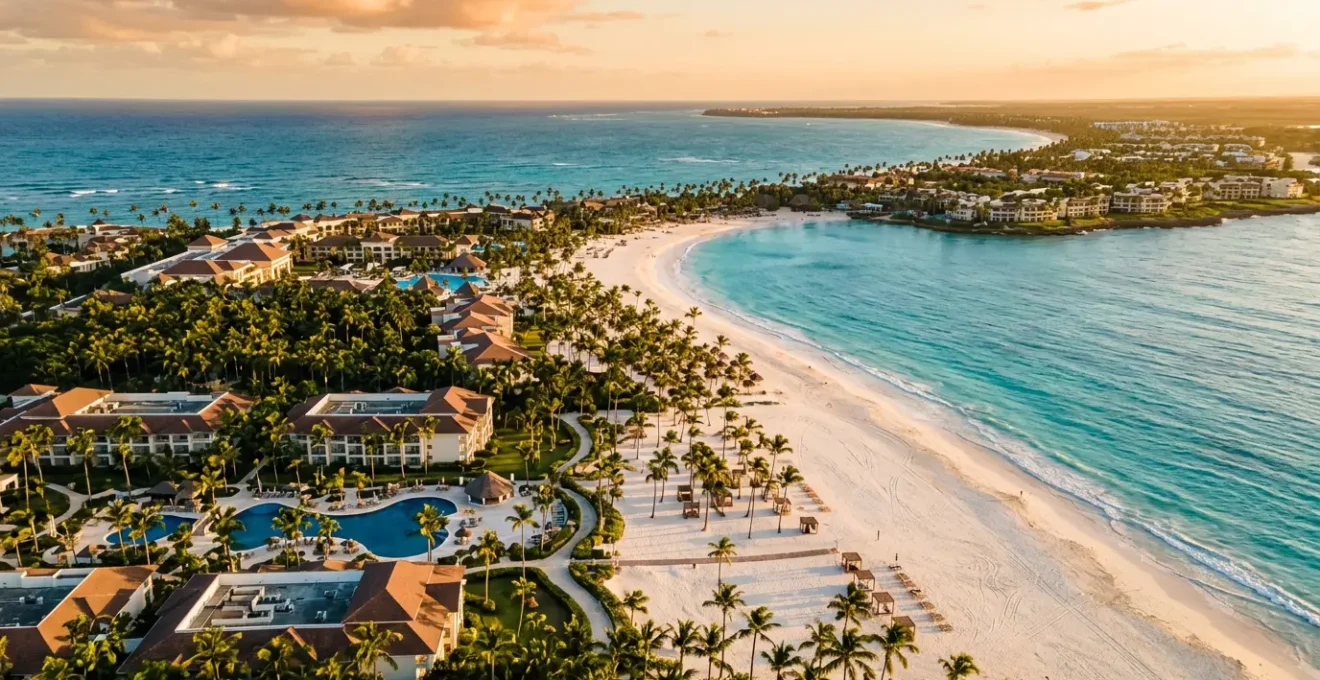
The perfect Punta Cana resort is chosen by analyzing its operational flaws and pricing traps, not its beachfront photos.
- The “all-inclusive” price is a starting point, with hundreds of dollars in hidden upsells for dining, activities, and transport being the norm.
- A resort’s location in Bávaro versus Cap Cana dictates a fundamentally different vacation experience and price structure, independent of its star rating.
Recommendation: Before booking, investigate a resort’s dining reservation policy and pre-booked transport options—these two factors are the strongest predictors of a frictionless family vacation.
You’ve seen them. Endless photos of turquoise water, infinity pools, and pristine white-sand beaches, all blurring into one another. You’re trying to book a family vacation to Punta Cana, but every resort’s website looks like a carbon copy of the last. You’re a parent with limited time and a significant budget on the line, and the fear of making the wrong choice is paralyzing. The generic advice to “read reviews” or “check the amenities” is useless when all 100+ family-friendly resorts seem to offer the exact same things. You’re left wondering: what *really* separates a truly great resort from a merely mediocre one?
As a critic who has stayed in over 50 properties in the region, I can tell you the secret isn’t in the marketing. It’s not about the number of pools or the color of the sand. The key to finding the perfect resort is to stop looking at it like a tourist and start analyzing it like an operations manager. The true quality of your vacation is determined by hidden systems and structures that are never mentioned in the brochures.
This guide will not show you more pictures of beaches. Instead, it will teach you to decode the resort’s operational DNA. We will dissect the economic realities of different zones, expose the pricing psychology behind the “all-inclusive” model, and map out the logistical weak points that can make or break your trip. By the end, you won’t just choose a resort; you’ll select it with the precision of an insider, ensuring your investment results in a genuinely relaxing and memorable family experience.
To help you navigate this complex landscape, this guide is structured to tackle the most critical decisions you’ll face. From choosing the right geographical zone to avoiding common budget traps, each section provides an insider’s framework for making the best choice.
Summary: A Critic’s Framework for Choosing Your Punta Cana Resort
- Bávaro vs Cap Cana: Which Zone Justifies the Higher Price Tag?
- Why Your “All-Inclusive” Package Might Still Cost You $500 Extra?
- How to Arrange Transport from PUJ Airport Without Waiting in Line for an Hour?
- When to Book Punta Cana to Save 40% on 5-Star Properties?
- The Dining Strategy to Avoid Buffet Boredom During a 7-Day Stay
- Is the “Club Level” Upgrade Worth the Extra $1000 per Week?
- How to Find “Soft Adventure” Activities Suitable for Multi-Generational Families?
- How to Build a Wellness Itinerary That Actually Reduces Stress?
Bávaro vs Cap Cana: Which Zone Justifies the Higher Price Tag?
The first and most critical decision is not which hotel, but which zone. This choice defines the entire character and cost of your vacation. Bávaro is the classic, sprawling heart of Punta Cana—a 48km stretch of continuous beach packed with resorts, shops, and activity. It’s energetic, convenient, and generally offers more competitive pricing. Cap Cana, by contrast, is a private, master-planned luxury community. It’s exclusive, quiet, and feels more like a manicured residential enclave than a tourist strip. The price difference isn’t just a perception; it’s embedded in the real estate.
The higher cost in Cap Cana is quantifiable. A recent property market analysis reveals that prime beachfront properties there command prices around $2,100 per square meter, significantly higher than the $1,569 average for villas in other areas. This premium translates directly to hotel rates. You are paying for exclusivity, security, and access to meticulously maintained amenities like the high-end marina, championship golf courses, and the serene Playa Juanillo. Bávaro offers value and variety, but with crowds. Cap Cana offers tranquility and prestige, but at a steep cost.
The visual and atmospheric differences are stark. A walk along Bávaro’s shore is a vibrant, social experience with a constant flow of people and vendors. A day at a Cap Cana beach is a quieter, more curated affair with more personal space. The choice isn’t about which is “better,” but which operational DNA aligns with your family’s vacation goals. If you thrive on energy and variety, Bávaro is the logical choice. If your priority is peace, quiet, and a high-end, self-contained environment, Cap Cana may justify the expense.
Why Your “All-Inclusive” Package Might Still Cost You $500 Extra?
The term “all-inclusive” is the most misleading phrase in the travel industry. As a parent trying to budget, you see it as a fixed cost. Resorts, however, see it as a base platform for upselling. The standard package almost always excludes a range of premium services, and these extras can easily add $500 or more to a week-long stay. The “all-inclusive” illusion is built on the premise that basics are covered, while desirable experiences come at a premium.
These aren’t obscure costs; they are for the very things you see in the resort’s marketing photos. That romantic lobster dinner on the beach, the deep-sea fishing trip, the relaxing massage, or a round of golf on a championship course—none of these are typically included. Even within the resort, certain liquors, wines, and specialty restaurants carry surcharges. It’s a carefully designed system to extract additional revenue. To avoid sticker shock, you must see the advertised price as a deposit, not the final bill.
Case Study: The “Resort Credit” Trap
Many premium resorts offer “resort credits” (e.g., “$200 in credits”) to seem more inclusive. However, analysis of these systems reveals they are essentially discount coupons. A ‘$50 spa credit,’ for instance, often only applies to treatments costing $200 or more. Similarly, a ‘$30 wine credit’ might only be valid on a $100 bottle. These credits encourage spending on high-margin extras rather than providing a true freebie, a model now common across Caribbean resorts for items like premium steaks and top-shelf liquor.
The following breakdown, based on a recent analysis of typical trip costs, shows where your money will likely go. Understanding this is the first step in creating a realistic budget.
| Extra Cost Category | Typical Price Range | Common Examples |
|---|---|---|
| Premium Dining | $30-50 per person | Specialty restaurants, wine pairings, imported spirits |
| Spa & Wellness | $100-200 per treatment | Massages, facials, aromatherapy sessions |
| Water Sports | $50-150 per activity | Jet skiing, parasailing, deep-sea fishing |
| Golf | $100-250 per round | Green fees at championship courses |
| Private Excursions | $85-700 per trip | Saona Island tours, catamaran trips, cenote visits |
How to Arrange Transport from PUJ Airport Without Waiting in Line for an Hour?
Your vacation begins the moment you land, and nothing erodes that initial excitement faster than logistical friction. Punta Cana International Airport (PUJ) is modern and efficient, but it’s also the gateway for the vast majority of tourists. In fact, official tourism data shows that nearly 59% of all air passengers to the Dominican Republic arrive through its gates. During peak hours, this volume creates chaos in the arrivals hall, particularly around ground transportation.
The default options are a recipe for frustration. Shared shuttles are cheap but can add over an hour to your journey as they make multiple stops. Official taxis are readily available but are often 40-60% more expensive than pre-booked options. The worst choice is engaging with the aggressive touts inside the terminal, who promise great deals but deliver confusion. The single most effective way to bypass this stress is to arrange a private transfer *before* you leave home. For a family, the $35-$60 cost is a small price to pay for sanity and an extra 60-90 minutes of resort time.
A pre-booked driver will be waiting for you outside the terminal, holding a sign with your name. You will walk right past the taxi queues and the shuttle bus crowds, get into a clean, air-conditioned vehicle, and be on your way directly to your resort. This isn’t a luxury; it’s a strategic necessity for any parent who values their time and wants to start their vacation on a calm, controlled note. The key is knowing exactly where to look: representatives for legitimate transfer companies wait outside the customs exit, not inside the scrum of the main arrivals hall.
When to Book Punta Cana to Save 40% on 5-Star Properties?
Timing your booking is less about finding a last-minute “deal” and more about understanding the seasonal pricing structure of the island. The fantasy of a massive discount a week before travel rarely materializes for quality family resorts. The real savings—often up to 40%—are found by strategically booking high-end properties during their less-demanded periods, known as the “shoulder seasons.”
Punta Cana’s calendar is divided into three main pricing tiers:
- Peak Season (Late December – April): This is the high season, with perfect weather and the highest prices. Demand is at its maximum, and discounts are virtually non-existent. You are paying a premium for guaranteed sunshine.
- Shoulder Seasons (May – June & November): These months offer the best of both worlds. The weather is still generally excellent, the crowds have thinned, and resorts are eager to fill rooms. This is the sweet spot for finding significant discounts on 5-star properties.
- Low Season (July – October): This is the heart of the hurricane and rainy season. Prices are at their lowest, but you are trading cost for a higher risk of inclement weather. While you can find incredible bargains, a week of rain can ruin a family vacation.
To secure the best rates, the key is to book well in advance, especially for the shoulder seasons. Resorts use dynamic pricing models that reward early commitments. For a trip in May or November, you should be booking in January or February. By booking a luxury resort 4-6 months ahead for a shoulder-season date, you are essentially getting peak-season quality at a significantly reduced price. This is the most reliable strategy for maximizing the value of your budget without compromising on the quality of the resort or the weather.
The Dining Strategy to Avoid Buffet Boredom During a 7-Day Stay
After three days, even the most elaborate buffet starts to feel repetitive. “Buffet fatigue” is a common complaint, but it’s an entirely avoidable problem. The solution lies not in the food itself, but in a resort’s operational DNA—specifically, its system for à la carte dining reservations. The difference between a frustrating dining experience and a delightful one is often determined within the first hour of your arrival.
The worst resorts use an archaic system requiring you to line up each morning to book a spot for that evening, creating daily stress and competition for limited tables. The best resorts, however, have invested in modern systems. Guest satisfaction analysis shows that resorts with efficient reservation systems see significantly happier diners. One study of dozens of Punta Cana properties found that those allowing guests to book all their dinners upon arrival, either via a concierge or a resort app, scored 35% higher in dining satisfaction. Some newer resorts even let you book your entire week’s restaurant schedule before you check in.
A successful dining week is a planned dining week. A mix of experiences is key: aim for 3-4 à la carte dinners, 2 nights at the best themed buffets (like a seafood or Dominican night), and perhaps one casual experience like room service on your balcony. This variety breaks the monotony and makes each meal feel like a distinct event.
Your Action Plan: Auditing a Resort’s Dining System Before You Book
- Inquiry: Before booking, email the resort or your travel agent and ask for the exact procedure for making à la carte dinner reservations.
- Red Flags: Be wary of vague answers or phrases like “subject to availability” or “book daily.” This indicates a high-friction system.
- Green Lights: Look for confirmation that you can book for your entire stay on day one, or even better, via a mobile app before you arrive.
- Review Analysis: Search TripAdvisor reviews for the keywords “dinner reservations,” “restaurants,” and “booking.” This will give you unfiltered feedback on the reality of the process.
- Decision: Make the quality of the reservation system a top-tier factor in your final decision, equal to the pool or beach quality.
Is the “Club Level” Upgrade Worth the Extra $1000 per Week?
The “Club Level” or “Preferred” upgrade is the ultimate upsell, promising an elevated experience for a hefty price—often $1000 or more for a family for one week. Before you commit, it’s essential to conduct a ruthless value-per-dollar analysis. Broken down, a $1000 upgrade is about $140 per day. Your task is to determine if your family will realistically extract $140 of value from the offered perks each day.
The typical Club Level package includes several key components:
- A Private Lounge: An exclusive space with premium snacks, drinks, and hors d’oeuvres throughout the day.
- Top-Shelf Liquor: Access to premium brands of alcohol not available at the standard bars.
- A Dedicated Concierge: Personalized service for booking dinners, excursions, and handling requests.
- Exclusive Pool/Beach Areas: A quieter, less crowded space reserved for Club guests.
- Upgraded Room Amenities: Better toiletries, a fancier minibar, and sometimes a better room location.
For some families, this is a clear win. If you have older children, value quiet spaces, will drink premium spirits, and will actively use the concierge to manage logistics, the cost can be justified. However, for many families, it’s a poor investment. If your kids are young and you spend all day at the main pool or on excursions, you’ll barely use the private lounge or beach. If you’re not a big drinker, the top-shelf liquor has no value. A travel industry analysis frames the decision perfectly:
The upgrade is for you IF: you value quiet spaces, your kids are old enough to use a private lounge responsibly, and you’ll leverage the concierge for logistics.
– Travel Industry Analysis, Punta Cana Resort Rankings Study
Don’t be swayed by the promise of “luxury.” Be honest about your family’s travel style. More often than not, that $1000 is better spent on a few incredible private excursions or amazing dinners that the whole family will remember, rather than on the passive benefit of a slightly better gin and tonic in a quiet room you rarely visit.
How to Find “Soft Adventure” Activities Suitable for Multi-Generational Families?
Vacationing with grandparents, parents, and kids presents a unique challenge: finding activities that engage everyone without exhausting anyone. The key is to seek out “soft adventures”—experiences that are accessible and enjoyable for a wide range of ages and mobility levels. This requires looking beyond high-octane ziplines and dune buggies and focusing on the experience architecture of an excursion.
A successful multi-generational activity is designed with flexibility in mind. It might offer a more intense option for teenagers while providing a comfortable, shaded viewing area for grandparents. Scape Park in Cap Cana is a prime example of this design philosophy. It operates from 9:00 to 16:00, and its popular Hoyo Azul cenote allows active members to zipline into the water, while others can descend via stairs and relax on viewing platforms. This allows the family to be together without everyone having to do the same thing.
When evaluating potential excursions, apply a “grandparent-friendly” litmus test. Ask critical questions about the logistics:
- Walking & Paths: Are the paths paved and flat, or are they uneven dirt trails? The Indigenous Eyes Ecological Park, with its well-maintained trails, is a great example of an accessible option.
- Shade & Rest: Are there ample covered areas and benches to rest away from the sun?
- Facilities: Are modern, accessible restrooms available throughout the activity?
- Transportation: Is the transport an air-conditioned bus with a smooth ride, or a bumpy open-air truck?
Activities like catamaran cruises (with plenty of shade and seating), tours of chocolate plantations, and visits to accessible cenotes often tick all these boxes. The goal is a shared memory, and that’s only possible if everyone, from the youngest to the oldest, feels comfortable and safe.
Key takeaways
- The true cost of an “all-inclusive” resort is the sticker price plus an average of $500 in expected upsells for premium dining and activities.
- A resort’s operational efficiency, especially its dining reservation system and airport transfer process, is a better indicator of quality than its marketing photos.
- The best value is found by booking 5-star resorts 4-6 months in advance for travel during the “shoulder seasons” (May-June, November).
How to Build a Wellness Itinerary That Actually Reduces Stress?
In a place as stimulating as Punta Cana, “relaxation” can ironically become another item on a stressful to-do list. A truly restorative wellness itinerary isn’t about frantically booking a massage between other activities; it’s about intentionally designing your days to minimize decisions and maximize peace. This approach is gaining traction, as tourism ministry data confirms a 55% growth in Dominican Republic tourism over pre-pandemic levels, with wellness experiences being a key driver.
The foundation of a stress-reducing day is a simple, repeatable structure. Instead of over-scheduling, build a template around four pillars:
- Gentle Movement: Start the day with a sunrise walk on the beach. Temperatures are pleasant, ranging from 19°C to 32°C depending on the season, and the crowds are gone.
- Mindful Relaxation: Opt for a quiet breakfast via room service on your balcony instead of navigating a chaotic buffet. This creates a peaceful, private start to the day.
- Digital Detox: Dedicate midday to being unplugged. Find a designated “quiet pool” (most resorts have one) and read a book. Actively avoid the main pool with its music and activities.
- Passive Wellness: Schedule a single, intentional spa treatment during the spa’s quietest hours (often mid-afternoon). A pre-booked 50-minute massage is more restorative than a last-minute decision.
This structure is about creating pockets of intentional calm. It’s about giving yourself permission to do less. Skip the late-night show in favor of watching the sunset. Choose a light lunch at a quiet beach grill over a heavy meal in a bustling restaurant. By building a predictable rhythm that prioritizes rest over activity, you shift from being a tourist who is “consuming” a vacation to a person who is actively restoring their well-being. The goal is to leave more rested than you arrived, and that requires a conscious, deliberate plan.
The perfect resort is out there, but it won’t reveal itself through glossy brochures. It’s found by applying this critical framework. Start now by evaluating your top three choices not on their beaches or pools, but on their operational DNA, their pricing transparency, and their ability to deliver a genuinely frictionless experience for your family.