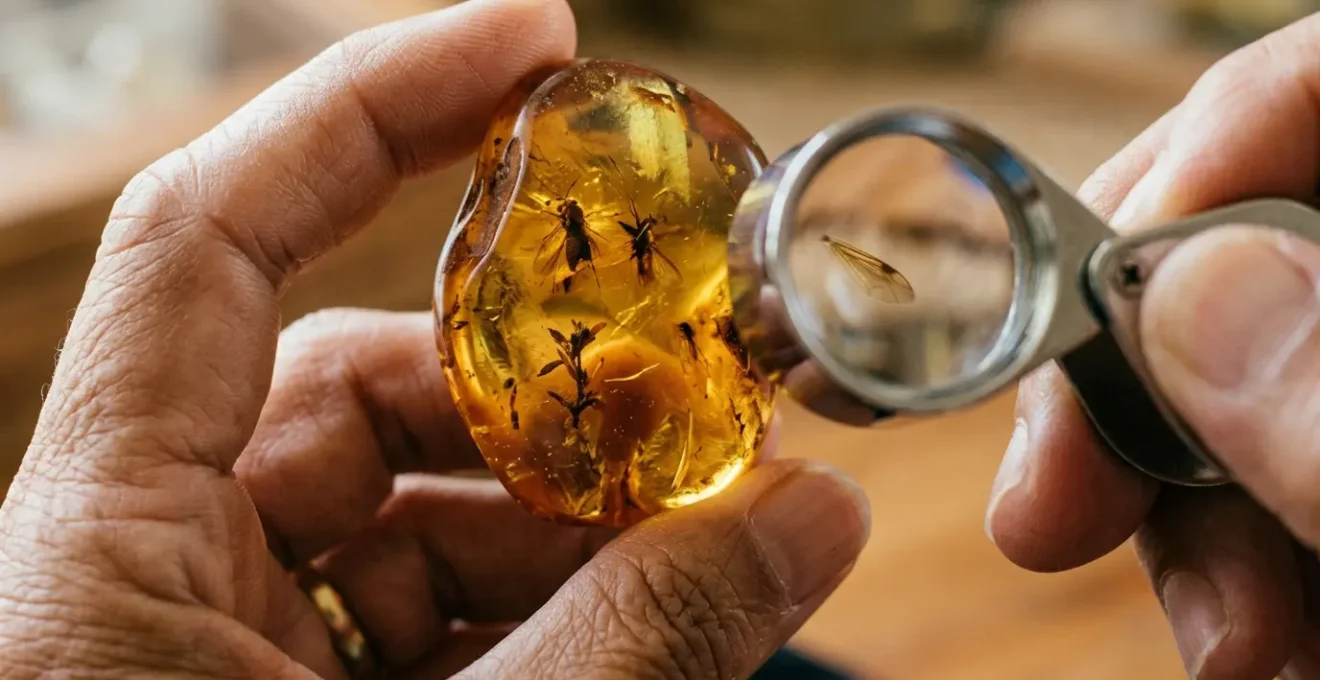
The biggest scam isn’t buying plastic amber; it’s overpaying for a low-grade authentic stone that has no real investment value.
- True value lies in an amber’s scientific rarity and geological provenance, not just its authenticity.
- Effective negotiation is based on gemological knowledge, not aggressive haggling, using benchmarks like the “Four C’s” and museum prices.
Recommendation: Approach every purchase as a formal appraisal. Focus on identifying and documenting the unique characteristics that define an investment-grade geological asset, not just a simple souvenir.
The warm Caribbean light filters through a shop in Santo Domingo’s Zona Colonial, illuminating rows of gleaming amber jewelry. For a shopper with a discerning eye and a desire to own a piece of this island’s geological treasure, the moment is filled with both allure and anxiety. The fear of being scammed—of paying a premium for a clever plastic imitation—is palpable. Many guides will offer simple tricks: the saltwater test, static electricity, or the infamous hot needle test, which is both destructive and impractical in a retail setting. These methods, however, address the most basic, and frankly least common, form of deception.
The real risk for a serious buyer isn’t the obvious fake; it’s the authentic, yet commercially worthless, piece of amber priced as a top-tier investment. A true appraisal goes far beyond a simple “real vs. fake” binary. It involves a methodical evaluation of an amber’s unique story, its scientific significance, and the subtle qualities that separate a common stone from a museum-quality specimen. This requires shifting your mindset from a tourist’s defensive posture to a gemologist’s analytical framework.
This guide provides that framework. We will move past the elementary tests and delve into the professional methodology for appraising Dominican amber. You will learn to evaluate the very factors that dictate its scientific and market value, understand the nuances of color that define rarity, and leverage local institutions as your personal training ground. We will cover the expert negotiation tactics that signal you are a knowledgeable investor, not a mark, and explore the critical importance of provenance, from polishing to finding the true artisans who can unlock a stone’s potential. Ultimately, you will be equipped not just to avoid fakes, but to identify and acquire a true investment.
To navigate this complex but rewarding world, this article breaks down the essential knowledge every serious amber investor needs. The following sections provide a structured path, from understanding geological value to securing your custom-made piece directly from the source.
Summary: A Professional’s Guide to Dominican Gemstones
- Why Is Dominican Amber More Valuable for Science Than Baltic Amber?
- Blue, Green, or Red: Which Amber Color Is the Rarest Investment?
- Amber World Museum or Larimar Museum: Which One for Education?
- The Pricing Mistake That Marks You as a Tourist in Jewelry Stores
- How to Polish Amber Without Melting It?
- Why Is Larimar Found Only in One Mountain in the Dominican Republic?
- How to Buy Custom-Made Jewelry in Santo Domingo?
- Where to Find Artisan Workshops Instead of Tourist Souvenir Shops?
Why Is Dominican Amber More Valuable for Science Than Baltic Amber?
While Baltic amber is older, Dominican amber’s value to science—and consequently, to investors—lies in its exceptional clarity and the unique snapshot of life it preserves. Formed from the resin of the extinct tree species *Hymenaea protera*, Dominican amber dates back 15-20 million years to the Cenozoic era. This period saw the rise of modern mammals and insects, and Dominican amber acts as a pristine time capsule. Its remarkable transparency allows paleontologists to study inclusions of extinct insects, lizards, and plant life with a level of detail impossible in the often cloudier Baltic specimens.
From an appraiser’s viewpoint, this scientific premium translates directly to market value. A piece containing a fully preserved, extinct species is not just jewelry; it is a unique fossil. Authentication involves looking for tells that confirm this origin, such as Schlieren flow lines—subtle, natural patterns visible under a 10x loupe that indicate authentic formation. Furthermore, its specific molecular structure causes a distinct blue or greenish fluorescence under UV light, a key identifier. This scientific desirability underpins its financial worth, as confirmed by current market valuations showing premium gem-quality raw blue amber can command prices of $100 to $400 per gram. Unlike Baltic amber, which is more common, each piece of Dominican amber with a clear inclusion is a one-of-a-kind scientific artifact.
Therefore, the first step in your appraisal is to shift your focus from “Is it old?” to “What unique story does it tell?” A piece with documented inclusions from a specific mine like those in the La Toca or Yanigua formations carries a verifiable provenance that significantly increases its investment-grade status. The scientific narrative is the foundation of its value.
Blue, Green, or Red: Which Amber Color Is the Rarest Investment?
For an investor, understanding the hierarchy of color rarity in Dominican amber is paramount. While the classic honey and yellow hues are beautiful, they are relatively common. The true investment-grade pieces lie in the spectrum of rarer colors, with blue amber standing as the undisputed king. Its coveted blue hue is not a pigment but a fluorescence, a natural phenomenon caused by aromatic hydrocarbons in the resin reacting with UV light. This effect is almost exclusive to Dominican amber.
However, rarity alone does not dictate the highest price. As a gemologist appraises a stone, color is weighed alongside clarity and size. A large, flawless piece of classic honey amber can easily outperform a small, cloudy, or cracked piece of poor-quality blue amber. The market for these rare colors is nuanced, with blue amber being the most liquid asset due to high global demand. Green amber, which is even rarer, appeals to a niche collector’s market, making it a more specialized investment.
To an appraiser’s eye, not all colors are equal, as this investment-grade comparison shows. It’s also critical to distinguish natural red amber from the heat-treated variety, which has minimal investment value. As a 2025 market analysis highlights, the key drivers for blue amber’s price are color intensity, clarity, and size, with pieces over 20 grams commanding significant premiums.
| Color Type | Geological Rarity | Market Price Range | Liquidity | Investment Grade |
|---|---|---|---|---|
| Blue Amber | Very Rare (1-2% of Dominican amber) | $100-$400/gram raw | High demand, easy resale | A+ (Best investment) |
| Green Amber | Extremely Rare (<1%) | $50-$200/gram | Niche collectors market | B+ (Specialist interest) |
| Red Amber (natural) | Rare (3-5%) | $30-$100/gram | Moderate demand | B (Steady value) |
| Red Amber (heat-treated) | Common (artificially created) | $10-$30/gram | Low, value decreases | D (Poor investment) |
Amber World Museum or Larimar Museum: Which One for Education?
For the serious investor, Santo Domingo’s museums are not tourist attractions; they are essential training grounds for calibrating your eye. Both the Amber World Museum and the Larimar Museum serve a critical purpose in your educational journey, but they should be approached with a strategic goal: to build your internal “visual database” of what constitutes investment-grade quality before you ever step into a private shop.
The Amber World Museum is your primary destination for authentication training. Here, you can study museum-grade specimens, including the famous 13.4 kg piece, and memorize the texture, color variations, and inclusion types of authentic, high-quality amber. Pay close attention to the UV fluorescence demonstrations to sear the image of true blue amber’s glow into your memory. Use the museum shop as a data-gathering tool; while experienced collectors report that their prices are often 20-30% higher, this premium buys you guaranteed authenticity and establishes a crucial top-end price benchmark. Photographing specimens (with permission) creates a personal reference library for later comparisons.
The Larimar Museum offers a similar opportunity for the nation’s other signature gem. Your focus here should be on memorizing the ‘Pectolite Silk’ patterns that define top-grade stones and internalizing the color grading system, from the most valuable ‘Volcano Blue’ to the more common ‘Sky Blue’. Test your eye by trying to grade pieces before reading their labels. This self-guided training is invaluable and transforms a simple visit into a professional development exercise, arming you with the confidence and knowledge needed to appraise pieces accurately in the field.
The Pricing Mistake That Marks You as a Tourist in Jewelry Stores
The single biggest mistake a buyer can make is to accept the seller’s opening price as the starting point for negotiation. This immediately frames the conversation around a percentage discount from an inflated number, a game every tourist is expected to play and lose. An expert investor, however, changes the game entirely by establishing their own anchor point based on verifiable value, not the seller’s fantasy price.
The most effective tactic is the ‘museum benchmark’ strategy. After examining a piece, you don’t ask “What’s your best price?” Instead, you make a statement of fact: “This is an interesting piece. The quality is comparable to what I saw at the Amber World Museum, though their settings were different. I know what those pieces are valued at.” This statement immediately signals you are an informed buyer, shifting the negotiation from a haggle over discounts to a discussion about comparative value. Following this with strategic silence and asking detailed questions about the piece’s specific mine origin can often compel a seller to justify their price or offer a more realistic one.
This approach elevates the discussion beyond mere weight. As the Dominican Amber Investment Guide from a Travel Industry Analysis notes, it’s about assessing the complete picture:
A true investor never negotiates solely on weight. Shift the conversation to the ‘Four C’s’ of Amber: Color, Clarity, Craftsmanship, and Context (the story/rarity of the piece)
– Dominican Amber Investment Guide, Travel Industry Analysis
By discussing the four C’s and using your own price anchor, you demonstrate expertise and negotiate from a position of power, focusing on what a piece is actually worth as an asset, not what a tourist is willing to pay for a souvenir.
How to Polish Amber Without Melting It?
From a gemologist’s and investor’s perspective, the answer to “How to polish amber?” is simple: you don’t. The impulse to polish a raw or older piece to a high shine is a common mistake that can permanently diminish its value. Amber is a soft organic gemstone, with a hardness of only 2 to 2.5 on the Mohs scale. Aggressive or amateur polishing with abrasive compounds creates micro-scratches that reduce its clarity and can destroy its surface integrity. Critically, professional appraisers confirm that amateur polishing can reduce amber’s resale value by 15-40%.
Proper conservation is about preservation, not alteration. For routine cleaning, use only lukewarm water with a drop of mild soap and dry immediately with a soft, clean cloth. For maintaining its luster, a gentle buffing with a microfiber cloth is sufficient. Any form of mechanical or chemical treatment, especially ultrasonic cleaners or steam, will cause irreparable damage. Heat is amber’s greatest enemy; its low melting point means that even the friction from an aggressive polishing wheel can cause the surface to melt, craze, or discolor.
Furthermore, experienced collectors often value a piece’s natural surface. An unpolished, authentic patina can be an indicator of age and provenance, a feature that some investors actively seek out. This ‘patina premium’ is lost forever once the original surface is removed. The best approach to care is preventative: store your amber in a fabric-lined box, away from direct sunlight and extreme temperatures (ideally between 65-75°F), and use silica gel packets to control humidity. Documenting your piece with photographs before and after any gentle cleaning helps maintain its provenance record for future valuation.
Why Is Larimar Found Only in One Mountain in the Dominican Republic?
Larimar’s extreme rarity is the core of its investment thesis. Unlike diamonds or emeralds found on multiple continents, this stunning blue pectolite is a geological anomaly found in only one place on Earth: a single, remote mountain range in the province of Barahona. This absolute scarcity is the result of a unique and unrepeatable sequence of volcanic events that occurred millions of years ago. Hot volcanic gases, rich in specific minerals like calcium and sodium, were pushed up through volcanic ‘tubes’ or ‘pipes’ in the mountain’s basaltic rock. As these mineral-rich solutions cooled under precise conditions, they crystallized into the pectolite we know as Larimar.
The specific copper concentration within this solution is what gives Larimar its signature blue color, a feature not found in pectolite from any other location. This single-source reality means the supply is finite and depletable. As miners at the Los Chupaderos mine—the world’s only Larimar source—are forced to dig deeper, often beyond 100 feet, extraction costs rise exponentially, further constraining supply and driving consistent price appreciation. Knowledgeable investors understand that even within this single mountain, value varies significantly by the specific mine vein.
This provenance directly impacts value, as different sections of the mine produce distinct grades of Larimar. An investor must learn to recognize these grades, as a piece’s origin story is written in its color and pattern.
| Grade Name | Mine Section | Color Characteristics | Market Value |
|---|---|---|---|
| Volcano Blue | Los Chupaderos Upper Vein | Deep volcanic blue, high copper concentration | Premium (highest value) |
| Sky Blue | Central deposits | Light blue with white clouds | Standard market price |
| Seafoam | Lower sections | Pale blue-green | Entry level pricing |
Key Takeaways
- Investment value is driven by scientific rarity and geological provenance, not just a simple “real vs. fake” assessment.
- An informed negotiation strategy relies on gemological knowledge, using the “Four C’s” and museum price benchmarks to establish value.
- Securing provenance through direct artisan commissioning and detailed documentation can add significant long-term value to your investment.
How to Buy Custom-Made Jewelry in Santo Domingo?
Acquiring a high-quality loose stone is only half the battle; the true investor knows that the setting and craftsmanship can either enhance or diminish the stone’s value. Commissioning custom-made jewelry in Santo Domingo allows you to control this final, crucial step, transforming a raw asset into a finished piece with documented provenance. This process, however, requires careful vetting of the artisan to ensure their work honors the stone’s integrity.
A true artisan works with raw, high-quality stones, not just pre-cut commercial ‘cabs’ (cabochons). When vetting a potential craftsman, request to see their portfolio, paying close attention to the quality of their soldering and the security of their settings. Most importantly, ask about their understanding of stone orientation. A master artisan knows how to orient a piece of Larimar to maximize its ‘turtle back’ pattern or set a piece of amber to best display its internal inclusions. For translucent amber, an open-back setting is often preferred as it allows light to pass through, showcasing its clarity and any inclusions—a detail that adds commercial value. Laura Tosato, a renowned Santo Domingo jewelry designer, emphasizes this point perfectly in a local artisan interview:
The best investment pieces come from artisans who understand both the artistic and commercial value of proper stone orientation and setting design
– Laura Tosato, Local Artisan Interview
Once you’ve chosen an artisan, the documentation process begins. This is non-negotiable for creating an investment piece. Taking photos with the artisan, the raw stone, and the finished piece creates a provenance story that can add 20-30% to the resale value. The final step is to get a detailed receipt that acts as a certificate of authenticity, listing the stone’s origin, weight, grade, the quality of the setting metal, and the artisan’s signature.
Your Action Plan: Artisan Vetting and Commissioning Checklist
- Verify the artisan works with high-quality raw stones, not just pre-cut commercial cabs.
- Request a portfolio review, examining their soldering joints and the security of their stone settings.
- Ask if they understand stone orientation to maximize a Larimar pattern or feature an amber inclusion.
- Choose settings that enhance value, such as open-back designs for translucent amber.
- Document the creation process with photos: you with the artisan, the raw stone, and the final piece.
- Obtain a detailed receipt listing stone origin, weight, grade, metal quality, and the artisan’s signature.
- Compile this documentation to create a formal provenance story, securing the piece’s investment value.
Where to Find Artisan Workshops Instead of Tourist Souvenir Shops?
The final step in securing an investment-grade piece is to bypass the retail chain and go directly to the source: the artisan workshops. These are the places where raw, high-quality stones are cut and set, and where you can negotiate prices based on materials and labor, not on tourist-inflated retail markups. Finding them requires moving off the beaten path, away from the high-traffic souvenir shops in the Zona Colonial that cater to cruise ship passengers.
Your search should begin before you even arrive in the country. Use digital prospecting tools like Instagram to search for hashtags like #joyeriadominicana, #larimardominicano, and #ambarartesanal. This will reveal local artisans who showcase their work online. You can often contact them directly to arrange a workshop visit. Once on the ground, apply the ‘Two-Street Rule’: never buy on the main tourist thoroughfares. Explore the side streets at least two blocks deeper into the neighborhoods. The workshops with less foot traffic are the ones that survive on reputation and quality, not volume.
Another expert tactic is to use reputable dealers and museum shops as intelligence sources. Don’t ask them where to buy cheaper jewelry. Instead, ask “Where do you source your most interesting raw stones?” or “If I had a high-quality stone, which local artisan would you recommend for custom setting work?” This line of questioning positions you as a knowledgeable peer and may yield valuable leads. The economic incentive for this effort is substantial, as local buyers confirm that artisan workshops can offer 30-50% better prices than shops on the main tourist thoroughfares, while providing superior quality and the opportunity for custom work.
Armed with this gemologist’s framework, you are now equipped to move beyond the souvenir stalls and engage with Dominican amber and Larimar as a serious investor. The journey from a raw stone to a finished piece of jewelry is a story of geology, artistry, and savvy negotiation. The next step is to begin your own prospecting, transforming your purchase from a simple transaction into the acquisition of a documented, investment-grade piece of Earth’s history.