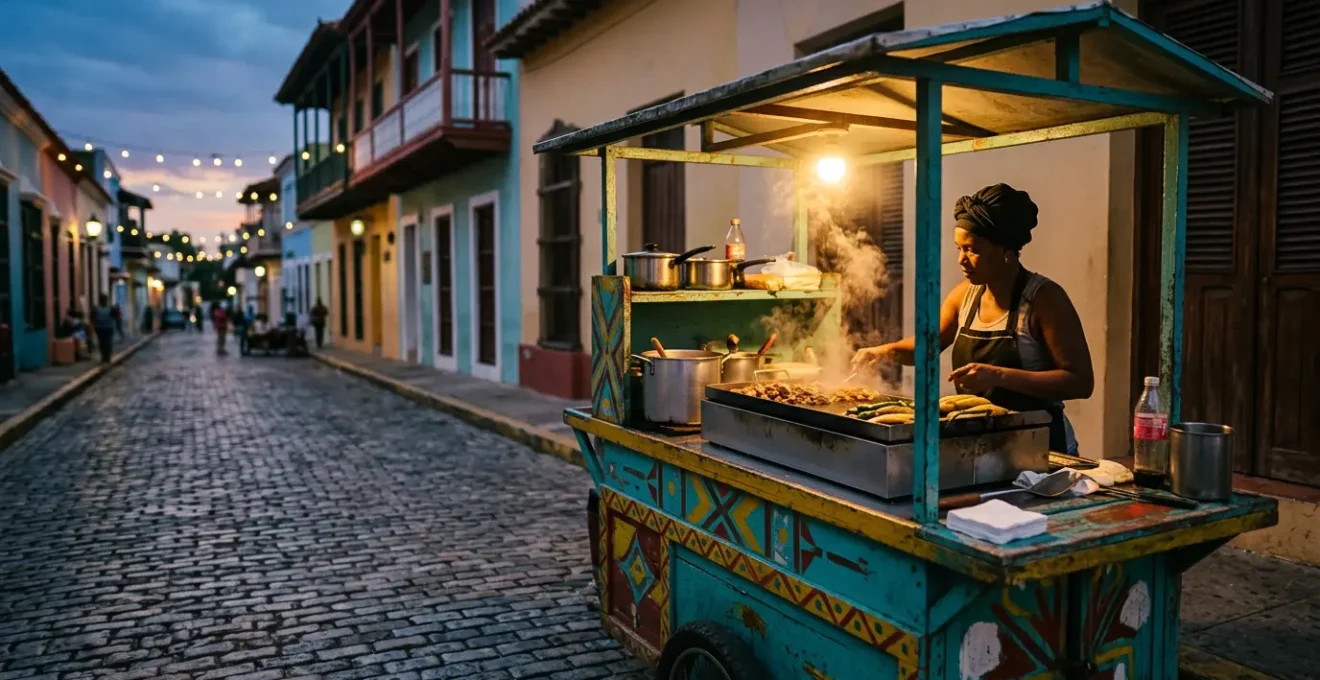
In summary:
- Develop “Street Food Intelligence” by learning to read visual cues like oil color and vendor setup, instead of relying on generic advice.
- Prioritize vendors who cook to order, use fresh ingredients like ‘pan de agua’ for chimis, and follow the local “freshness cycle.”
- Understand that timing is key: chicharrón is best late at night, while other snacks have their own peak freshness windows.
- Master a few personal safety habits, like the ‘Street Food Stance’ and using small bills, to eat confidently and securely.
The sizzle of hot oil, the scent of oregano and grilled meat, the vibrant chaos of a Dominican street corner at dusk—this is the allure of fritura. For the adventurous eater, it’s the gateway to the country’s authentic soul. Yet, this desire for authenticity often clashes with a nagging fear: the dreaded traveler’s stomach bug. Mainstream travel advice offers generic, fear-based rules: “avoid street food,” “only eat at your resort,” or “stick to busy places.” This advice, while well-intentioned, robs you of a core cultural experience and fails to recognize that millions of Dominicans eat this food safely every day.
The secret isn’t avoidance; it’s education. The key to unlocking this culinary world without getting sick is to move beyond tourist-level caution and develop what can be called ‘street food intelligence’. This isn’t about carrying the biggest bottle of hand sanitizer. It’s about learning to see a food stall through the eyes of a local connoisseur—decoding the subtle, specific signals that broadcast quality, freshness, and safety. It’s understanding the rhythm of the street, from the visual grammar of the oil to the cultural timing of the chicharrón rush.
This guide will not give you a list of foods to avoid. Instead, it will equip you with the knowledge to confidently select the right vendors. We will dissect iconic Dominican street foods, teach you how to visually vet a stall, and explain the unwritten rules of the local food scene. By the end, you’ll be able to navigate the world of fritura not with fear, but with the informed confidence of an insider.
To help you master this art, this article breaks down the essential knowledge for enjoying Dominican street food safely, from decoding specific dishes to understanding the broader cultural context.
Contents: How to Eat Dominican Fritura Safely
- Chimichurri vs Hamburger: What Makes the Dominican Chimi Unique?
- Why Is Pica Pollo Different from American Fried Chicken?
- Yaniqueque: The History Behind the Famous Beach Bread
- How to Spot a High-Quality Fritura Stall by Looking at the Oil?
- Why Is Chicharrón Best Eaten Late at Night?
- How Does Cooking on a “Fogón” (Wood Fire) Change the Flavor?
- How to Navigate Dominican City Centers Safely as a Solo Traveler?
- How to Learn Authentic Bachata Steps Without Looking Like a Tourist?
Chimichurri vs Hamburger: What Makes the Dominican Chimi Unique?
The Dominican “chimi” is not a hamburger. Mistaking it for one is the first sign of a tourist. The chimi is a universe unto itself, and its authenticity—and safety—lies in specific, observable details. A true chimi is built on a foundation of pan de agua, a local water bread with a distinctively crispy crust and soft, airy interior, typically shaped into an oval. If the vendor is using standard round hamburger buns, they are already cutting corners.
The soul of the chimi comes from its seasoned beef patty and the toppings. The meat should be grilled to order, not sitting in a tray. A key indicator of quality is the fresh, shredded cabbage (repollo) and the signature ‘salsa rosada’. A dedicated vendor mixes this pink sauce—a blend of mayonnaise, ketchup, a hint of orange juice, and Worcestershire sauce—freshly. Pre-packaged slaw or generic sauce from a large tub are red flags for both authenticity and hygiene, as they can harbor bacteria in the tropical heat.
Finally, always ask for your chimi “bien cocido” (well-done). This ensures the patty reaches a safe internal temperature, killing any potential pathogens. This simple request signals that you are a knowledgeable customer and prioritizes your well-being. By vetting these key components, you’re not just finding a better-tasting meal; you’re actively selecting a safer one.
Action Plan: Spotting an Authentic Chimi Vendor
- Verify the Bread: Look for the signature oval-shaped, crispy ‘pan de agua’, not soft, round hamburger buns.
- Inspect the Toppings: Check for fresh cabbage shredded on-site and ensure the ‘salsa rosada’ is mixed to order, not dispensed from a large, open container.
- Observe Meat Preparation: Confirm the vendor grills heavily seasoned, reddish-hued beef patties to order. Avoid pre-cooked meat.
- Assess Condiment Safety: Prioritize vendors using squeeze bottles for sauces over those with open bowls exposed to the elements.
- Place Your Order with Confidence: Always request your patty ‘bien cocido’ (well-done) to guarantee it’s cooked to a safe internal temperature.
Why Is Pica Pollo Different from American Fried Chicken?
At first glance, pica pollo might look like any other fried chicken. But its unique flavor and texture profile come from a distinct Dominican preparation method that also has implications for food safety. Unlike many American styles that rely on a thick, flour-based batter, authentic pica pollo starts with chicken pieces marinated in a vibrant mix of lime juice, garlic, and most importantly, Dominican oregano. This isn’t just for flavor; the acidity of the lime acts as a mild antimicrobial agent.
The chicken is then lightly dusted with flour and double-fried. This double-fry technique is the secret to its signature ultra-crispy skin and moist interior. The first fry cooks the chicken through at a lower temperature, and the second, shorter fry at a higher temperature creates that coveted crunch. This process is a built-in safety measure. As the USDA’s Food Safety and Inspection Service notes, “Deep frying is very fast and, when performed properly, destroys bacteria.” The key is “performed properly,” which means hot, clean oil—a topic we’ll explore in depth later.
When selecting a pica pollo vendor, look for one who fries in small batches to order. The chicken should be a deep golden brown, not dark or greasy. Often served with a side of fried plantains (tostones), a well-made pica pollo is a masterclass in texture and flavor, a far cry from its fast-food counterparts.
Yaniqueque: The History Behind the Famous Beach Bread
The yaniqueque (or “yanikeke”) is the quintessential Dominican beach snack. This large, thin, crispy-fried dough disc has a fascinating origin story, its name believed to be a Dominicanization of “Johnnycakes,” a recipe brought over by Afro-Caribbean immigrants in the 19th century. While historically a simple flour-and-water bread, today it’s a staple of beach vendors, often sold plain or filled with cheese or meat.
Eating safely at the beach presents unique challenges: sun, sand, and wind. The simplicity of a yaniqueque is its greatest strength. The safest choice is always the plain version, fried fresh to order. This minimizes the risk associated with fillings like cheese or ham that may have been sitting in the heat for an extended period. A reputable beach vendor will have a clean and organized setup, even in a rustic environment. Look for vendors who keep their dough covered with a clean cloth or in a sealed container to protect it from sand and insects.
The cooking station itself is another tell. Is there a windscreen or barrier to shield the hot oil from wind-blown debris? Is the oil light golden and clear, or dark and murky? A vendor who takes these small precautions demonstrates a professional approach to food safety. Choosing a vendor who makes each yaniqueque fresh before your eyes is the single most important step you can take. You’re not just getting a tastier snack; you’re ensuring it was cooked at a high, bacteria-killing temperature moments before you eat it.
How to Spot a High-Quality Fritura Stall by Looking at the Oil?
Of all the visual cues you can learn, none is more critical than assessing the frying oil. The state of the oil is a direct window into the vendor’s hygiene standards and respect for their craft. Fresh, clean oil produces crispier, better-tasting, and significantly safer food. Old, degraded oil not only imparts a bitter, rancid taste but can also contain harmful compounds formed from repeated heating.
You don’t need a lab to perform this check; your eyes and ears are sufficient. Fresh oil is light golden and transparent. As it breaks down, it becomes dark brown, cloudy, and even syrupy. When food is dropped in, fresh oil produces a sharp, consistent sizzle. Degraded oil, often contaminated with water from food, will pop, spit, and crackle aggressively. Furthermore, look at the bottom of the frying vessel. A high concentration of dark, burnt sediment is a major red flag, indicating the oil is rarely changed and that burnt particles are tainting every new batch.
Another crucial indicator is the smoke point. Good quality oil should not smoke at normal frying temperatures (around 350°F/175°C). If you see smoke billowing from the pot, it means the oil is breaking down, releasing acrolein and other potentially harmful compounds. Indeed, food safety research on frying oil safety shows that once levels exceed a 6% Free Fatty Acid concentration, it’s considered unfit for consumption. While you can’t measure this on the street, the visual signs of dark, smoking oil are your proxy for this danger threshold.
This comparative guide can serve as your field manual for making a quick and accurate assessment of any fritura stall.
| Oil Quality Indicator | Fresh/Safe Oil (Good) | Degraded Oil (Red Flag) | Safety Implication |
|---|---|---|---|
| Color | Light golden, transparent | Dark brown, cloudy, syrupy | Dark oil contains harmful polar compounds from repeated heating |
| Sound when frying | Sharp, consistent sizzle | Aggressive popping, spitting, crackling | Popping indicates water contamination and old oil with food particles |
| Floating debris | Minimal, clear oil surface | High concentration of dark burnt sediment at bottom | Burnt particles impart bitter taste and indicate oil is rarely changed |
| Smoke point behavior | No smoke at normal frying temperature (350°F/175°C) | Smoking at normal temperatures, foul odor | Oil breaking down, releasing potentially harmful compounds |
Why Is Chicharrón Best Eaten Late at Night?
Understanding the “freshness cycle” is a core tenet of street food intelligence. Different foods are prepared and are at their peak at different times, synchronized with local cultural rhythms. Chicharrón, crispy fried pork belly or pork rinds, is a prime example. While you might see it for sale during the day, the true connoisseur knows that the best chicharrón is found late at night.
This isn’t just a cultural quirk; it’s a strategic system for ensuring maximum quality and safety. The entire process is a spectacle of culinary dedication, showcasing a deep understanding of food from farm to fryer.
Case Study: Dominican Street Food Culture and Timing
Dominican street food vendors operate on a strategic freshness cycle optimized for peak consumption times. Chicharrón vendors typically prepare their pork belly in the late afternoon (4-6 PM) for the evening and late-night rush. This timing ensures maximum crispiness and freshness during the busiest period when locals leave clubs and bars (10 PM to 2 AM). The practice reflects a deep understanding of both food safety and quality – chicharrón prepared earlier in the day loses its signature crunch and sits at unsafe temperatures. Vendors who follow this traditional schedule demonstrate expertise and commitment to authentic preparation methods.
As confirmed by local guides, the rhythm of Dominican life dictates the menu; you’ll find “people lining up for an empanada in the morning, or enjoying chicharrón with their after-work beer on Friday night.” Buying chicharrón from a vendor in the late evening means you’re getting a product that is fresh, crispy, and has spent minimal time sitting out. It’s a perfect fusion of cultural practice and food safety logic.
How Does Cooking on a “Fogón” (Wood Fire) Change the Flavor?
While much of Dominican fritura comes from the deep fryer, another authentic and beloved cooking method is the fogón, or traditional wood-fire grill. This method imparts a smoky, complex flavor that oil simply cannot replicate. From grilled chicken (pollo al carbón) to roasted pork (puerco asado), the fogón is central to the country’s rustic culinary identity.
From a safety perspective, a well-managed wood fire is an excellent cooking source. The high, dry heat is effective at killing pathogens. However, just like with frying oil, you must learn to spot the difference between a master and a novice. A well-managed fogón uses seasoned (dry) wood, which produces a consistent bed of glowing coals and minimal smoke. Billowing black smoke is a sign of wet wood or incomplete combustion, which can deposit unpleasant-tasting soot on the food.
Observe the setup. The grill grate should be clean, not caked with old, carbonized residue that can transfer bitter flavors and potentially harmful substances. The vendor should control the heat, moving the food to cooler or hotter zones as needed to cook it perfectly without charring it to a crisp. This high-heat, short-time cooking method not only provides incredible flavor but can also be a healthy option, as it “preserves nutrients in vegetables, seafood and lean meats. Wood fire imparts flavor without needing excessive added fats, salt, or processed sauces.” A skilled fogón master is an artist, and choosing their stall is a vote for quality and tradition.
Key Takeaways
- True food safety comes from education, not avoidance. Learn to read the visual and cultural cues of the Dominican street food scene.
- Master the “visual vet”: assess the quality of core ingredients (like ‘pan de agua’), the freshness of toppings, and most importantly, the color and behavior of the frying oil.
- Synchronize with the local “freshness cycle.” Understand that certain foods, like chicharrón, have specific times when they are at their peak quality and safety.
How to Navigate Dominican City Centers Safely as a Solo Traveler?
For a solo traveler, enjoying street food involves more than just food safety; it’s intrinsically linked to personal safety. The very act of stopping to eat on a busy street can make you a target if you’re not mindful. However, by adopting a few strategic habits, you can enjoy your chimi in peace. The risk of illness is real; the CDC data shows attack rates ranging from 30% to 70% of travelers for traveler’s diarrhea depending on the destination, highlighting the need for caution. But this caution should be smart, not fearful.
First, adopt the ‘Street Food Stance.’ Instead of standing vulnerably in the middle of a crowd, find a spot with your back against a wall or a solid structure. This minimizes your blind spots. Always keep your bag in front of you, either between your feet or on your lap—never slung over your back or the back of a chair. Second, master the ‘Small Bills, Separate Pocket’ strategy. Before you even approach a vendor, have small-denomination notes (100-500 pesos) ready in an easily accessible front pocket. This prevents you from pulling out your main wallet and flashing a large amount of cash or credit cards.
Maintain situational awareness. While you eat, make it a habit to periodically scan your surroundings. Making brief eye contact with people around you signals that you are alert and not an easy target. By combining these personal security measures with the food-vetting skills learned earlier, you create a holistic safety strategy. You can confidently navigate the vibrant city centers, savoring authentic flavors while minimizing risks to both your health and your belongings.
Checklist: Solo Traveler Street Food Safety Protocol
- Adopt the ‘Street Food Stance’: Always eat with your back to a wall to maintain awareness of your surroundings.
- Secure Your Bag: Keep your bag in front of you or between your feet, never out of your line of sight.
- Use the ‘Separate Pocket’ Strategy: Carry small bills in a front pocket to avoid exposing your main wallet.
- Map Your Route: Pre-research 2-3 vetted vendors and plan a safe, well-lit route between them, especially at night.
- Be Efficient: Order and pay quickly to minimize the time your money is visible, then move away from the busy transaction area to enjoy your food.
How to Learn Authentic Bachata Steps Without Looking Like a Tourist?
The ultimate goal of developing street food intelligence is deep cultural immersion. It’s about more than just eating; it’s about participating in the rhythm of Dominican life. Interestingly, the skills required to confidently order from a local chimi joint are the same ones needed to step onto a bachata dance floor without feeling like a clumsy outsider: observation, confidence, and a willingness to engage authentically.
Food and music are deeply intertwined in the Dominican Republic. The best, most authentic experiences are often found together, far from the polished tourist resorts. This connection is a powerful tool for any traveler seeking genuine immersion.
Cultural Immersion Through the Food and Dance Connection
The most authentic Dominican chimichurri vendors are strategically located near colmados (neighborhood corner stores) and local bachata spots, far from main tourist drags. These vendors operate on a social schedule synchronized with Dominican nightlife—they open around 9 PM and stay busy until 3 AM, serving dancers and revelers. Observing the confidence locals display when ordering chimis (using specific Dominican slang, customizing their order) mirrors the confidence required to join a bachata circle. Both experiences demand the same skillset: careful observation of local behavior, shedding tourist inhibitions, and participating authentically rather than as a spectator. According to a deep dive into Dominican culture, travelers who successfully navigate one experience often find the other easier—the rhythm of Dominican life encompasses both the dance floor and the dinner plate.
Learning authentic bachata isn’t about memorizing steps from a YouTube video. It’s about going to a local spot, perhaps after enjoying a freshly made chimi, and watching how people move. It’s about feeling the music and allowing yourself to be part of the scene. The confidence you gained by successfully ordering food like a local will translate directly to the dance floor. You’ve already proven you can step outside your comfort zone and engage with the culture on its own terms.
By moving beyond fear and embracing an educated approach, you transform street food from a risk into a rich, rewarding adventure. The next step is to take this knowledge to the streets and begin your own delicious, and safe, exploration of Dominican culture.