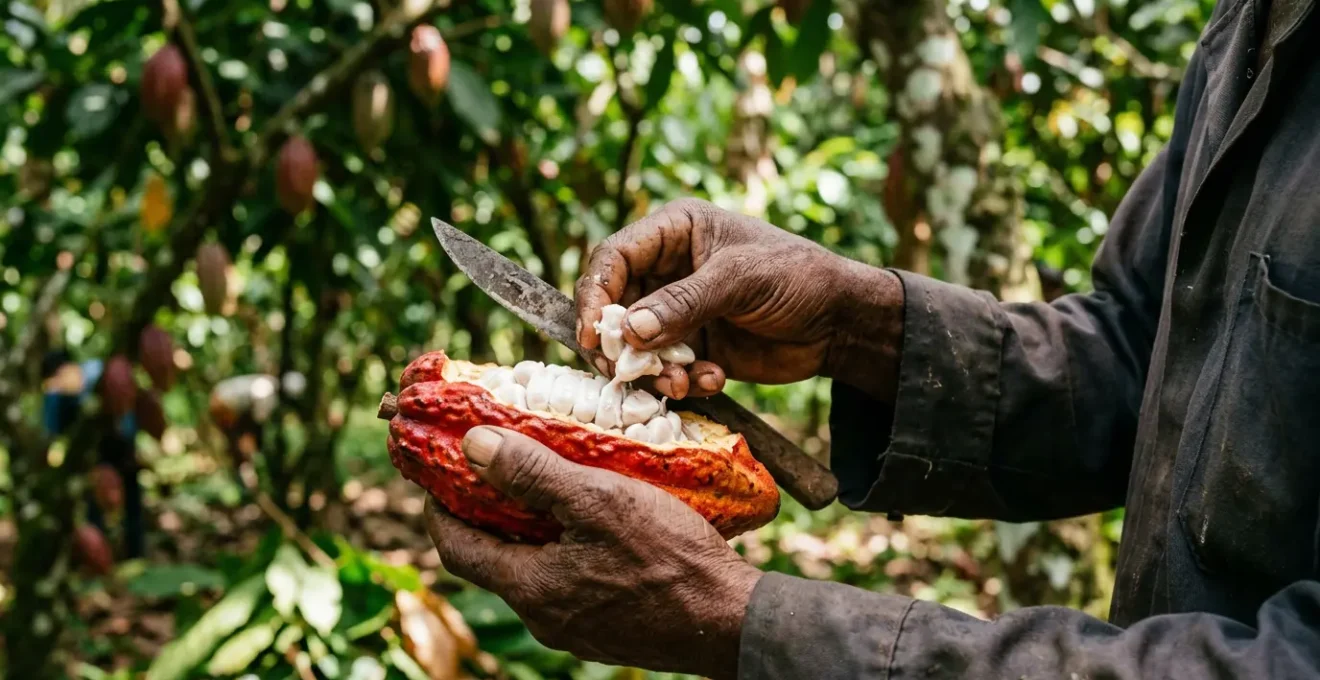
A truly memorable cacao tour goes beyond chocolate, immersing you in the region’s entire agricultural and cultural ecosystem.
- It’s about recognizing shared principles of ‘terroir’ and craft in local coffee, cigars, and cacao.
- It involves understanding the deep connection between the land, the community, and the final product you taste.
Recommendation: Plan your visit not as a single tour, but as a multi-sensory exploration of a place’s agricultural soul.
The rich, earthy smell of roasting cacao beans is an invitation. For any chocolate lover, the fantasy of walking through a plantation, cracking open a fresh cacao pod, and crafting a personal chocolate bar is a powerful draw. Many guides will walk you through the standard “bean-to-bar” process, a fascinating journey in its own right. You’ll see the vibrant pods hanging from the trees, witness the crucial fermentation and drying stages, and taste the complex flavors of a freshly made chocolate.
But what if the secret to a truly profound experience lies not just within the cacao orchard, but in the fields, mountains, and kitchens that surround it? As agritourism developers, we see that the most meaningful journeys adopt a polyculture mindset. This means viewing the cacao farm as a gateway—a lens through which you can understand an entire agricultural tapestry. The principles of soil, climate, and human craft that create exceptional chocolate are the same ones that shape the local coffee, the hand-rolled cigars, and the very spices that define the regional cuisine.
This guide is designed to transform your trip from a simple tour into a holistic exploration. We’ll show you how to plan your cacao and chocolate-making adventure, but more importantly, we’ll reveal how to connect that experience to the wider world of flavors and traditions around you. By understanding the craft lineage of one product, you learn to appreciate them all, turning a tasty excursion into a deep, sensory connection with the land and its people.
To help you navigate this immersive journey, this article breaks down the key elements that transform a simple visit into a comprehensive agritourism experience. You’ll discover how the principles of terroir extend beyond cacao and how to prepare for a truly connected stay.
Summary: A Deep Dive into Cacao and its Agricultural World
- Why Dominican Coffee Tastes Different Depending on the Altitude?
- The Cigar Tour: How to See the Process from Seed to Smoke?
- The Batey History: What Travelers Should Know About Sugar Cane Communities?
- How to Eat a Zapote or Jagua Without Making a Mess?
- How to Plan a Mountain Retreat in the Central Cordillera?
- When Is Mango Season to Taste the Famous “Banilejo” Variety?
- What Are the “Holy Trinity” Spices of Dominican Cooking?
- How to Prepare for a Stay in an Off-Grid Jungle Lodge?
Why Dominican Coffee Tastes Different Depending on the Altitude?
Dominican coffee’s flavor profile changes dramatically with altitude primarily due to temperature, soil, and drainage variations. At higher elevations (above 1,200 meters), cooler temperatures slow the coffee cherry’s maturation process. This extended ripening time allows more complex sugars and acids to develop within the bean, resulting in a cup that is brighter, more aromatic, and often features citrus or floral notes. Lower altitude coffees mature faster in warmer climates, typically yielding a bolder, earthier, and less acidic flavor.
This concept of sensory terroir is the perfect starting point for your agritourism journey because it applies directly to fine-flavor cacao. Just like with coffee, high-altitude cacao beans are prized for their complexity. The same environmental stressors that create a nuanced coffee bean also forge the delicate, fruity, and wine-like notes in Criollo and Trinitario cacao varieties. When you visit a farm, ask about the elevation of different plots. This question alone signals a deeper interest and can open up conversations about microclimates and their impact on flavor.
Many high-end chocolate makers seek out these specific beans. For instance, the renowned Lydgate Farms in Hawaii, celebrated for producing some of the world’s best cacao, leverages its unique high-altitude terroir to create award-winning beans. Their success underscores the direct link between elevation and quality, a principle you can taste in both your morning coffee and your evening chocolate treat.
The Cigar Tour: How to See the Process from Seed to Smoke?
A cigar tour reveals the meticulous journey from a tiny seed to a finished, smokable work of art, a process that mirrors chocolate making in its dedication to craft. The tour typically begins in the nursery, moves to the fields to see the mature plants, then enters the curing barns where leaves are dried. The most critical stage is fermentation, where leaves are stacked in large piles (pilones) to heat up, a process that removes ammonia and refines the flavor. Finally, you’ll see artisans hand-rolling the aged leaves with incredible precision.
While seemingly different, the craft lineage of premium tobacco and fine cacao share a foundational step: fermentation. This controlled decomposition is where the magic happens for both. It’s the stage that unlocks the complex flavor precursors that will define the final product. Understanding this parallel deepens your appreciation for both crafts, revealing a shared philosophy of transformation.
This paragraph introduces the following table, which breaks down the fascinating parallels and differences in the fermentation process for these two luxury agricultural products, as detailed in a comparative analysis of agro-industries.
| Aspect | Premium Tobacco | Fine Cacao |
|---|---|---|
| Duration | 45-60 days | 5-7 days |
| Temperature Range | 90-140°F (32-60°C) | 104-122°F (40-50°C) |
| Key Chemical Process | Nicotine reduction, sugar development | Acid development, precursor formation |
| Turning Frequency | Daily monitoring | Every 24-48 hours |
| End Result | Smooth, complex smoke | Complex flavor precursors |
| Quality Indicators | Even color, flexibility, aroma | Brown color, vinegar smell transitioning to fruity |
The final step in chocolate making, tempering, is another display of artisan skill. This precise heating and cooling process aligns the cocoa butter’s crystals, giving high-quality chocolate its signature snap, glossy shine, and smooth mouthfeel. Watching a chocolatier work the liquid chocolate on a marble slab is as mesmerizing as watching a master torcedor roll a cigar.
By visiting both a cigar factory and a cacao plantation, you’re not just seeing two separate industries; you’re witnessing a shared regional dedication to artisanal transformation.
The Batey History: What Travelers Should Know About Sugar Cane Communities?
Travelers should know that Bateys are communities originally built to house sugarcane workers, and their history is deeply intertwined with the story of labor, migration, and economic struggle in the Caribbean. While often associated with sugar, the Batey represents a broader narrative about the agricultural economy and the people who power it. Understanding this history provides crucial context for modern agritourism, encouraging visitors to think critically about where their food comes from and who benefits from its production.
This perspective of economic dignity is vital when you visit a cacao farm. The romantic image of chocolate production often obscures the harsh economic realities. The discussion around fair pay is critical, especially when you learn that, on average, only 6% of a chocolate bar’s retail value is what a cacao farmer receives. By choosing tours that are transparent about their labor practices or are farmer-owned, you contribute to a more equitable system. Your visit becomes more than a transaction; it’s an act of support for sustainable livelihoods.
Case Study: From Monoculture to Polyculture at Finca La Iguana
The story of Finca La Iguana in Costa Rica offers a powerful example of this transformation. After a fungus wiped out their cacao monoculture in the 1990s, the family returned to cattle ranching. However, with the rise of ecotourism, they began processing small batches of chocolate from their recovering orchard for visitors. As detailed in a report on regenerative tourism, the interest was so immense that they developed a full tour and enhanced their farm into a diverse agroforestry system. Today, agritourism provides them with a direct, stable income, allowing them to thrive by showcasing their polyculture farm rather than just selling a raw commodity.
When you plan your trip, look for farms that have a similar story or mission. These are the places where your tourism dollars directly empower communities, supporting a shift from volatile commodity markets to a model that values both the product and the producer.
How to Eat a Zapote or Jagua Without Making a Mess?
To eat a zapote or jagua with minimal mess, the key is preparation and the right tools—namely a knife, a spoon, and a plate. For a zapote, cut it into quarters lengthwise, then use a spoon to easily scoop the creamy flesh away from the large, smooth seed. For jagua, which is notorious for staining skin a dark blue-black for days, wearing gloves is non-negotiable. Carefully cut it open and consume the pulp quickly before it oxidizes. Having wet wipes or water on hand is always a wise strategy for any tropical fruit tasting.
However, the real agritourist’s answer is to embrace the mess. This is a core tenet of the polyculture mindset. The stickiness, the juice running down your chin—it’s part of an authentic, sensory connection to the farm’s diverse bounty. Cacao farms are rarely just cacao. They are vibrant ecosystems teeming with other fruit trees like mango, passion fruit, and, yes, the messy-but-delicious zapote. A good tour will encourage you to taste what’s in season.
The experience of eating fresh cacao pulp directly from the pod is similarly primal and a little messy. You don’t bite it; you suck the sweet, tangy pulp off each individual bean. This act connects you directly to the raw material of chocolate in its most natural state. By leaning into these beautifully imperfect moments, you move from being a spectator to a participant in the farm’s life.
How to Plan a Mountain Retreat in the Central Cordillera?
To plan a mountain retreat in the Central Cordillera, you should focus on choosing a base that offers both tranquility and strategic access to the agricultural regions in the foothills and valleys. Look for eco-lodges or guesthouses that prioritize sustainability and have relationships with local guides or farmers. The goal is to use the cool, serene mountain environment as your “base camp” for targeted explorations into the warmer, fertile lands where cacao, coffee, and tobacco thrive. This “hub and spoke” model allows you to enjoy restful evenings in the mountains and active, educational days on the farms.
This approach transforms a simple vacation into a structured agritourism expedition. The contrast between the crisp mountain air and the humid warmth of a cacao plantation enriches the sensory experience of your entire trip. A mountain retreat provides the perfect mental space to relax and reflect on your farm visits. You can spend your evenings journaling about tasting notes or simply enjoying the quiet, fully present after a day of learning.
Integrating a cacao tour into this retreat requires a bit of logistical planning to maximize the experience. The key is to schedule your farm visits thoughtfully to align with the relaxed pace of a retreat, rather than rushing from one activity to the next.
Action Plan: Planning Your Cacao Farm Day Trip from a Mountain Retreat
- Book Smart: Schedule your cacao tour for mid-morning (9-10 am) to enjoy cooler temperatures while walking through the orchards.
- Pack in Layers: You’ll be descending from the cool mountains to warmer cacao-growing elevations, so adaptable clothing is essential.
- Allocate Time: Allow 2-3 hours for the farm tour itself, plus round-trip travel time from your mountain base. Don’t rush the experience.
- Bring a Journal: The meditative process of chocolate-making pairs beautifully with journaling. A notebook for tasting notes is a must.
- Consider a Workshop: Enhance your trip by booking a “bean-to-bar” workshop where you can get hands-on experience grinding cacao by hand.
When Is Mango Season to Taste the Famous “Banilejo” Variety?
The main mango season in the Dominican Republic typically runs from late spring through the summer, roughly from May to September. To taste the famous ‘Banilejo’ mango, a small, intensely sweet, and fiberless variety, the peak time to visit is often June and July. This is when the fruit is at its most abundant and flavorful, and you’ll find it sold at roadside stands and local markets throughout the country, especially in its home province of Peravia.
Asking about the ‘Banilejo’ mango season is more than a practical question; it’s an entry point into the concept of varietal importance, a cornerstone of the entire agricultural tapestry. Just as connoisseurs seek out a specific mango for its unique flavor profile, chocolate makers treasure specific heirloom cacao varietals. The world of mass-market chocolate is dominated by high-yield, disease-resistant hybrids like CCN-51, but the world of craft chocolate celebrates the complex flavors of heritage beans like Criollo and Nacional.
This comparative table highlights the trade-offs between different cacao varietals, a concept that a cacao farmer or chocolate maker would be thrilled to discuss with an interested visitor, based on data from agritourism farm tour information.
| Varietal | Origin | Flavor Profile | Yield | Disease Resistance |
|---|---|---|---|---|
| Criollo | Venezuela/Ecuador | Complex, fruity, low bitterness | Very Low | Poor |
| Nacional | Ecuador | Floral, fruity, nutty | Low | Moderate |
| Trinitario | Trinidad | Balanced, spicy, fruity | Medium | Good |
| CCN-51 | Ecuador (hybrid) | Mild, acidic, less complex | Very High | Excellent |
When you’re on a cacao tour, ask, “What varietals do you grow here? Why did you choose them?” This question elevates your conversation from that of a tourist to that of a connoisseur, showing you understand that, just like with mangoes, not all cacao is created equal.
What Are the “Holy Trinity” Spices of Dominican Cooking?
The “Holy Trinity” of Dominican cooking, known as “sazón,” is a foundational flavor base typically made from a blend of garlic, oregano (specifically Dominican oregano, which is more pungent), and bell peppers or cilantro. This aromatic combination is the starting point for countless traditional dishes, from stews and rice to marinades for meats. It’s the defining taste of the island’s culinary identity, a perfect example of how a few key ingredients create a distinct sensory terroir.
This tradition of using a specific spice blend to create a signature flavor profile has deep roots, connecting directly to the history of chocolate itself. Long before it was sweetened into bars, cacao was a sacred Mesoamerican beverage, often consumed with spices. The Mayans and Aztecs mixed ground cacao with chili, vanilla, and other local ingredients. This heritage of spiced chocolate is a vital part of the craft lineage you explore on an agritourism journey.
Case Study: Reviving Mesoamerican Spice Traditions in Modern Chocolate
Some modern craft chocolate makers are reviving these ancient traditions. For example, as highlighted by producers focused on historical methods, it’s possible to find hot chocolate made in the traditional Latin American style. Instead of processed sugar and milk powder, they use freshly ground chocolate liquor, whole vanilla pods, and allspice. This approach honors the origins of chocolate as a complex, savory, and spiced beverage, a world away from a simple candy bar.
Many cacao farm tours culminate in a chocolate-making workshop, which is the perfect opportunity to experiment with this concept. After you’ve ground your own beans, you can create your own spiced chocolate bar. Try adding a pinch of cinnamon, nutmeg, or even a tiny dash of chili to connect your creation back to the ancient traditions and the local spice culture you’ve been exploring.
Key Takeaways
- A true agritourism experience connects cacao to the region’s broader agricultural world, including coffee, cigars, and fruit.
- The principles of terroir, fermentation, and craft are a shared language across different artisanal products.
- Engaging with local communities and understanding their economic realities adds profound meaning to your visit.
How to Prepare for a Stay in an Off-Grid Jungle Lodge?
Preparing for a stay in an off-grid jungle lodge requires a shift in mindset and packing strategy, focusing on self-sufficiency, sensory awareness, and minimal impact. You should pack lightweight, quick-dry clothing in neutral colors, a reliable headlamp (with a red-light filter to avoid disturbing wildlife), and a high-quality water filter or purifier. Most importantly, prepare to disconnect from technology and reconnect with your environment. Download offline maps and plant identification apps before you lose signal, and bring a waterproof notebook to record your observations.
This deep immersion is the ultimate expression of the polyculture mindset. Staying at a jungle lodge, perhaps one located on or near a cacao farm, allows you to experience the agricultural tapestry around the clock. You’ll wake up to the sounds of the rainforest, taste water from a local spring, and notice the subtle shifts in the environment from dawn to dusk. It’s a stark contrast to the mass-market experience of chocolate. While global consumption grows, with some estimates suggesting that worldwide chocolate consumption is 7.5 million tons annually, the true magic of cacao is found in these quiet, off-grid places.
Your packing should reflect a focus on sensory engagement. Unscented wipes are essential, as artificial fragrances can interfere with the delicate aromatics of a chocolate tasting. Bringing small, sealed jars can be useful for collecting samples of dried beans or local spices (where permitted) to compare later. This level of preparation turns your stay from a simple overnight into a dedicated sensory expedition, allowing you to fully appreciate the subtle nuances of the terroir.
By embracing this holistic approach, your journey becomes more than a quest for the perfect chocolate bar. It becomes a rich, multi-layered story of place, people, and process. The next step is to start planning your own immersive journey, seeking out the farms and lodges that champion this profound vision of agritourism.