In summary:
- Safely accessing Samaná’s best views requires an expedition mindset, focusing on self-guided logistics over standard tours.
- Mastering local transport like “guaguas” and understanding micro-weather patterns are key to reaching remote spots independently.
- Prioritize morning excursions for the best light and to avoid common afternoon rain showers that obscure views.
- True adventure on the peninsula means making ethical choices, from how you hike to how you watch whales.
For the adventure photographer and serious hiker, the Samaná Peninsula is a canvas of untamed beauty. The desire for that perfect shot—a sheer cliff dropping into turquoise water, a hidden waterfall veiled in mist—is a powerful draw. Yet, this very allure can lead you down a well-trodden path of generic bus tours and crowded viewpoints, leaving you with the same photos as everyone else and a feeling that the real peninsula remained just out of reach. The common advice is to book a package deal, hire a guide for everything, and follow the crowd.
But what if the key to unlocking Samaná’s most dramatic landscapes wasn’t about booking another tour, but about adopting an expeditionary mindset? This approach trades convenience for control, and passivity for preparation. It’s about understanding the terrain, the culture, and the climate not as obstacles, but as variables you can use to your advantage. It’s the difference between being a passenger and being an explorer.
This guide is built on that principle. We will bypass the superficial and dive into the logistics of true exploration. We’ll cover how to navigate the peninsula’s arteries, read its weather signals, and choose your adventures based on strategic, view-driven planning. From a self-guided trek to its most famous waterfall to finding secret coves and ensuring your presence has a positive impact, you’ll gain the knowledge to craft your own authentic Samaná expedition.
The following sections provide a complete briefing for your self-guided exploration of the Samaná Peninsula. Each part is designed to give you the practical knowledge and strategic insight needed to navigate this stunning region safely and effectively, just as an expedition leader would.
Summary: A Guide to Samaná’s Wildest Landscapes
- Why the Road to Samaná Offers the Best Scenic Driving in the Caribbean?
- How to Hike to El Limón Waterfall Without Using Horses?
- The Weather Mistake That Ruins Peninsula Views in the Afternoon
- Cliffs vs Mangroves: Which Peninsula Landscape Should You Explore by Boat?
- When Is the Peninsula Greenest After the Rainy Season?
- How to Reach the “Secret” Beaches of the North Coast Without a Guide?
- How to Plan a Week in Samaná for Authentic Connection With Nature?
- How to Book an Ethical Whale Watching Tour That Respects the Animals?
Why the Road to Samaná Offers the Best Scenic Driving in the Caribbean?
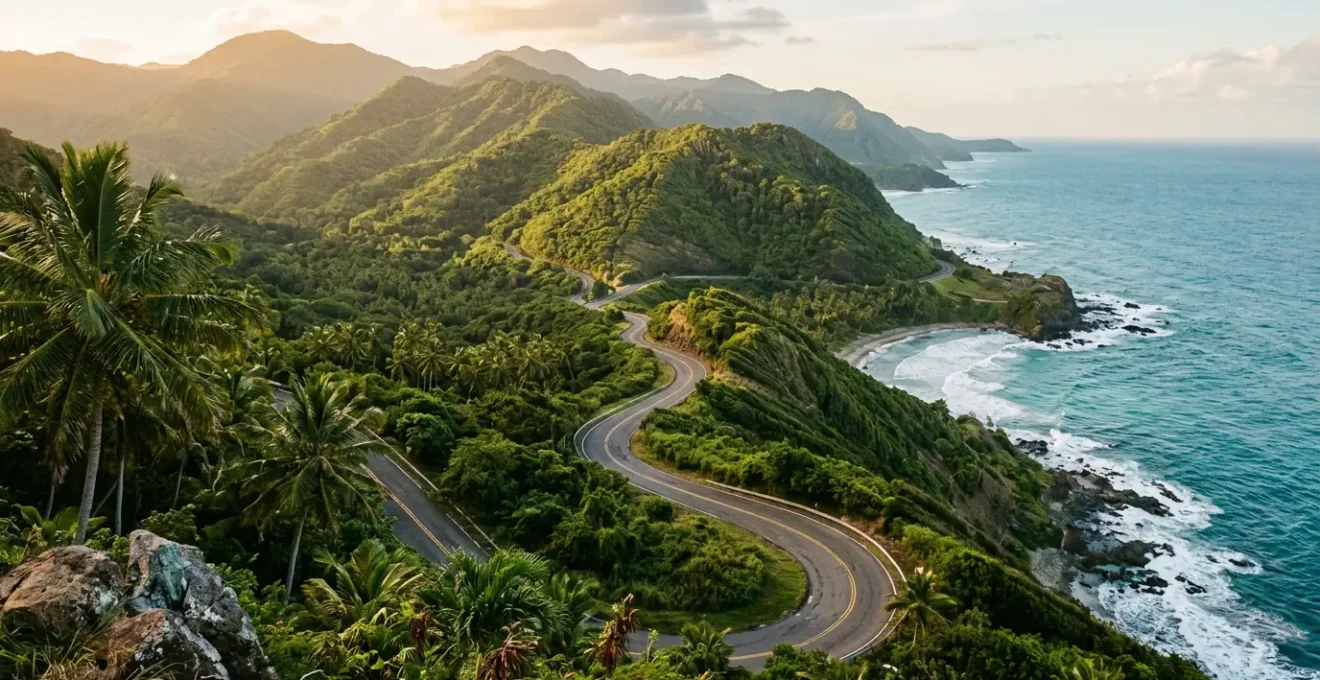
The drive into the Samaná Peninsula isn’t just a transfer; it’s the first and most accessible opportunity to capture its dramatic topography. The route, particularly Highway 5, wraps around coastal hills and offers sweeping vistas of jungle-clad mountains plunging into the azure bay. For a photographer, this road is a linear studio, with every bend revealing a new composition of light, land, and water. The key to making it the “best” scenic drive is treating it like an expedition objective, not just a commute.
The most critical factor is timing. An expeditionary mindset means planning for optimal conditions. Morning drives are non-negotiable. The early light casts long, soft shadows, defining the contours of the landscape and making the greens of the jungle pop against the blue of the ocean. This is your window for crisp, dramatic shots. Driving in the afternoon, especially during the summer, is not only a missed photographic opportunity due to harsh overhead light but also a safety risk.
The peninsula’s microclimate means that even on a clear day, weather patterns can shift rapidly. Regional weather data shows that summer afternoon thundershowers are common, particularly concentrated around the Samaná Bay area. These aren’t just light drizzles; they can be intense downpours that reduce visibility to near zero, turning a scenic drive into a hazardous ordeal. By planning your drive for the morning, you secure better light, clearer views, and safer roads, setting the tone for a well-executed exploration of the peninsula.
How to Hike to El Limón Waterfall Without Using Horses?
El Limón Waterfall is a crown jewel of the peninsula, but the common approach involves crowded, and sometimes ethically questionable, horse tours. For the independent hiker, achieving this objective on your own two feet is not only possible but also more rewarding and aligns with the principle of logistical sovereignty. The key is to bypass the main tourist entry points and use the local transportation system.
Your mission starts in Las Terrenas. Instead of hiring a taxi or tour, head to the main street and look for a “guagua” (a local minivan or pickup truck shuttle) heading towards El Limón. This is authentic, efficient, and incredibly cost-effective. Based on recent hiking reports from 2024, the cost is around 150 pesos per person for transport. You must be clear with the driver: ask to be dropped off at “Parada El Limón” or “Casa Nega,” which is the trailhead for the public path.
From this drop-off point, you’ll pay a modest entrance fee (around 50 pesos) and begin your trek. Hikers report that this path is a straightforward, partially paved trail that takes approximately 30-45 minutes to walk. While some sections can be steep or muddy after rain, it is a very manageable hike for anyone with a decent level of fitness. It allows you to move at your own pace, stopping to photograph the lush jungle canopy and listen to the sounds of the forest without being tethered to a group.
The trail itself is a photographic subject, with gnarled tree roots, vibrant flora, and dappled light filtering through the canopy. Arriving at the powerful 52-meter cascade on foot, having navigated the journey yourself, offers a sense of accomplishment that a packaged tour simply cannot match. To maximize the experience, start early in the morning to beat both the crowds and the midday heat, ensuring a more serene connection with this natural wonder.
The Weather Mistake That Ruins Peninsula Views in the Afternoon
The single biggest mistake an explorer or photographer can make in Samaná is underestimating the daily weather cycle. Many visitors plan their main scenic activities for the afternoon, assuming the day will remain clear. This is a critical error in judgment that often leads to disappointment, as dramatic landscapes become shrouded in cloud and rain, and photographic opportunities are lost to flat, grey light. Weather intelligence is a cornerstone of successful expedition planning.
The peninsula, due to its geography of coastal mountains and a large bay, creates its own weather. The consistent tropical heat causes moisture to evaporate from the bay and ocean throughout the morning. As the day progresses, this moist air rises, cools, and condenses over the peninsula’s high terrain, forming clouds. By early to mid-afternoon, these clouds often develop into significant thundershowers. This pattern is predictable and should be central to your daily planning.
As one climate analysis report for the region clearly states, this is not a random occurrence. In the words of the Holiday Weather Report on Samaná’s climate, ” Generally speaking, summer is characterised by some afternoon thundershowers, which are mainly limited to the immediate Samana Bay area and the peninsula’s western part.” This means that activities requiring clear, long-distance views—like exploring the cliffs of the north coast, scenic drives, or hiking to high viewpoints—must be scheduled for the morning. Afternoons are better suited for activities where weather is less of a factor, such as exploring towns, relaxing at a sheltered beach, or processing the morning’s photos. Ignoring this rhythm is the fastest way to have your epic views washed out.
Cliffs vs Mangroves: Which Peninsula Landscape Should You Explore by Boat?
A boat is an essential expedition tool in Samaná, granting access to landscapes impossible to reach by land. The primary choice you’ll face is between two fundamentally different marine environments: the dramatic cliffs of the north coast and the labyrinthine mangroves of Los Haitises National Park. Your decision should be guided by your primary objective, whether it’s capturing epic seascapes or immersing yourself in wildlife. A view-driven planning approach requires a clear understanding of what each offers.
Exploring the northern coastline, particularly near Las Galeras, is an excursion into raw geological power. Here, a motorboat is necessary to handle the ocean swells as you navigate past towering cliffs, hidden sea caves, and secluded beaches like the famous Playa Frontón. This is the landscape for wide-angle shots of immense scale, capturing the contrast between the rugged limestone and the deep blue of the Atlantic. While you might spot dolphins, the main attraction is the dramatic, imposing coastline itself.
Los Haitises National Park, located on the southern side of Samaná Bay, offers a completely different experience. This is a protected, estuarine environment best explored by a smaller vessel, ideally a kayak for silent, up-close encounters. The focus shifts from grand vistas to intricate details: the complex root systems of the mangroves, the rich birdlife (including pelicans, frigatebirds, and herons), and the ancient Taino pictographs preserved in its caves. It’s a journey into the ecological heart of the region.
This table breaks down the strategic choice:
| Feature | Cliffs & North Coast | Mangroves (Los Haitises) |
|---|---|---|
| Main attractions | Sea caves, hidden beaches, dramatic cliffs | Taino pictographs, bird life, protected ecosystem |
| Best vessel type | Motorboat for ocean swells | Kayak for silent wildlife observation |
| Access difficulty | Requires boat due to remote location | Accessible from Samana Bay |
| Wildlife viewing | Marine life, occasional dolphins | Extensive bird species in mangroves |
As a comparative analysis from travel guides like Rough Guides shows, the choice isn’t about which is “better,” but which aligns with your expedition’s goals. Do you want the raw power of the open ocean and cliffs, or the quiet intimacy of a protected ecosystem?
When Is the Peninsula Greenest After the Rainy Season?
For a photographer, capturing the “peak green” of a landscape is a primary objective. In Samaná, the entire peninsula explodes into a riot of vibrant, lush greens in the period immediately following the rainy season. To time your expedition perfectly, you need to understand the region’s climate data. The answer is clear: the peninsula is at its most verdant and photogenic from late November through February.
The official rainy season in Samaná runs from May to November. Climate data indicates that the annual precipitation increases in late August and peaks through the autumn months. During this time, the landscape is certainly green, but persistent cloud cover and wet conditions make photography and hiking challenging. Trails become notoriously muddy and slick, requiring proper rain gear and sturdy, waterproof boots.
However, once the heavy rains subside around mid-to-late November, the magic happens. The landscape, saturated with water, enters its most vigorous growth phase under the returning sun. The hillsides adopt an almost impossibly deep emerald hue, the palm groves are at their most dense, and the waterfalls, still fed by the season’s rainfall, are flowing powerfully. This post-rainy season window offers the best of both worlds: the spectacular greenery fueled by the rains, but with the more stable, sunnier weather of the dry season, providing the perfect light to capture it.
An expedition planned for December or January will find the peninsula in its absolute prime. The air is slightly cooler and less humid, the skies are generally clearer (especially in the mornings), and every vista is a testament to the life-giving power of the tropical rains. This is the optimal time to deploy a drone or seek high vantage points to capture the breathtaking scale of Samaná’s green splendor.
How to Reach the “Secret” Beaches of the North Coast Without a Guide?
Accessing Samaná’s truly secluded beaches, like Playa Frontón and Playa Madame, is the ultimate test of an explorer’s logistical skills. These are not places you can drive to; their beauty is preserved by their inaccessibility. While many will opt for an expensive, all-inclusive tour, the independent traveler can arrange access by applying the principles of local negotiation and logistical sovereignty. This requires heading to the end of the road: the small fishing village of Las Galeras.
Las Galeras is the nerve center for accessing the wild, cliff-lined coast. The key is to deal directly with the local boat captains. This not only puts more money into the local economy but gives you flexibility and control over your day. The process is straightforward if you know the steps. Forget booking online; this is a face-to-face operation.
Here is your operational plan for a self-arranged excursion to Playa Frontón:
- Establish a Base: Make your way to Las Galeras. The public beach is the main hub where boat captains gather.
- Initiate Contact: Approach the captains directly. Be friendly, respectful, and clear about your destination (e.g., “Playa Frontón”). Some local dive shops or guesthouses can also make trusted introductions.
- Negotiate Terms: Agree on a price for the round trip. This should include drop-off and a designated pick-up time. Be prepared to pay their asking price, as this is their livelihood. Confirm the plan for the day—you can often arrange to be dropped at one beach and picked up from another (e.g., dropped at Frontón, hike to Madame, get picked up there).
- Prepare Provisions: You are your own support team. Pack ample water, sunscreen, snacks, and a hat. While you might be able to buy fresh fish lunch on the beach from locals, it’s not guaranteed.
- Confirm Your Return: Before your captain leaves you on the beach, reconfirm the pick-up time and location. Do not lose track of time.
As travel reports often note, this direct approach is the most authentic way to experience these gems. As one guide puts it, ” Playa Frontón – This beach is only reachable by boat and is surrounded by a coral reef.” By arranging your own transport, you transform a simple boat ride into a genuine part of your expedition.
How to Plan a Week in Samaná for Authentic Connection With Nature?
While many sources suggest a whirlwind tour, a true expedition leader knows that authentic connection requires time. While travel experts suggest that 3-5 days is enough to see the highlights, a full week is the optimal timeframe for an immersive, nature-focused journey. A week allows you to move beyond a simple checklist of sights and adopt a rhythm that’s in tune with the environment, providing a buffer for weather and the flexibility for spontaneous discovery.
The foundation of a successful week-long plan is establishing a strategic base. Las Terrenas is the ideal candidate. It offers the best balance of infrastructure (accommodation, supplies, restaurants) and access to the peninsula’s diverse landscapes. From here, you can launch a series of focused day trips, treating each as a distinct mission. This “base camp” model prevents the exhaustion of constantly moving and allows for deeper exploration of each area.
A well-structured week might look like this:
- Day 1: Arrival & Acclimatization. Settle into Las Terrenas. Explore the local beaches (Playa Bonita, Playa Cosón) and provision for the week.
- Day 2: The Waterfall Mission. A morning expedition to El Limón Waterfall, using the self-guided hiking method. Afternoon for rest or exploring Las Terrenas town.
- Day 3: The North Coast Expedition. A full-day trip to Las Galeras to arrange boat access to Playa Frontón and/or Playa Rincón. This is a major logistical day.
- Day 4: Weather Buffer / Local Immersion. A flexible day. If the weather was bad on a previous day, use this day to retry an objective. Otherwise, explore the area around Las Terrenas on a scooter or quad bike.
- Day 5: The Bay & Whales (Jan-Mar) or Los Haitises. A boat-based day trip into Samaná Bay. During whale season, this is a must. Outside of the season, this is the day to explore the mangroves of Los Haitises National Park.
- Day 6: The Scenic Route. Explore the scenic driving routes east of Las Terrenas towards El Limón, stopping at various viewpoints and lesser-known beaches.
- Day 7: Departure. One last morning walk on the beach before heading out.
This framework provides structure but allows for the flexibility that is essential for true adventure. It builds in time to connect with local culture, to wait out a rainstorm without stress, and to truly absorb the profound natural beauty of the peninsula.
Key takeaways
- Master the Morning: Plan all major scenic and hiking activities for the morning to capitalize on the best light and avoid predictable afternoon rain.
- Embrace Independence: Utilize local “guaguas” and negotiate directly with boat captains to gain flexibility and have a more authentic, cost-effective experience.
- Respect is the Rule: An ethical footprint is non-negotiable. This means choosing operators who follow regulations, keeping a safe distance from wildlife, and leaving no trace.
How to Book an Ethical Whale Watching Tour That Respects the Animals?
From January to March, Samaná Bay becomes one of the world’s most important breeding and calving grounds for North Atlantic humpback whales. Witnessing these majestic creatures is a profound experience, but it comes with a significant responsibility. As an expedition leader, your duty extends beyond your own safety to the welfare of the wildlife you encounter. An ethical footprint is paramount, and choosing your whale watching tour is the most important ethical decision you’ll make in Samaná.
The industry is regulated, but enforcement can be inconsistent. The Dominican Republic has set guidelines for responsible whale watching, but not all operators adhere to them with the same rigor. Your job is to actively seek out the responsible ones. This begins with understanding the rules. For example, official regulations state that a maximum of 43 permits are issued for whale watching in Samaná Bay. This fact alone tells you it’s a sensitive, controlled activity. An operator’s attitude towards these regulations is a clear indicator of their professionalism.
Do not simply book the cheapest or most convenient tour. You must interrogate the operator’s practices before you hand over your money. A responsible explorer asks questions. Is there a naturalist or marine biologist on board to provide education, not just shuttle tourists? Do they respect the mandated approach distances? Do they cut their engines when near the whales? Do they avoid chasing or cornering the animals? A refusal to answer these questions is a major red flag.
Your Action Plan: Vetting an Ethical Whale Watching Operator
- Verify Licensing: Ask if the operator is licensed by the Ministry of Environment and Natural Resources. This is the baseline requirement.
- Question the Crew: Inquire if a trained naturalist or marine biologist will be on board to provide educational commentary and enforce rules.
- Confirm Approach Protocol: Ask about their policy for maintaining the minimum 100-meter safe distance and their rules for limiting viewing time with any single group of whales.
- Assess Anti-Chasing Policy: Directly ask how they handle situations where whales move. A responsible operator lets the whales lead, they never chase or disrupt natural behaviors like breaching or nursing.
- Check for Conservation Focus: Look for operators who emphasize education and conservation in their marketing and pre-trip briefings, not just “guaranteed” sightings.
Choosing an ethical operator might cost a little more or require more research, but it is the only responsible choice. It ensures your presence doesn’t add stress to these animals during a critical phase of their lives and supports a sustainable tourism model that protects the very resource it relies on. Your best photograph is worthless if it comes at the expense of the animal’s well-being.
Your expedition to Samaná begins not when you arrive, but when you commit to this mindset of preparation, awareness, and respect. Use this guide to build your own itinerary, to ask the right questions, and to explore the stunning, authentic landscapes of the peninsula with the confidence and competence of a seasoned explorer. The greatest views are the ones you earn.