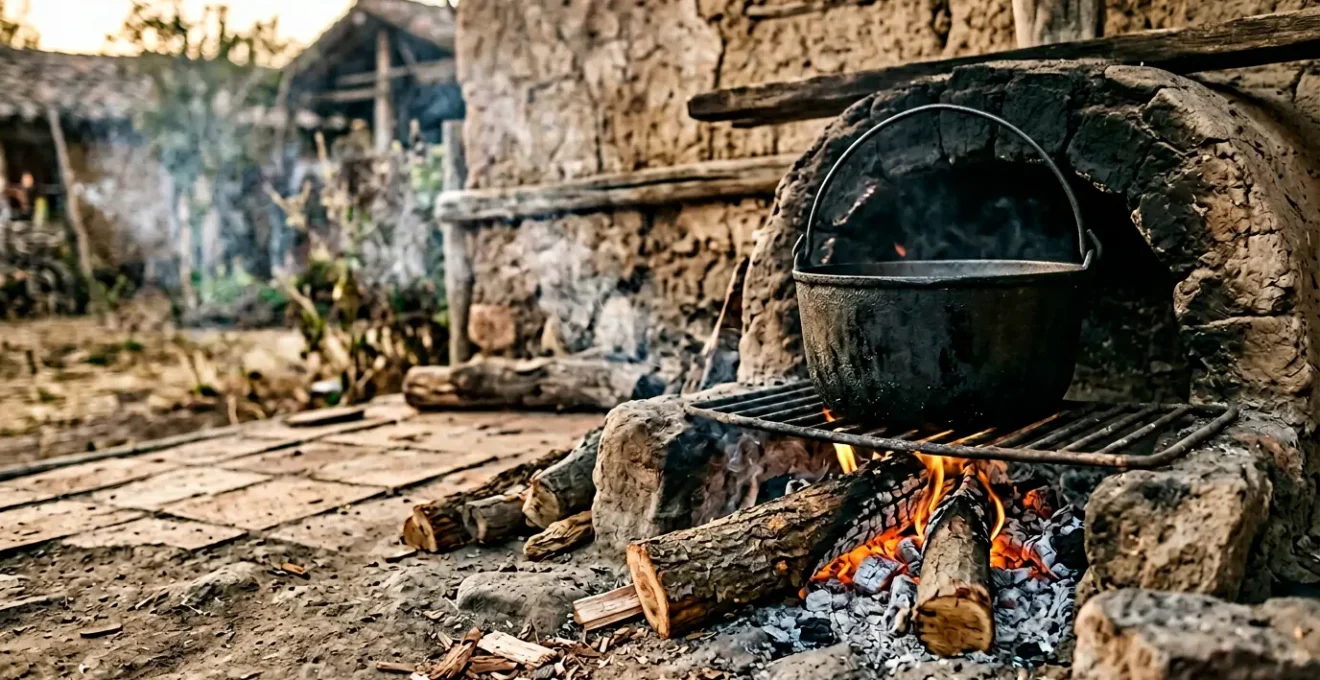
The unforgettable flavor of food cooked over a wood fire, or fogón, isn’t just about smoke. It’s the result of how raw, intense heat interacts with traditional tools. This process forces ideal chemical reactions—from perfect collagen breakdown in stews to superior nutrient extraction—that modern, controlled heat sources struggle to replicate. The true magic lies in the science dictated by the fire itself.
If you’re a fan of barbecue, you already know wood smoke adds a layer of flavor that gas or charcoal can’t touch. But that’s only scratching the surface. When we talk about cooking on a traditional fogón—an open wood fire on the ground—we’re entering a different realm. This isn’t about precise temperature control or fancy grills. It’s about harnessing a living, breathing heat source that has shaped culinary traditions for centuries. Many will say the food tastes better because it’s “natural” or “authentic,” but these are just feelings. The truth is far more scientific and fascinating.
The real secret isn’t just the smoke; it’s how the intense, uneven heat of the wood fire forces a different approach to cooking. This raw energy, when channeled through old-world tools like clay pots and stone mortars, unlocks textures and flavors through specific chemical processes. It’s a culinary world where thermal inertia, cellular disruption, and perfect caramelization aren’t just concepts, but the delicious, tangible results of a method perfected over generations. Forget what you know about modern cooking; the key to the fogón’s magic is not in what you control, but in what you are forced to surrender to the fire.
In this guide, we will explore the science behind why these traditional methods produce such profound flavors. We will break down how the simplest techniques, from mashing plantains to slow-cooking goat, are actually sophisticated applications of chemistry, proving that the old ways are often the best ways.
Summary: The Soul of the Fogón: How Wood Fire Cooking Truly Transforms Flavor
- Why Is Goat Meat (Chivo) Always Slow-Cooked in Spicy Sauce?
- The Art of Mashing: How to Make Smooth Mangú Without Lumps?
- Why Are Clay Pots Still Used in Rural Kitchens?
- Mortar and Pestle: Why Crushing Garlic by Hand Tastes Better?
- Why You Can’t Rush the “Concón” (Burnt Rice) Formation?
- Why Is Sancocho Considered a “Cure-All” and Celebration Dish?
- How to Experience Taino Traditions Through Food and Agriculture?
- How to Participate in Local Traditions Without Being an Intruder?
Why Is Goat Meat (Chivo) Always Slow-Cooked in Spicy Sauce?
Goat meat, or chivo, is a staple in many rural cuisines, but it has a reputation for being tough. Unlike fatty, marbled beef, goat is lean and full of connective tissue. Simply grilling it would result in a dry, chewy meal. The traditional solution is a long, slow braise, a technique perfectly suited to the inconsistent heat of a fogón. The fire’s gentle, lingering embers provide the perfect environment for the magical transformation of collagen into gelatin. This process doesn’t just tenderize the meat; it creates a rich, silky body in the sauce that cannot be rushed.
The spicy, often acidic sauce serves a dual purpose. While it certainly adds a vibrant kick of flavor that balances the gaminess of the goat, the acids in ingredients like tomatoes, citrus, or vinegar also work to break down tough muscle fibers. The slow simmer over several hours allows these flavors to penetrate deep into the meat. It’s a method born from necessity—taming a tough cut of meat with a wild heat source—that results in a dish with incredible depth and tenderness. A modern stove can mimic the low temperature, but it can’t replicate the gentle, all-encompassing radiant heat from the embers that defines this process.
The Art of Mashing: How to Make Smooth Mangú Without Lumps?
Anyone who has tried to make mangú, the beloved Dominican dish of mashed plantains, knows the frustration of a lumpy final product. The secret to a perfectly smooth, velvety texture lies not in the mashing technique itself, but in the crucial first step: the boiling. Traditional cooks know that you need a violent, rolling boil that only a powerful heat source like a fogón can consistently provide. The goal is to cook the plantains as quickly and evenly as possible, which prevents their starch molecules from setting improperly.
As you can see from the intense convection in the pot, this isn’t a gentle simmer. This vigorous boil ensures that the entire plantain, from the outside to the very core, reaches the same level of softness at the same time. If the heat is too low or uneven, the outside of the plantain will turn to mush while the inside remains firm, creating the dreaded lumps when mashed. Once perfectly boiled, the plantains are mashed immediately with a bit of the starchy cooking water and fat (oil, butter, or lard), creating an emulsion that results in that signature smooth texture. The power of the wood fire is the unsung hero of lump-free mangú.
Why Are Clay Pots Still Used in Rural Kitchens?
In an age of stainless steel and non-stick pans, the humble clay pot, or olla de barro, remains a fixture in rural kitchens. This isn’t just nostalgia; it’s a testament to the pot’s superior cooking properties, especially when paired with a wood fire. The magic of clay lies in its thermal inertia. It heats up slowly and, more importantly, distributes that heat far more evenly than metal. This prevents the hot spots that can scorch food at the bottom of a metal pot placed over the intense, concentrated heat of a fogón.
This gentle, even heat creates a perfect environment for stews, beans, and rice dishes. The porous nature of unglazed clay also allows a small amount of steam to escape, concentrating flavors, while the pot itself absorbs and radiates heat from all sides. As the experts at Taste Cooking note, this creates a unique cooking dynamic. Their analysis highlights this fundamental difference:
Clay brings food to a boil more slowly than cast iron, but also more evenly, so the food takes heat from all directions: the sides and lid as well as the bottom.
– Taste Cooking, Inside the Cult of Clay Cookware
This all-around heat is akin to a miniature oven, allowing for slow, uniform cooking that tenderizes ingredients and melds flavors without aggressive boiling. The clay pot isn’t just a container; it’s an active tool that tames the wild heat of the fire and refines it into a gentle, productive energy.
Mortar and Pestle: Why Crushing Garlic by Hand Tastes Better?
In modern kitchens, a press or a blender makes quick work of garlic. But traditional cooks insist on the mortar and pestle (pilón), and science backs them up. The difference in flavor is not imaginary; it comes down to chemistry at a cellular level. When you chop garlic with a knife or blade, you are cleanly slicing through cell walls. The mortar and pestle, however, employs a crushing and grinding action. This brutal, inefficient method causes far more extensive cellular disruption, tearing and rupturing a greater number of cell walls.
This process releases more of the enzyme alliinase, which then mixes with the compound alliin to create allicin—the fiery, pungent molecule responsible for garlic’s signature kick. More cell damage equals more allicin. In fact, research confirms this significant difference; one study found that crushing garlic with a mortar and pestle for 10 minutes yielded dramatically higher allicin levels than other methods. A culinary contributor on Quora explains the sensory result perfectly:
The crushing action releases more essential oils and creates a much richer flavor than a straight whir.
– Quora culinary contributor, What types of things do you crush with a mortar and pestle?
This is why a hand-crushed sofrito base has a depth and pungency that a food processor simply cannot match. It’s a clear case where a slower, more laborious traditional technique yields a scientifically superior result.
Why You Can’t Rush the “Concón” (Burnt Rice) Formation?
For many, the best part of a pot of rice is the concón—the crispy, golden crust that forms at the bottom. It’s a delicacy born from the imperfect heat of the fogón. Achieving perfect concón is an art that cannot be rushed. It’s a delicate dance between two chemical processes: caramelization of the starches and the Maillard reaction, which is the browning reaction between amino acids and reducing sugars. High, direct heat will simply burn the rice, creating a bitter, carbonized mess.
The magic happens after the rice is cooked and the main fire has died down to glowing embers. The heavy cast-iron pot (caldero) retains heat, and the embers provide a steady, low-to-medium radiant heat from below. This allows the bottom layer of rice to slowly toast, reaching the ideal temperature for the Maillard reaction to work its magic. Food science confirms that this browning process proceeds rapidly from around 140 to 165°C (280 to 330°F). This sustained, gentle heat dehydrates the grains and creates that coveted glassy, crunchy texture and nutty, complex flavor. It’s a perfect example of using the waning energy of the fire to create a final, delicious reward.
Why Is Sancocho Considered a “Cure-All” and Celebration Dish?
Sancocho is more than just a stew; it’s a cultural institution. This hearty, meat-and-root-vegetable stew is served at every major celebration, but it’s also the first thing prepared to nurse someone back to health. This dual role as both a party dish and a restorative remedy is directly linked to how it’s cooked: slowly, for hours, over a wood fire. The long cooking time is essential for breaking down tough cuts of meat and bones, which are often used to build the stew’s foundation. This process does more than just make the meat tender.
As the stew simmers at a sub-boiling temperature over the gentle heat of the fire, it masterfully extracts nutrients. The slow, persistent heat is perfect for converting the collagen in bones, joints, and connective tissues into gelatin. The result is a broth that is incredibly rich, flavorful, and packed with easily digestible proteins and minerals. This nutrient density is what gives sancocho its “cure-all” reputation. As noted by one wood-fired cooking resource:
The long, slow, sub-boiling simmer is the ideal method for extracting gelatin and collagen from bones and tough meat cuts, creating a nutrient-dense, easily digestible broth.
– Backyard Brick Ovens, The Science Behind Wood-Fired Cooking
This makes the stew both deeply satisfying for a celebration and profoundly nourishing for someone in recovery. It’s a dish that feeds the body and the soul, a direct result of the slow-extraction power of wood-fire cooking.
How to Experience Taino Traditions Through Food and Agriculture?
Long before the arrival of Europeans and Africans, the island of Hispaniola was home to the Taíno people. Their culinary traditions were deeply connected to the land, based on what they could grow and forage. While many traditions have faded, the Taíno influence remains a powerful undercurrent in Dominican food, especially in rural areas. Experiencing this heritage is about looking for the foundational ingredients and simplest cooking methods. The cornerstone of the Taíno diet was cassava, or yuca, a starchy root vegetable that is still a staple today.
The most authentic way to connect with this tradition is through these core ingredients. Look for dishes featuring yuca, batata (sweet potato), yautía (taro root), and corn. The Taíno people were masters of agriculture, developing a system of planting in mounds called conucos, a practice still visible in the countryside. Their cooking was elemental, often involving roasting vegetables directly in the embers of a fire, a method that imparts a sweet, smoky flavor that can’t be replicated in an oven. Seeking out casabe, a dry, flat bread made from yuca, is another direct taste of this history. It’s a connection not just to a recipe, but to an ancient and resilient agricultural system.
Key takeaways
- The power of a fogón is in its intense, radiant heat, which forces slow-cooking techniques that transform tough ingredients.
- Traditional tools are scientifically superior for flavor: clay pots provide even thermal inertia, while mortars maximize cellular disruption for more potent aromatics.
- Iconic dishes like the crispy concón and nourishing sancocho are the direct result of these scientific principles, not just random recipes.
How to Participate in Local Traditions Without Being an Intruder?
Witnessing these deep-rooted cooking traditions is a powerful experience, and it’s natural to want to be a part of it. However, there’s a fine line between being a welcome guest and an intrusive observer. The key to navigating this is a combination of humility, respect, and genuine curiosity. These kitchens are the heart of the home, not a tourist attraction. Your role is not to “help” in the way you might at home, but to learn and connect. Don’t assume your knowledge of cooking translates here; the rhythms and rules are entirely different and have been perfected over generations.
The goal is to be invited in, not to push your way in. Show interest, ask respectful questions, and be patient. The greatest compliment you can give is not your assistance, but your undivided, appreciative attention. Acknowledging the skill and knowledge of the cook is the first and most important step. True participation comes from a place of respect, not a desire to control or contribute in a technical sense. The following steps provide a practical guide for earning your place by the fire.
Your action plan: Earning a Place by the Fire
- Observe and Learn: Before offering to help, simply watch. Understand the flow, who does what, and the rhythm of the work. Your first job is to be an invisible, respectful presence.
- Ask, Don’t Assume: Show genuine curiosity. Ask questions like, “Why do you add that now?” or “What is that ingredient?” This shows respect for the cook’s expertise and opens the door to conversation.
- Start with Small, Deferential Tasks: If you do offer to help, volunteer for the simplest jobs: peeling vegetables, carrying water, or washing dishes. Never try to take over a core task like seasoning the pot or managing the fire.
- Eat with Gratitude and Praise: The most important form of participation is enjoying the final meal. Praise the food specifically (“The meat is so tender,” “I love the flavor of the broth”). This validates the cook’s hard work.
- Contribute Indirectly: A great way to show respect is to contribute to the household. Offer to buy the drinks for the meal, or bring a small gift of fruit or coffee for the host. This shows you value their hospitality.
The most meaningful way to experience these traditions is to approach them with an open heart and a genuine desire to learn. By understanding the science and soul behind the food, you can participate not as an intruder, but as a respectful student of a rich and living culinary art form.