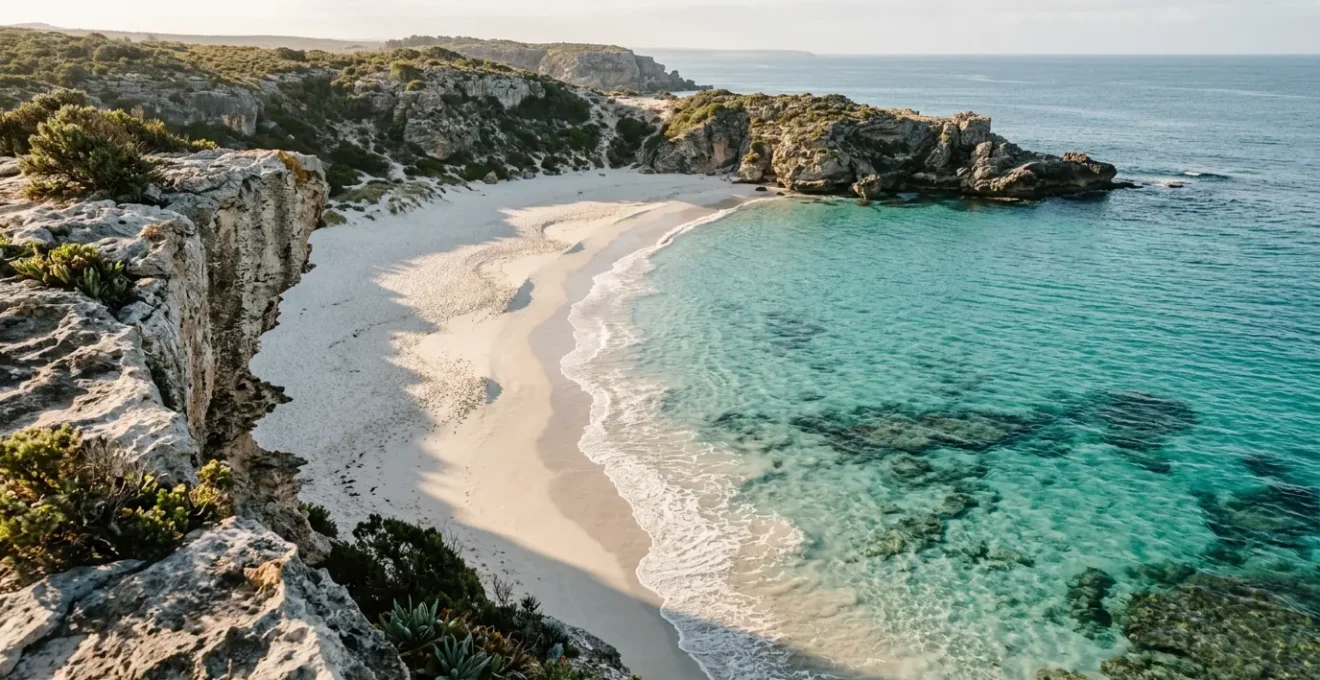
Securing genuine beach privacy is not about luck; it’s a matter of strategic vetting and understanding the subtle difference between ‘private access’ and true solitude.
- Villas and remote eco-lodges consistently outperform hotels for guaranteed isolation.
- The ‘when’ of your visit, down to the hour, is as crucial as the ‘where’ for achieving an empty beach.
Recommendation: Adopt a rigorous digital vetting process before booking to see past marketing gloss and verify the on-the-ground reality of your chosen sanctuary.
The promise is intoxicating: a pristine, empty stretch of sand, reserved just for you. It’s the image that sells luxury travel, the fantasy that fuels the search for the perfect coastal escape. Yet, for the discerning traveler, the reality too often falls short. The “private beach” advertised with the five-star resort turns out to be a crowded strip shared with hundreds, and the exclusive villa offers a view of a public thoroughfare. This gap between the marketing and the reality is the ultimate luxury travel disappointment.
Most advice circles around the obvious: book an expensive resort or travel during the off-season. But these are blunt instruments for a task that requires surgical precision. True exclusivity isn’t simply bought; it is engineered. It demands a shift in mindset—from a passive consumer of luxury to an active architect of your own solitude. The real luxury is not the price tag on the room, but the guaranteed peace that comes from a strategic, informed approach.
This guide provides that framework. We will move beyond the glossy brochures to uncover the systems and strategies required to secure genuine privacy. We will dissect misleading marketing, compare accommodation philosophies, master the art of timing, and even detail how to pack for perfect, uninterrupted isolation. It’s time to stop searching for a private beach and start creating one.
This article will provide you with the complete strategic framework to ensure your next coastal getaway delivers the solitude you’re paying for. Below is a summary of the key areas we will cover to transform you into an expert at engineering privacy.
Summary: The Discerning Traveler’s Blueprint to Coastal Solitude
- Why “Private Beach” Marketing Often Misleads Tourists in Punta Cana?
- Luxury Villa or Boutique Hotel: Which Offers Better Isolation for Couples?
- How to Pack for Remote Coastal Havens Where Shops Are Miles Away?
- When to Visit Popular Havens to Feel Like You Own the Beach?
- The Safety Check You Must Do Before Booking an Isolated Beach House
- Eco-Lodge vs All-Inclusive: Which One Fits Your Travel Personality?
- How to Reach the “Secret” Beaches of the North Coast Without a Guide?
- How to Rent a Private Villa in Casa de Campo Without Hidden Fees?
Why “Private Beach” Marketing Often Misleads Tourists in Punta Cana?
The term “private beach” is one of the most powerful, and often most deceptive, phrases in travel marketing. Especially in destinations like Punta Cana, what is advertised as exclusive is often merely “direct access” to a very public space. The fundamental misunderstanding stems from a legal principle that governs most coastlines worldwide: the Public Trust Doctrine. This doctrine holds that the shoreline, specifically the area below the high tide line, is public property, accessible to all.
As the legal experts at Surfertoday.com clarify in their definitive guide, this is not a guideline but a foundational rule of property. Their analysis states:
The area below the high tide line is considered public property, governed by the Public Trust Doctrine
– Surfertoday.com, Public vs. Private Beaches Guide
This means that while a hotel can own the land up to the high-water mark and restrict access *through* its property, it cannot legally stop people from walking along the shoreline. This creates the Privacy Delta: the significant gap between the advertised promise of seclusion and the reality of a shared coastline. To counter this, a savvy traveler must become a digital sleuth, verifying claims before committing. This requires a systematic process to see the truth behind the marketing photos.
Your Action Plan: The Digital Vetting Process for Beach Claims
- Satellite Reconnaissance: Search for the property on Google Earth’s satellite view. Verify the actual beach proximity, assess neighboring properties, and look for signs of public access points or pathways.
- Unfiltered Footage: Look up “[hotel or villa name] beach walk” on YouTube. This often reveals unedited guest footage showing the real conditions, crowds, and noise levels.
- Geotag Intelligence: Check Instagram location tags for the property. This provides a stream of unfiltered, time-stamped photos from actual guests, revealing the beach’s typical state.
- Photo Cross-Reference: Compare the polished marketing photos on the official website with user-generated content from review sites like TripAdvisor or Google Reviews. Look for discrepancies in crowds, beach furniture, and water quality.
- Legal Verification: Perform a quick search on high-tide line laws for the destination (e.g., “Dominican Republic beach access laws”). Understanding the local legal framework gives you the true picture of ownership rights.
By adopting this forensic approach, you shift from a hopeful tourist to an informed strategist, ensuring the beach you book is the one you actually experience.
Luxury Villa or Boutique Hotel: Which Offers Better Isolation for Couples?
For couples seeking true isolation, the choice between a luxury villa and a boutique hotel is a critical one. While high-end hotels offer impeccable service, they operate on a model of shared luxury. Pools, restaurants, and even the beach itself are communal spaces. A private villa, by contrast, is designed around the principle of exclusive-use. This fundamental difference is why the market is seeing what Isle Blue’s market analysis describes as a 40% surge in luxury villa rental demand in 2024. Discerning travelers are actively choosing structural privacy over serviced convenience.
A villa provides a geographic moat—a physical and psychological barrier to the outside world. Your pool is your own, your terrace is your sanctuary, and access is entirely within your control. This structure is inherently more conducive to the uninterrupted intimacy that defines a romantic escape. The very architecture is a statement of seclusion.
As this image of a private villa at sunset suggests, the experience is about an unbroken connection with your surroundings and your partner, free from the peripheral awareness of other guests. Boutique hotels, even the most exclusive, cannot replicate this level of structural solitude. They can offer a private *room* with a view, but a villa offers a private *world* with a view. For couples where the ultimate luxury is a lack of intrusion, the villa is unequivocally the superior choice for guaranteeing isolation.
Ultimately, the decision hinges on your definition of privacy. If it means not having to see another soul unless you choose to, the private villa is the only structure that can reliably deliver on that promise.
How to Pack for Remote Coastal Havens Where Shops Are Miles Away?
Securing a truly remote coastal haven is a victory for privacy, but it introduces a new logistical challenge: self-sufficiency. When the nearest shop is an hour’s drive away, your packing list transforms from one of convenience to one of necessity. This isn’t just about remembering sunscreen; it’s about curating a mobile support system that ensures your splendid isolation remains luxurious, not limiting. Technology and culinary planning are the two pillars of this strategy.
On the tech front, you must plan for connectivity failure and power outages. Your remote paradise can quickly become a stressful trap without the right gear. A robust tech kit is non-negotiable for both safety and comfort:
- Pack a portable power station (at least 20,000mAh), not just a small power bank, to run multiple devices.
- Download offline maps of the entire region on multiple devices before departure.
- Bring a satellite messenger device (e.g., Garmin inReach) for emergency communication where cell service is non-existent.
- Pre-load all entertainment—movies, books, and music—for offline access.
- Include universal adapters and, crucially, backup charging cables for every device.
Beyond technology, culinary self-sufficiency is key to a superior remote experience. Relying on local, often limited, grocery options can be disappointing. Experienced travelers adopt a more strategic approach.
Case Study: The “One-Pan Gourmet” Self-Sufficiency Strategy
As documented by remote travel experts at Western Rise, the ‘One-Pan Gourmet’ approach transforms the challenge of remote cooking into a creative endeavor. The strategy involves packing a small arsenal of non-perishable, high-impact ingredients that can elevate simple, locally sourced foods. Essentials include a high-quality olive oil, dried mushrooms for umami depth, a curated selection of specialty spices, preserved lemons, and vacuum-packed proteins like pancetta or chorizo. This compact culinary kit, often paired with a portable camping stove as a reliable backup, ensures gourmet-level meal variety even when the nearest proper grocery store is hours away. It’s a shift from ‘making do’ to ‘dining well’, anywhere.
By packing strategically for both tech resilience and culinary excellence, you ensure your isolation is a choice you enjoy, not a limitation you endure.
When to Visit Popular Havens to Feel Like You Own the Beach?
Even the most popular, seemingly overrun beaches have moments of perfect solitude. The key to unlocking them is not just avoiding the high season, but mastering the art of temporal arbitrage—exploiting small, predictable windows of time when crowds are naturally at their lowest. This strategic timing can deliver a private beach experience for the price of a standard one, even in sought-after destinations.
The first level of this strategy is targeting macro-windows. Think “shoulder seasons” but with more precision. Instead of a vague “September,” aim for the specific week immediately following a major local holiday, when the domestic tourists have departed but international crowds have not yet returned. The “dead weeks” between Christmas and New Year’s, when most families are occupied with home-based festivities, can also be surprisingly quiet. The goal is to identify the “in-between” moments in the annual travel calendar.
The second, more powerful level is exploiting micro-windows within the day itself. This requires understanding the rhythm of a beach town. Day-trippers and hotel guests follow predictable patterns, creating lulls you can leverage for a feeling of total ownership.
- The Post-Breakfast Lull (9-11 am): Many guests are still finishing breakfast or getting organized for the day, leaving the beach beautifully empty.
- The Pre-Dinner Golden Hour: As day-trippers depart and hotel guests retreat to prepare for dinner, the beach often empties out, bathed in the best light of the day.
- Weather Contrarianism: A forecast of light, intermittent rain is a powerful crowd-repellent. These days often have long, dry, and completely empty periods on the beach for those willing to take a small risk.
- Event Avoidance: Always check local event calendars before booking to avoid dates that coincide with surf competitions, music festivals, or regional holidays that will flood the beaches.
By combining savvy calendar choices with a precise daily schedule, you can effectively have the world’s most beautiful beaches all to yourself, if only for a few perfect hours.
The Safety Check You Must Do Before Booking an Isolated Beach House
The allure of an isolated beach house is its profound privacy, but that very isolation can also be its greatest vulnerability. Engineering your solitude requires an equal and opposite effort in engineering your security. Before you book that remote dream villa, a rigorous safety and security check is not just recommended; it is an absolute necessity. Your peace of mind—and personal safety—depends on it.
This process begins long before you pack your bags, during the digital vetting phase. As the Solo Female Travelers Club’s safety guidelines highlight, primary concerns for many travelers are beach security and the storage of valuables. You must proactively investigate the property’s security posture and its surrounding environment. Don’t be afraid to ask direct questions of the owner or rental agency; their willingness and ability to answer are telling.
Your pre-booking security audit should be a comprehensive checklist covering both digital reconnaissance and direct inquiries. This is your defense against unforeseen risks, from natural hazards to human threats.
- Neighborhood Assessment: Use Google Street View to virtually “walk” the roads leading to the property. Assess the visibility from the road, the quality of fencing, and the general upkeep of the neighborhood.
- Security Systems: Ask the owner specifically about external security cameras (and their coverage), motion-activated lighting, and whether there is a monitored alarm system.
- Emergency Protocol: Verify the emergency contact process. Who do you call first? Is there a local private security firm on call? How far is the nearest police or medical facility?
- Environmental Risks: Check publicly available tsunami and hurricane evacuation routes for the property’s precise location. Research local wildlife advisories, such as jellyfish seasons or the presence of dangerous marine life.
- Communication Lifeline: Before you travel, create a firm plan with someone back home, including scheduled check-in times. If you miss a check-in, they know to initiate an emergency protocol.
By treating safety with the same seriousness as you treat your search for privacy, you ensure that your secluded paradise is a sanctuary in every sense of the word.
Eco-Lodge vs All-Inclusive: Which One Fits Your Travel Personality?
The choice between an eco-lodge and a traditional all-inclusive resort is more than a matter of taste; it’s a choice between two fundamentally different philosophies of privacy. An all-inclusive resort offers Effortless Privacy, managed through controlled access, wristbands, and security. An eco-lodge, conversely, provides Intentional Privacy, born from geographic isolation and a self-selecting clientele. Understanding which philosophy aligns with your personality is key to finding your ideal form of seclusion.
As a 2024 report on luxury hospitality trends from Arthur D. Little notes when describing a premier eco-lodge, the very location is the primary privacy feature: “The level of privacy is unique: the resort is built on a remote, mostly untouched atoll, where dolphins and whales often swim by.” This encapsulates the eco-lodge promise: privacy is not a service layer; it is an inherent quality of the place itself.
This table breaks down the core differences in their approach to creating a private experience, based on the analysis of evolving luxury travel.
| Aspect | All-Inclusive Resort | Eco-Lodge |
|---|---|---|
| Privacy Type | Effortless Privacy (controlled access) | Intentional Privacy (geographic isolation) |
| Auditory Environment | Pool music, entertainment programs | Natural sounds, quiet community ethos |
| Gatekeepers of Privacy | Wristbands, security guards | Remote location, difficult access |
| Social Interaction | Optional but present | Minimal, like-minded guests |
| Service Style | On-demand, structured | Personalized, flexible |
The all-inclusive patron seeks a frictionless environment where privacy is a guaranteed amenity within a bustling ecosystem. The eco-lodge guest, however, actively seeks out friction—the long drive, the boat transfer—as a filter that ensures the only others they meet are equally committed to quiet and immersion in nature. One offers a bubble within the world; the other offers a bubble far removed from it.
Choosing correctly is not about which is “better,” but about honest self-assessment. Do you want privacy delivered to you, or are you willing to journey to it?
How to Reach the “Secret” Beaches of the North Coast Without a Guide?
For the truly adventurous traveler, the ultimate prize is not a pre-vetted private villa but the discovery of a truly secret beach—a hidden cove on the North Coast that isn’t in any guidebook. This level of discovery requires moving beyond traditional travel tools and adopting the mindset of a modern explorer, blending digital cartography with old-fashioned local intelligence.
Finding these places means learning to read the landscape for clues. It’s about looking for the gaps, the unmarked trails, and the places where the land meets the water away from established access points. It requires a specific set of techniques that fuse modern technology with on-the-ground observation.
- Digital Cartography: Use advanced cartography apps like AllTrails or Komoot, which often show user-generated data on unmarked coastal trails that don’t appear on Google Maps.
- Satellite Imagery Analysis: Scour satellite images for breaks in coastal cliffs, river mouths that deposit sand, and coves that are geographically sheltered and lack road access.
- Local Sources: Politely approach local fishermen at non-tourist ports. They possess an unparalleled mental map of the coastline and may be willing to arrange for a private boat drop-off and pickup at a hidden beach for a fee.
- Marine Charting: Use marine charting apps to identify hidden coves with safe anchor points, often missed by land-based explorers.
- Social Media Intelligence: Join local hiking or kayaking groups on social media platforms for the destination. These communities often share insider knowledge not meant for the general public.
This method is not just theoretical; it’s a proven strategy for uncovering remarkable, secluded spots that reward the effort of the search.
Proof of Concept: The Discovery of Oregon’s Secret Beach
The perfectly named “Secret Beach” in Oregon exemplifies this discovery process. Located off the major Route 101, it has no signage and is invisible from the road. Its discovery relies almost entirely on dedicated travelers who have scoured local travel blogs and hiking forums for the precise, unmarked turnout and the specific trail to follow. Those who put in this digital research are rewarded with a spectacular beach featuring dramatic rock formations, sea stacks, and waterfalls—a place they often have entirely to themselves, especially on weekdays or during the low season. It’s a testament to the fact that with the right research, true secrets can still be found.
Reaching these places without a guide is the final expression of engineered solitude, where your own initiative and research are the keys that unlock the coast’s most private treasures.
Key takeaways
- True privacy is engineered, not found by chance. It requires a rigorous digital vetting process to see past marketing.
- Geographic isolation (found in villas and remote eco-lodges) and temporal arbitrage (exploiting micro-seasons) are your most powerful tools for solitude.
- Self-sufficiency in technology and culinary supplies, combined with a meticulous safety plan, are non-negotiable components of enjoying remote luxury.
How to Rent a Private Villa in Casa de Campo Without Hidden Fees?
You have successfully vetted your villa, confirmed its isolation, and planned for your safety. The final hurdle in engineering the perfect private escape, particularly in a managed luxury community like Casa de Campo, is navigating the complex and often opaque world of fees. A seemingly fair rental price can quickly inflate with a slew of surcharges, turning your dream booking into a source of frustration. Avoiding this requires preemptive inquiry and contractual clarity.
Unlike a standard hotel bill, a luxury villa rental can come with a host of ancillary costs that are not always included in the headline price. You must proactively ask about these potential fees and get the answers in writing. A reputable rental agent will be transparent, but it is your responsibility to ask the right questions.
To protect your budget and peace of mind, use this checklist of common hidden fees during your inquiry process:
- Resort Access Fees: In communities like Casa de Campo, a mandatory fee for access to amenities (beaches, restaurants) can add 10-15% to your cost.
- Utility Surcharges: Air conditioning, a necessity in the tropics, is often metered and can add a significant $50-$200 per day.
- Mandatory Staff Gratuity: A service charge of 5-10% of the total rental cost is often expected or required for the villa staff.
- Damage Waiver vs. Security Deposit: A non-refundable “damage waiver” fee ($50-$500) might be charged in lieu of a larger, refundable security deposit.
- Mid-stay Cleaning Fees: For longer stays, additional cleaning services may be mandatory and can cost $200-$500.
- Sports Equipment Rental: The iconic golf carts, as well as tennis or watersports equipment, are almost always an extra charge.
- Local Tourist Taxes: These vary by destination but can add another 10-18% and are sometimes excluded from the initial quote.
The goal is to receive a final quote where all mandatory costs are clearly itemized. As the booking guide from Villas of Distinction advises on its process, clarity is paramount, though some costs remain separate: “All mandatory destinations, service fees and taxes are included in your quote. Villa staffing costs and gratuities are expected at the end of your stay”. This highlights the need to understand what is included, what is expected, and what is optional.
Your journey to absolute tranquility is now mapped out. The final step is to apply this rigorous financial framework to your destination of choice, ensuring there are no surprises and transforming the dream of a private, peaceful beach into a meticulously planned and budgeted reality.