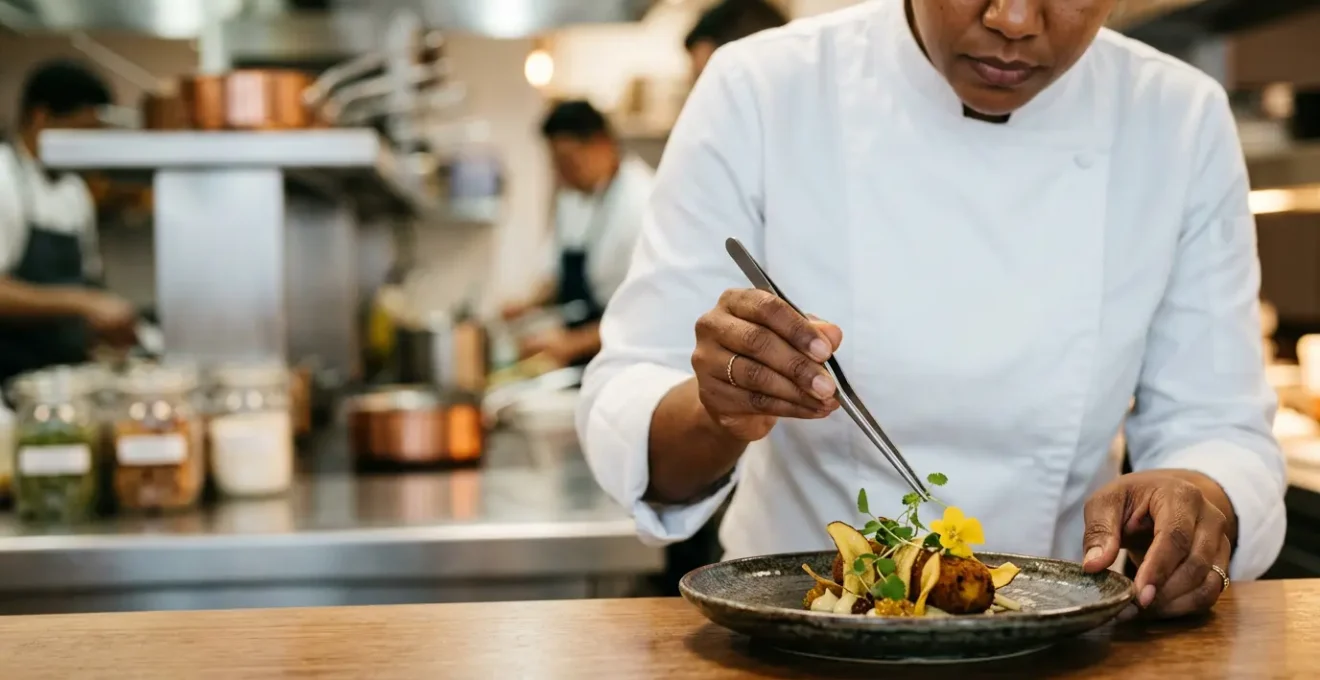
The “New Dominican Kitchen” is not just about fusion cuisine; it’s a sophisticated movement of culinary archaeology where chefs are unearthing the nation’s gastronomic soul.
- Chefs are acting as cultural curators, reviving ancestral Taíno ingredients and techniques with modernist precision.
- Humble staples like plantain and cassava are being radically reinterpreted, transforming them into objects of haute cuisine.
Recommendation: To truly experience this renaissance, look beyond standard menus. Seek out the multi-course tasting experiences that tell the rich, layered story of the Dominican Republic, one plate at a time.
To the uninitiated, Dominican cuisine might evoke sun-drenched images of hearty, rustic fare: a comforting bowl of sancocho, a mound of savory mofongo, or the ubiquitous plate of La Bandera Dominicana. It’s a palate built on bold flavors and satisfying textures, a delicious testament to its rich history. For decades, the story has been that this is a “fusion” cuisine, a simple blend of its Spanish, African, and indigenous Taíno roots. While true, this description barely scratches the surface of the quiet revolution currently unfolding in the kitchens of Santo Domingo and beyond.
A new generation of chefs is challenging this simplistic narrative. They are not merely mixing influences; they are engaging in a form of culinary archaeology. They are digging deep into the island’s history, unearthing forgotten ingredients and reviving ancestral cooking methods to construct a new, yet deeply authentic, gastronomic identity. This movement, dubbed the “New Dominican Kitchen,” asks a profound question: What does it mean to be Dominican in the 21st century, and how can that story be told through food?
This is not about erasing the past but about illuminating it with contemporary techniques and a global perspective. It’s a dialogue between the ancient and the modern, the humble and the refined. This guide explores the leaders of this movement, delving into where you can find these narrative-driven tasting menus, how chefs are transforming the most common ingredients into art, and the deep cultural currents that make this culinary moment so significant.
To navigate this exciting culinary landscape, it is essential to understand its key facets. The following sections offer a comprehensive overview, from the most exclusive dining experiences to the historical foundations that give the movement its profound meaning.
Summary: A Critic’s Exploration of the New Dominican Kitchen
- Where to Find a 7-Course Tasting Menu in Santo Domingo?
- How Chefs Are Turning Humble Plantains into Haute Cuisine?
- Asian-Dominican Fusion: Where to Try the Best “Chofan”?
- Can You Take a Cooking Class with a Top Local Chef?
- How Far in Advance Must You Book Top Restaurants in Piantini?
- How to Explore Santo Domingo’s Modern and Ancient Sides in 48 Hours?
- Is the “Club Level” Upgrade Worth the Extra $1000 per Week?
- How Did African, Spanish, and Taino Influences Create the Creole Palate?
Where to Find a 7-Course Tasting Menu in Santo Domingo?
The tasting menu has become the definitive format for the chefs of the New Dominican Kitchen. It’s a canvas for storytelling, allowing them to guide diners through a carefully constructed narrative of history, terroir, and technique. These are not just meals; they are curated experiences, often found in the ambitious, chef-driven restaurants of Santo Domingo that are gaining international acclaim. Here, the menu is a manifesto, each course a chapter in the larger story of the island’s identity.
These experiences are designed to provoke and delight, challenging preconceptions of what Dominican food can be. This philosophy of reinterpretation is at the heart of the movement. For instance, a dish as fundamental as crispy rice is elevated to new heights. As noted by The World’s 50 Best, at a leading restaurant, “traditional dishes merge on the menu, with options such as the concón, a crispy rice dish usually eaten with beans and a hearty meat sauce, offered here in a more refined composition of stewed crab, seafood bisque, ginger and stir-fried leek.” This is not just a fancier version; it’s a complete deconstruction and reassembly of a familiar memory.
Case Study: Morisoñando’s Seasonal Tasting Experience
A prime example of this narrative-driven approach is Morisoñando, a restaurant that offers a fresh take on Dominican cuisine with dishes enlivened by indigenous ingredients. According to a feature on the new wave of chef-driven restaurants, menus are based on seasonal produce, with playful appetizers such as El Árbol de los Deseos (The Wish Tree), where diners are invited to make a wish before tasting deep-fried cassava balls. This represents a blend of storytelling with Dominican culinary heritage, turning the meal into an interactive and deeply personal event.
Finding these menus requires seeking out the establishments where the chef’s vision is front and center. Look for restaurants that explicitly advertise a “menú de degustación” or a “chef’s experience,” as this is where the most innovative and personal expressions of the New Dominican Kitchen are found.
How Chefs Are Turning Humble Plantains into Haute Cuisine?
If there is one ingredient that symbolizes the Dominican table, it is the plantain. Boiled, fried, or mashed, it is the bedrock of countless traditional dishes—a humble, starchy, and deeply beloved staple. It is precisely for this reason that the chefs of the New Dominican Kitchen have seized upon it as a primary vehicle for their creative ambitions. To transform the familiar into the extraordinary is the ultimate demonstration of skill and vision. The metamorphosis of the plantain is a microcosm of the entire movement.
This elevation of everyday ingredients is a conscious act of cultural re-evaluation. As one cultural analysis notes, “Plantain, cassava, sweet potato and yautía, humble foods of the popular table, entered the haute cuisine thanks to a generation of chefs who are revolutionizing the Dominican cuisine.” These chefs apply modernist techniques—spherification, foams, gels, powders, and dramatic dehydrations—to unlock new textures and flavors. A simple plantain can become a delicate, translucent chip, a savory ice cream, or a fluid gel that carries other flavors.
This approach, which can be described as Ancestral Modernism, doesn’t erase the plantain’s identity but rather reveals its hidden potential. The flavor remains rooted in Dominican soil, but the form is entirely new. It is a dialogue between the grandmother’s kitchen and the modern laboratory, resulting in dishes that are both intellectually stimulating and deeply comforting.
Asian-Dominican Fusion: Where to Try the Best “Chofan”?
While the Taino-Spanish-African triad forms the historical bedrock of Dominican cuisine, the island’s palate is a living, evolving entity shaped by waves of migration. Among the most significant is the influence of Chinese immigrants, which has been seamlessly woven into the fabric of daily life and, most deliciously, into its food. This is most evident in one of the nation’s favorite dishes: chofan, the Dominican adaptation of Chinese fried rice.
The prevalence of Chofan is a direct reflection of a significant cultural exchange. The Dominican Republic is home to more than 30,000 people of Chinese origin, and their culinary traditions have become an integral part of the national landscape. In Santo Domingo, the small but vibrant Barrio Chino (Chinatown) is an epicenter of this fusion, but the reach of chofan extends far beyond its borders. It is a staple comfort food found everywhere from bustling city eateries to small roadside stands in the countryside.
Case Study: Chofan as a Symbol of Culinary Syncretism
Chofan is the perfect case study in Dominican culinary fusion. Unlike traditional Chinese fried rice, the Dominican version is often made with long-grain rice and may include local additions like diced ham, shrimp, and sometimes even sweet plantains. It’s typically seasoned with a generous splash of soy sauce, which has become a staple in many Dominican kitchens. This humble, flavorful dish exemplifies how the Chinese-Dominican community has influenced local cuisine, creating a unique syncretic dish that is beloved across the island.
For the best chofan, one must explore both the traditional and modern interpretations. In Santo Domingo’s Barrio Chino, you can find classic, no-frills versions that are deeply satisfying. Meanwhile, some chefs of the New Dominican Kitchen are beginning to deconstruct chofan, using its flavor profile as a jumping-off point for more refined dishes that honor this important layer of the island’s gastronomic identity.
Can You Take a Cooking Class with a Top Local Chef?
For the fine-dining enthusiast, the desire to go behind the scenes is a natural one. After experiencing a meal that redefines a country’s cuisine, the question inevitably arises: can one learn from the masters themselves? While the notion of a formal, scheduled “cooking class” with a top-tier chef in the vein of a culinary school is rare, opportunities for intimate, educational experiences do exist for the determined visitor. The key is to think less about “classes” and more about “chef-led encounters.”
These top chefs are focused on running their demanding kitchens, and their time is a scarce commodity. Therefore, access is often gained not through a public booking portal but through strategic inquiry and personal connections. High-end hotels are an excellent starting point, as their concierge services may have exclusive arrangements for culinary demonstrations or private kitchen tours for their guests. Similarly, following leading Dominican chefs on social media can reveal announcements for rare workshops or special events.
The most direct approach, however, involves engaging with the restaurants themselves. Inquiring about a “stage” (a short, informal kitchen internship) or a behind-the-scenes tour can sometimes yield positive results, especially for those who can demonstrate a serious passion for gastronomy. The goal is to gain insight into the philosophy and technique that drive the New Dominican Kitchen, an experience far more valuable than simply replicating a recipe.
Your Action Plan: Securing a Chef-Led Culinary Experience
- Research Restaurants: Identify restaurants with chef-led experiences, such as those offering interactive, seasonal tasting menus.
- Contact High-End Hotels: Inquire with concierges at luxury properties like the Billini Hotel about exclusive culinary demonstrations or chef connections.
- Follow on Social Media: Monitor the social media platforms of top Dominican chefs for announcements about private classes, workshops, or special dining events.
- Explore Specialized Venues: Visit establishments like El Museo del Ron for rum tasting experiences that often include education on Dominican beverage and food pairing culture.
- Inquire Directly: Contact signature restaurants respectfully about the possibility of a “stage” or a brief, paid behind-the-scenes culinary experience.
How Far in Advance Must You Book Top Restaurants in Piantini?
The Piantini district in Santo Domingo has firmly established itself as the glittering epicenter of the city’s fine-dining scene. This upscale neighborhood, with its sleek high-rises and designer boutiques, is home to many of the most ambitious restaurants leading the New Dominican Kitchen movement. As a critic, one learns to read the signs of a serious culinary destination, and the reservation books of Piantini’s top tables tell a clear story: demand is high, and spontaneity is not your friend.
For the premier restaurants—those helmed by award-winning chefs and featured in international guides—booking several weeks in advance is not just recommended; it is often essential, particularly for weekend dining. For a table at the most sought-after venues during peak season (winter and major holidays), a lead time of a month or more is a wise strategy. These are not large, sprawling tourist establishments but often intimate spaces where every seat is precious.
The booking process itself is an indicator of the restaurant’s caliber. Online reservation systems are common, but for prime-time slots, a direct phone call can sometimes be more effective. Furthermore, one should be mindful of the dining culture. As a travel advisory on Dominican fine dining points out, “Many high-end restaurants in Santo Domingo and Punta Cana feature award-winning chefs… These upscale venues often require reservations and maintain dress codes for their evening service.” A “smart casual” or elegant dress code is the norm, reflecting the seriousness and artistry of the experience being offered.
Treating the reservation as the first step of the dining experience is crucial. It signals your respect for the craft and ensures your place at the table to witness this exciting culinary moment firsthand.
How to Explore Santo Domingo’s Modern and Ancient Sides in 48 Hours?
To truly comprehend the New Dominican Kitchen, one must understand the city that birthed it. Santo Domingo is a city of exhilarating contrasts, where the 16th century collides with the 21st on every corner. A well-crafted 48-hour itinerary for the discerning food lover should be a journey through both time and taste, creating a dialogue between the city’s ancient stones and its modern culinary ambitions.
Your first day should be an immersion in history. Begin in the Zona Colonial, a UNESCO World Heritage site, exploring the stones of the Fortaleza Ozama and walking the halls of the Alcázar de Colón. For lunch, bypass the tourist traps and seek out a traditional comedor for an authentic plate of La Bandera. This grounds your palate in the foundational flavors of the nation. The evening is for contrast: book a table at a restaurant like Maraca or Buche Perico, where contemporary Dominican cuisine is served within beautifully restored historic buildings. Here, you eat the modern interpretation of the history you spent the day absorbing.
Day two is a leap into the present. Head to the sleek, modern district of Piantini to witness contemporary architecture and explore upscale boutiques and art galleries showcasing Dominican artists. This is the world that fuels the ambition and global outlook of the New Kitchen. The grand finale of your 48 hours should be a full tasting menu experience at one of the neighborhood’s top restaurants. This is the culmination of your journey, where you will see indigenous ingredients and historical recipes, filtered through a modern lens, telling the complete story of Santo Domingo on a plate.
Is the “Club Level” Upgrade Worth the Extra $1000 per Week?
While “Club Level” typically refers to a hotel upgrade, the question serves as a potent metaphor for the choices facing a fine-dining enthusiast in Santo Domingo. Is the “upgrade” from casual, traditional eateries to the exclusive, high-concept world of the New Dominican Kitchen—with its tasting menus, wine pairings, and higher price points—worth the significant investment of time, effort, and money? From a critical perspective, the answer is an unequivocal yes.
To dine only at traditional comedores is to understand the foundation of Dominican cuisine, which is an essential and delicious experience. However, it is an incomplete one. You are reading the first chapter of a book but never reaching its transformative conclusion. The “Club Level” of Dominican dining—the tasting menus at the forefront of the culinary archaeology movement—is where the soul of the cuisine is being debated, redefined, and propelled into the future. It is where you move from being a tourist to being a witness to a cultural renaissance.
The “extra cost” buys you more than just more elaborate food. It buys you access to the chef’s narrative. It grants you a seat at the table where history is being served, where forgotten ingredients are being reborn, and where the future of a nation’s palate is being decided. For anyone who believes that food is more than sustenance—that it is art, history, and identity—this upgrade is not a luxury. It is the entire point of the journey.
Key Takeaways
- The New Dominican Kitchen is a movement of “culinary archaeology,” focused on reviving ancestral ingredients and techniques.
- The tasting menu is the primary format for this movement, offering a narrative-driven experience rather than just a meal.
- Securing a reservation at top restaurants, especially in the Piantini district, requires planning several weeks in advance.
How Did African, Spanish, and Taino Influences Create the Creole Palate?
The Creole palate of the Dominican Republic is not a monolith but a rich, layered tapestry woven from three distinct cultural threads. Understanding this foundation is critical to appreciating the work of today’s chefs, who are not creating in a vacuum but are in direct conversation with this complex history. The island’s cuisine is a result of a culinary collision: the ingredients and techniques of the indigenous Taíno people, the culinary traditions of the Spanish colonizers, and the profound influence of enslaved Africans.
This tri-cultural heritage is the DNA of Dominican food. As a baseline, Dominican cuisine is made up of Spanish, Indigenous Taíno, and African influences, which have been adapted into a uniquely Creole palate. The Spanish brought cattle, pork, rice, and citrus. The Africans introduced ingredients like pigeon peas and yams, along with cooking methods like deep-frying. And from the Taíno, the very first inhabitants, came the foundational staples: cassava, yautía, sweet potatoes, and the practice of cooking with charcoal and wood smoke (barbacoa).
Chefs are acting as culinary archaeologists, reviving long-lost Taino ingredients like ‘leren’, ‘yautía coco’, and using native cooking methods like pit roasting in a modern context.
– Chef Tita, as quoted in Dominicana Online
This quote perfectly captures the spirit of the New Dominican Kitchen. The most forward-thinking chefs are actively researching and reviving these ancestral elements. The ultimate example of this continuity is casabe bread.
Case Study: Casabe – From Taíno Staple to Modern Canapé
Casabe, a flatbread made from the poisonous bitter cassava root through a complex detoxification and grating process, was a cornerstone of the Taíno diet. This ancient preparation has survived for centuries and remains a part of Dominican cuisine. Today, chefs are elevating this humble bread, transforming it into delicate, crisp bases for modern appetizers, using it as a textural element in composed dishes, or serving it traditionally alongside refined soups. Casabe’s journey from an essential pre-Columbian staple to a component of modern haute cuisine is a powerful symbol of the entire New Dominican Kitchen movement.
To truly appreciate this culinary renaissance, your next step is to plan your visit and reserve a seat at one of these tables where history is being served. It is an investment in an experience that transcends dining and becomes a memorable exploration of culture itself.