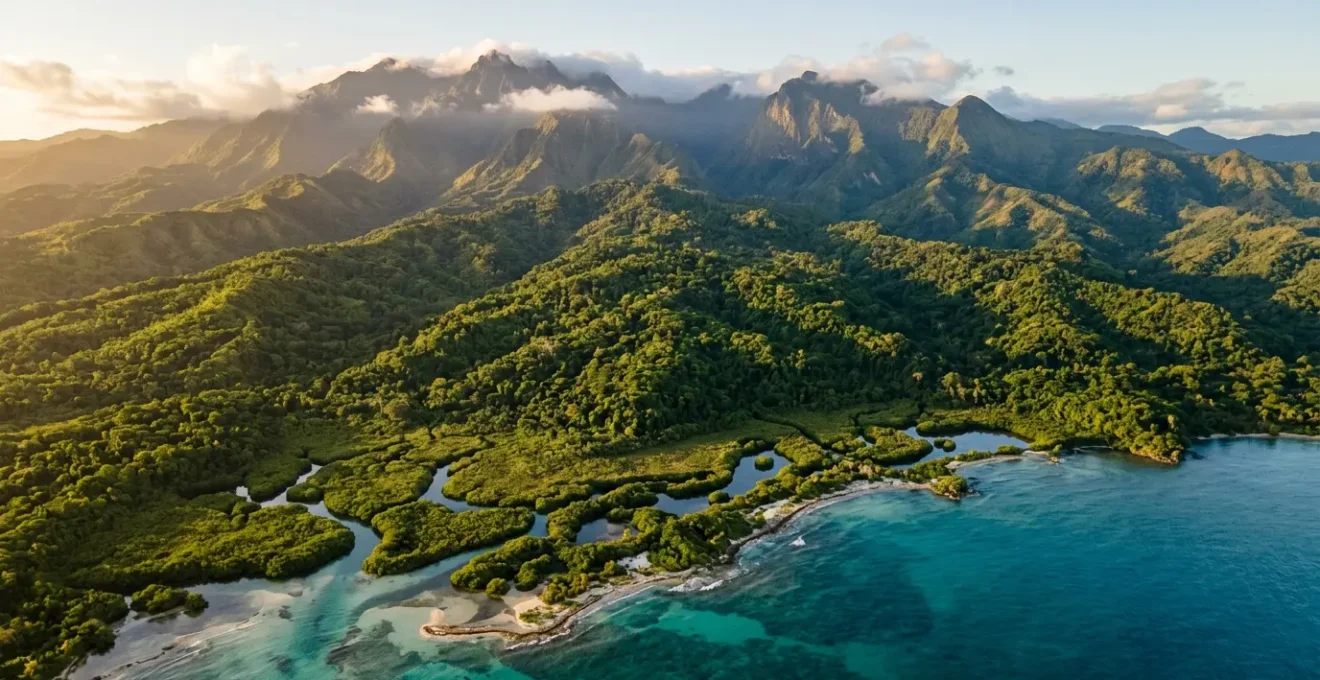
In summary:
- The Dominican Republic’s geological isolation has created an “ecological laboratory” with thousands of species found nowhere else on Earth.
- It’s possible to experience vastly different ecosystems—from alpine cloud forests to coastal dry forests—in a single week due to the island’s unique biodiversity density.
- For travelers seeking authentic, less-packaged nature experiences, the DR offers deeper cultural immersion and better value than more established eco-destinations.
- Avoiding the common tourist traps requires hiring local guides, embracing slow travel in one region, and learning to spot “greenwashed” tourism.
For many, the Dominican Republic conjures images of endless white-sand beaches, all-inclusive resorts, and turquoise waters. While this vision holds true, it represents only a fraction of the island’s soul. The nature enthusiast planning a trip often hears the standard advice: book a whale-watching tour in Samaná or take a day trip from Punta Cana to a nearby “eco-park.” This approach treats the country’s profound ecological richness as a mere side attraction, a box to be ticked before returning to the buffet.
But what if the real treasure isn’t just seeing the nature, but understanding *why* it’s so extraordinary? What if the island’s true identity is that of a living, breathing ecological laboratory, shaped by millions of years of isolation? This perspective shifts the goal from simply visiting to truly connecting. It moves beyond the surface-level beauty to uncover a story of evolution, resilience, and hyper-condensed biodiversity that rivals more famous eco-destinations.
This guide is designed for the traveler who wants to go deeper. It’s for the one who seeks authentic connection over convenience and who understands that the most rewarding experiences are often found far from the beaten path. We will explore the unique ecosystems that make the DR a biological hotspot, reveal the common mistakes that prevent most visitors from seeing its true wonders, and provide a clear roadmap for planning an immersive journey into the wild heart of the Caribbean.
This article provides a comprehensive framework for planning your authentic eco-adventure. You’ll discover the scientific reasons behind the island’s unique biodiversity, learn how to navigate its diverse landscapes, and get practical tools to distinguish genuine ecotourism from the superficial.
Summary: Your Guide to the Dominican Republic’s Natural Wonders
- Why the Dominican Ecosystem Supports 6,000 Species Found Nowhere Else?
- How to Visit 3 Distinct Climate Zones in One Week Without Exhaustion?
- Costa Rica vs Dominican Republic: Which Offers Better Biodiversity for the Price?
- The Error That 70% of Tourists Make When Visiting Protected Reserves
- When to Book Your Trip to See Migratory Birds at Their Peak?
- How to Distinguish Real Ecotourism from “Greenwashing” in the DR?
- How Do the Mangroves Protect the Coral Reefs and Tourism Economy?
- How to Plan a Week in Samaná for Authentic Connection With Nature?
Why the Dominican Ecosystem Supports 6,000 Species Found Nowhere Else?
The Dominican Republic’s incredible biodiversity isn’t an accident; it’s the direct result of geological history and isolation. The island of Hispaniola, which it shares with Haiti, has been a solitary landmass for millions of years. This long period of separation allowed life to evolve in unique ways, creating a living laboratory of evolution. As a result, the island is a global hotspot for endemism—species that exist here and nowhere else on the planet. This is evidenced by the fact that the island is home to over 6,000 species of vascular plants, with 2,050 of them being endemic.
A prime example of this unique evolutionary path is the Hispaniolan Solenodon, a creature that embodies the island’s ancient and distinct character. Often called a “living fossil,” this small, shrew-like mammal has survived since the age of the dinosaurs. It possesses a rare trait among mammals: it’s venomous, using grooved incisors to inject poison into its prey. The solenodon’s continued existence is a testament to the island’s role as a sanctuary for species that have vanished elsewhere. It represents the thousands of hidden biological stories waiting to be discovered by the observant traveler.
Understanding this context of geological isolation is the key to truly appreciating a nature trip here. You are not just looking at plants and animals; you are witnessing the results of a distinct evolutionary experiment. Every endemic bird, rare orchid, and camouflaged lizard is a chapter in a story that can only be read on this island, making each discovery more meaningful than a simple sighting.
How to Visit 3 Distinct Climate Zones in One Week Without Exhaustion?
The secret to the Dominican Republic’s remarkable biodiversity lies in its “biodiversity density,” fueled by a dramatic range of altitudes. The Cordillera Central, the Caribbean’s highest mountain range, acts as a spine, creating a variety of microclimates in a very small area. This allows a traveler to journey from a desert-like environment to an alpine cloud forest and a tropical rainforest in just a few days—an ecological trifecta that is impossible in most countries without long-haul travel. The key is strategic planning that uses central hubs to minimize exhausting hotel changes and long drives.
This itinerary blueprint demonstrates how to experience this incredible variety efficiently:
- Days 1-2: Coastal Dry Forest. Base yourself near Santo Domingo and explore Jaragua National Park in the southwest. Here, you’ll find desert-like landscapes, cacti, and endemic rhinoceros iguanas in a hot, arid climate.
- Days 3-4: Alpine Cloud Forest. Drive north to the mountainous region of Constanza or Jarabacoa, which can serve as a hub. From here, a 4×4 vehicle is essential to ascend to Valle Nuevo National Park, where temperatures can drop near freezing. At 2,200 meters, you’ll find pine forests shrouded in mist—an ecosystem that feels more like the Alps than the Caribbean.
- Days 5-6: Karstic Rainforest. Head northeast to the Samaná Bay area to explore Los Haitises National Park. This region is characterized by lush rainforest, sprawling mangroves, and unique limestone hill formations (mogotes), offering a stark contrast to the previous two climates.
This approach transforms a trip into a journey through distinct biological worlds. It highlights that the DR’s richness is not just in the number of species, but in the dramatic juxtaposition of ecosystems packed into one small, accessible island nation.
Costa Rica vs Dominican Republic: Which Offers Better Biodiversity for the Price?
For decades, Costa Rica has been the undisputed champion of Central American ecotourism, boasting an incredible 5% of the world’s biodiversity on just 0.3% of its landmass. Its well-established network of eco-lodges and professional tours offers a seamless, “plug-and-play” experience for nature lovers. However, the Dominican Republic is emerging as a compelling alternative, particularly for travelers who prioritize authenticity and value. While its total species count is lower, its high rate of endemism offers a different kind of reward. The choice between the two often comes down to travel style and budget.
A direct comparison reveals a clear trade-off between polish and pioneering spirit. Costa Rica’s mature infrastructure comes at a higher price point across the board, from park entries to guided tours and lodging. The Dominican Republic, with its developing ecotourism scene, provides a more adventurous and often more affordable experience, where your travel dollars are more likely to directly support local communities.
This table breaks down the key differences for the eco-conscious traveler, based on data from a recent comparative analysis.
| Category | Dominican Republic | Costa Rica |
|---|---|---|
| Biodiversity Profile | 6,000+ endemic plant species, emerging ecotourism | 500,000+ total species (5% of world’s biodiversity) |
| Tourism Infrastructure | Pioneer/adventurous feel, developing eco-lodges | Mature, well-established ecotourism network |
| National Park Entry | $3-10 USD average | $15-30 USD average |
| Eco-lodge Night | $50-150 USD | $100-300 USD |
| Guided Nature Tour | $30-80 USD per day | $75-200 USD per day |
| 4×4 Rental (weekly) | $350-500 USD | $450-700 USD |
| Experience Type | Authentic, less packaged, community-based | Professional, plug-and-play, tourist-ready |
Ultimately, the decision is not about which is “better,” but what kind of journey you seek. Costa Rica offers world-class biodiversity with a highly professionalized support system. The Dominican Republic offers the chance to be a pioneer, to engage more directly with local culture, and to experience unique endemic wildlife in a less crowded, more intimate setting—all while your budget stretches significantly further.
The Error That 70% of Tourists Make When Visiting Protected Reserves
The single biggest mistake visitors make in the Dominican Republic’s protected areas is adopting a “checklist mindset.” They rush from park to park, spending only a few hours at each, staying near the entrance, and often visiting during the middle of the day. This surface-level approach guarantees they will miss the profound biodiversity they came to see. Most of the island’s unique wildlife is crepuscular (active at dawn and dusk), shy, and masterfully camouflaged. Truly experiencing a reserve means dedicating time, moving slowly, and, most importantly, hiring a local guide.
An untrained eye will almost certainly walk right past a Hispaniolan Trogon or a Ridgway’s Hawk hidden in the foliage. A local guide’s eyes are tuned to the forest’s subtle cues. They know where to look, what to listen for, and how to navigate unmarked trails safely. They transform a simple walk into an interpretive journey, pointing out medicinal plants, animal tracks, and the ecological relationships that are invisible to the casual observer. Without them, the forest remains a beautiful but silent backdrop.
This sentiment is shared by those who know the parks best. As one experienced local guide explains, a guide is not an optional add-on but an essential component of an authentic experience.
Tourists rush to ‘collect’ parks without truly experiencing them. A local guide is not a luxury but a necessity for safety on unmarked trails, spotting camouflaged wildlife, and understanding the unseen ecological stories.
– Roberto, Los Haitises Tour Guide, Punta Cana Tours Field Report
To avoid this common error, commit to deep immersion over broad coverage. Choose one or two national parks and spend several days exploring each one at different times of the day, especially dawn. Investing in a knowledgeable local guide is the single most effective way to unlock the secrets of the ecosystem and ensure your visit is both safe and deeply rewarding.
When to Book Your Trip to See Migratory Birds at Their Peak?
Timing is everything when planning a wildlife-focused trip to the Dominican Republic. While many endemic species are present year-round, the country’s strategic location in the Caribbean makes it a vital stopover and wintering ground for numerous migratory species. Planning your visit to coincide with these natural events can lead to breathtaking spectacles. The nation hosts an impressive 306 bird species, with a notable 10.5% rate of endemism, but the migratory visitors add another layer of excitement for birdwatchers.
The most famous wildlife event is the arrival of thousands of humpback whales in Samaná Bay, but bird migrations and other seasonal phenomena are just as compelling for the dedicated nature lover. For example, the elusive Bicknell’s Thrush travels from North America to winter exclusively in the high-altitude cloud forests of Hispaniola, making a sighting a truly special event for avid birders.
To maximize your chances of witnessing these events, it’s essential to book well in advance, especially for regions with limited lodging. Here is a calendar of key wildlife seasons to guide your planning:
- January-March: Peak Humpback Whale season in Samaná Bay. Book whale-watching tours and accommodation by October for the best options and ethical operators.
- October-November: Arrival of the Bicknell’s Thrush in the Sierra de Bahoruco. Mountain lodges are few, so reserving by August is critical.
- December-April: The best months for flamingo viewing at Laguna de Oviedo in Jaragua National Park, as winter brings the highest concentrations.
- May-November: Sea turtle nesting season along the eastern and southern coasts. Night tours must be arranged with certified guides to ensure the turtles are not disturbed.
- Year-round: Endemic species like the Hispaniolan Parrot, Hispaniolan Woodpecker, and the ever-present Palmchat (the national bird) are visible throughout the year, but guided dawn tours can increase sighting chances by over 60%.
Aligning your travel dates with these peaks in animal activity transforms a general nature trip into a targeted, once-in-a-lifetime experience. It requires foresight and planning but rewards the traveler with unparalleled wildlife encounters.
How to Distinguish Real Ecotourism from “Greenwashing” in the DR?
As “ecotourism” becomes a marketing buzzword, it’s increasingly difficult to separate genuine, sustainable operations from “greenwashing”—hotels and tour operators that make superficial claims without real commitment. In the Dominican Republic, a truly eco-conscious lodge is not just one surrounded by nature; it’s one that actively works to conserve it and uplift its local community. Becoming an ecologically literate traveler means learning to look past the green logos and ask the right questions.
A legitimate eco-operation integrates sustainability into every aspect of its business, from construction and waste management to employment and food sourcing. These are not marketing points but core operational principles. You can often identify them through simple observation and targeted inquiries. For instance, a hotel claiming to be “eco” but offering a buffet of imported foods and having a perfectly manicured, water-intensive lawn is likely greenwashing. A true eco-lodge will proudly feature local, seasonal produce and have visible signs of water and energy conservation.
Your Greenwashing Detector Checklist: Points to Verify for Dominican Eco-lodges
- Verify local employment: Ask about the staff. At least 70% should be from surrounding communities, including management positions, not just entry-level jobs.
- Inquire about conservation projects: A genuine operator can name specific initiatives they fund or lead (e.g., “We contribute 5% of profits to a local mangrove reforestation project”). Vague answers are a red flag.
- Examine the menu: Look for a menu that emphasizes local, seasonal produce. Ask where they source their ingredients; they should be able to name their local farm suppliers.
- Look for energy and water systems: Visible rainwater collection tanks, greywater filtration systems, or solar panels are strong indicators of a real commitment.
- Assess waste management: Ask how they manage waste. Authentic operations will have clear systems for composting, recycling, and minimizing plastic use, and are often proud to show them off.
The gold standard for ecotourism is a model where the local community becomes the primary steward and beneficiary of conservation. This creates a powerful economic incentive to protect the natural resources that attract visitors.
Case Study: Community-Based Tourism Success in Los Haitises
The Los Haitises boatmen’s cooperative is a powerful example of authentic ecotourism. Formerly local fishermen, these men transformed into certified guides, creating a system where 100% of tour revenues remain within their community. This model has directly funded the restoration of over 50 hectares of mangroves and established a scholarship program for local children. In contrast to large resort-operated tours where profits often leave the region, every dollar spent here directly supports the families who act as guardians of the park. As a result, illegal fishing in the area has dropped by an estimated 70%, as sustainable tourism now provides a more stable and lucrative income than resource extraction.
By using this critical lens, you can ensure your travel investment supports businesses that are genuinely protecting the Dominican Republic’s natural and cultural heritage.
How Do the Mangroves Protect the Coral Reefs and a Tourism Economy?
Often overlooked in favor of sandy beaches, mangrove forests are one of the most critical ecosystems in the Dominican Republic. They are not merely swampy coastlines but complex, vital systems that act as the crucial link between the land and the sea. Their dense, tangled root systems serve as the island’s natural filtration system, protecting the fragile coral reefs that are the bedrock of the tourism economy. Without healthy mangroves, the vibrant underwater world that draws divers and snorkelers would quickly perish.
The protective role of mangroves is twofold. First, they act as a physical barrier, absorbing the energy of storm surges and protecting coastal communities. Second, and more importantly for the reefs, they are biological filters. Their roots trap sediment, fertilizers, and pollutants running off the land after heavy rains. This prevents the silt from flowing out to sea and smothering the coral, which needs clear, sunlit water to survive. A healthy mangrove forest means a healthy reef, which in turn supports a thriving fish population and the entire marine tourism industry.
Mangroves are the island’s kidneys, and reefs are its skin. The kidneys filter land-based pollution that would otherwise smother the skin. Without mangroves, sediment flows directly to reefs, causing coral death, cloudy water, destroyed fish nurseries, and ultimately the collapse of diving tourism and fishing livelihoods.
– Dr. Marina Santos, Caribbean Marine Conservation Institute
Beyond their role as protectors, these forests are immensely valuable carbon sinks. The Dominican mangrove forests sequester an estimated 966,847 tons of carbon, playing a significant role in mitigating climate change. They also serve as critical nursery grounds for countless species of fish and crustaceans, supporting local fishing communities. When you visit a place like Los Haitises National Park, you are not just seeing a pretty landscape; you are witnessing the engine room of the island’s coastal health and economic stability.
Key takeaways
- The true value of the Dominican Republic’s nature lies in its unique endemic species, a direct result of millions of years of geological isolation.
- Authentic ecotourism is about more than just a “green” label; it requires verifying local employment, community benefits, and genuine conservation efforts.
- A deep, immersive experience in one or two key regions provides a far more rewarding connection with nature than a rushed tour of multiple “checklist” sites.
How to Plan a Week in Samaná for Authentic Connection With Nature?
The Samaná Peninsula is a microcosm of the Dominican Republic’s wild soul. While it’s famous for humpback whale watching, its true charm lies in the wealth of year-round, immersive nature experiences it offers away from the large tour crowds. To forge an authentic connection, the strategy is simple: base yourself on the peninsula in towns like Las Terrenas or Las Galeras, and prioritize hiring local, independent guides over booking all-inclusive packages from distant resort hubs like Punta Cana. This approach saves precious travel time and channels your money directly into the local economy.
A week in Samaná can be a journey through diverse landscapes and local culture, if planned with intention. It’s an opportunity to engage with the environment on an intimate level, from trekking to hidden beaches to learning about traditional agriculture from the farmers themselves. The key is to embrace a slower pace and seek out experiences that require a little more effort but offer far greater rewards.
Here is a sample 7-day itinerary focused on authentic immersion:
- Days 1-2: Los Haitises on Your Own Terms. Instead of joining a large catamaran tour, hire a private ‘lanchero’ (local boat captain) from the town of Sánchez or Sabana de la Mar. This allows for a personalized, unhurried exploration of the park’s mangroves, caves, and bird life.
- Day 3: The Secluded Reward of Playa Frontón. A true adventure, this pristine beach is accessible only by a challenging hike or a boat trip from Las Galeras. Its isolation is its beauty, offering incredible snorkeling at the base of its dramatic cliff face.
- Day 4: Following the ‘Ruta del Café’. Explore the peninsula’s lush interior by visiting small-scale coffee farmers. Participate in the harvest (in season) and learn about the traditional, organic process from bean to cup.
- Day 5: Dawn at Salto El Limón. Visit the famous waterfall early in the morning, either on foot or by horseback with a local guide, to avoid the midday crowds and swim in its refreshing natural pool in near solitude.
- Day 6: From Cacao to Chocolate. Tour a family-owned cacao plantation. Many offer hands-on workshops where you can participate in the entire process, from harvesting the pods to grinding the beans and making your own rustic chocolate.
- Day 7: Kayaking the Mangroves. Explore the mangrove estuaries around Samaná Bay by kayak with a guide from a local cooperative, who can share generational knowledge about the ecosystem’s flora and fauna.
This approach transforms you from a spectator into a participant. The difference between a mass-market tour and a locally guided experience is profound, as it connects you to the people whose lives are intertwined with the nature you’ve come to see.
We chose to stay in Las Galeras and hire local guides instead of booking from Punta Cana. The difference was remarkable – our boat captain’s family had fished these waters for generations. He took us to hidden caves unknown to large tours, taught us to spot manatees, and we ate lunch at his cousin’s beachside ‘comedor’ where the fish was caught that morning. This intimate, unhurried experience connected us to the real Samaná.
– TripAdvisor User Review
By embracing this philosophy of travel, your week in Samaná will become more than a vacation; it will be a deep and memorable connection with the Dominican Republic’s living culture and untamed nature.
Your journey into the Dominican Republic’s ecological heart begins not with a flight booking, but with a shift in perspective. By choosing deep immersion over a superficial tour, you support the communities that protect these natural treasures. Start planning your authentic adventure today, and discover the wild soul of the Caribbean that most visitors never see.